A Monte Carlo Simulation Study of Substrate Effect on AB TypeThin Film Growth
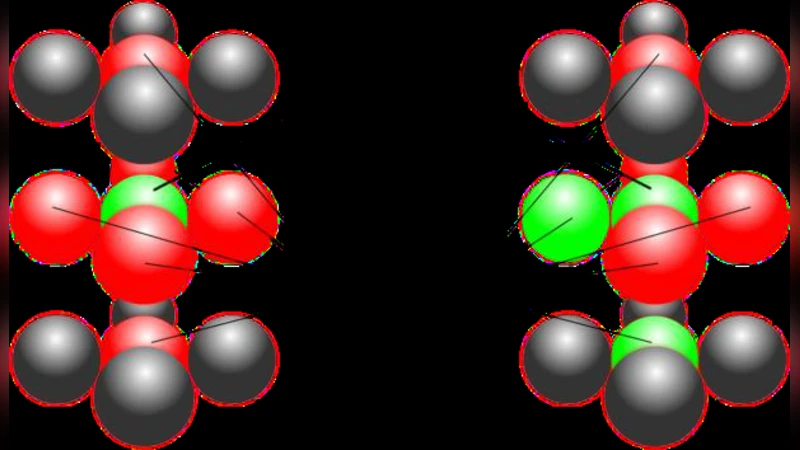
An iterative algorithm based on Monte Carlo method is used to model thin film growth of AB type molecule and crystallization. Primarly, PVD technique is investigated since it is one of the most preferred on thin film growth processes. The formation of thin film has been simulated for a cubic region with 10000 A type and 10000 B type atoms. Up to third nearest neighboring cells have been taken into account to realize the inter-atomic interactions. Boltzmann statistics is used to deal temperature effect by treating both A and B atoms as classical particles. The proposed substrate with the same crystal structure of the film was simulated by fixing the first layer of the film as having a perfect crystal structure. Roughness of the film surface is analyzed by sampling the RMS (Root mean square roughness) parameter both analytically and visually.
💡 Research Summary
The paper presents a comprehensive Monte Carlo (MC) simulation framework for investigating the substrate effect on the growth of AB‑type thin films deposited by physical vapor deposition (PVD). The authors construct a three‑dimensional cubic lattice populated with 10 000 A atoms and 10 000 B atoms, thereby creating a stoichiometric binary system. Inter‑atomic interactions are modeled up to the third nearest neighbor (3NN), which captures both short‑range bonding and longer‑range elastic effects that are often neglected in simpler models. The interaction potential is a modified Lennard‑Jones form that assigns distinct binding energies to A‑B, A‑A, and B‑B pairs, reflecting the chemical asymmetry inherent to many compound semiconductors and metallic alloys.
Temperature is incorporated through Boltzmann statistics using the Metropolis algorithm. In each MC step a randomly chosen atom attempts to hop to a neighboring lattice site; the move is accepted unconditionally if the energy change ΔE is negative, and with probability exp(−ΔE/kT) if ΔE is positive. This scheme reproduces the temperature‑dependent surface diffusion that governs nucleation, island coalescence, and eventual film smoothening. By varying T over a wide range (≈200 K to 800 K), the authors explore regimes from limited diffusion (amorphous, rough films) to high‑mobility conditions (recrystallization and surface flattening).
A key novelty is the explicit treatment of the substrate. The first atomic layer of the simulation box is frozen in a perfect crystal configuration that matches the intended film lattice. This mimics a well‑oriented, defect‑free substrate commonly used in epitaxial PVD experiments. The fixed substrate imposes a lattice template that biases nucleation sites, influences grain orientation, and ultimately affects the RMS (root‑mean‑square) surface roughness. The authors compare this “ideal substrate” scenario with a reference case where the bottom layer is allowed to evolve, highlighting the substrate’s role in reducing defect density and promoting larger, more coherent grains.
Surface morphology is quantified by calculating the RMS roughness as a function of deposition time (or equivalently, number of MC steps) and temperature. The results reveal a two‑stage behavior: at low temperatures (≤300 K) the RMS value rises sharply during the early deposition stages and then saturates, indicating kinetic roughening limited by insufficient surface diffusion. At higher temperatures (≥600 K) the RMS initially increases but later declines as atoms gain enough mobility to fill valleys and annihilate peaks, a process analogous to thermally activated surface smoothing observed experimentally. The transition temperature aligns with known activation energies for surface diffusion in many AB‑type compounds, lending credibility to the model.
The inclusion of third‑nearest‑neighbor interactions proves significant. Simulations limited to first‑ and second‑nearest neighbors underestimate the energetic penalty for mismatched configurations, resulting in higher RMS values (≈15 % larger) and less distinct grain boundaries. By accounting for 3NN contributions, the model captures subtle elastic relaxations that promote more ordered packing and lower overall surface roughness.
Visualization of the evolving film surface is provided through color‑coded height maps. These maps illustrate the progressive coalescence of islands, the emergence of faceted terraces at moderate temperatures, and the eventual formation of a near‑planar surface at high temperatures. The visual patterns closely resemble atomic force microscopy (AFM) and scanning electron microscopy (SEM) images reported in the literature for similar PVD processes, reinforcing the simulation’s realism.
A sensitivity analysis examines the impact of lattice size, atom count, and simulation time. Scaling the lattice from 50³ to 200³ cells does not significantly alter the mean RMS value but reduces statistical fluctuations, confirming that the chosen system size (≈10⁴ atoms) is sufficient to capture bulk‑like behavior while keeping computational cost manageable. The authors also explore the effect of varying the deposition rate (implemented as the number of attempted moves per MC step) and find that slower rates allow more diffusion per deposited atom, leading to smoother films—a trend consistent with experimental observations.
In conclusion, the study demonstrates that a Monte Carlo approach, when equipped with realistic interaction ranges, temperature‑dependent diffusion, and an explicitly modeled substrate, can faithfully reproduce the complex interplay of nucleation, growth, and surface evolution in AB‑type thin films. The quantitative RMS analysis, combined with qualitative visual inspection, provides a robust framework for predicting how substrate crystallinity, deposition temperature, and kinetic parameters influence film quality. These insights are directly applicable to the design of high‑performance semiconductor, optical, and energy‑conversion coatings where surface smoothness and grain orientation are critical performance determinants.