Detecting binary neutron star systems with spin in advanced gravitational-wave detectors
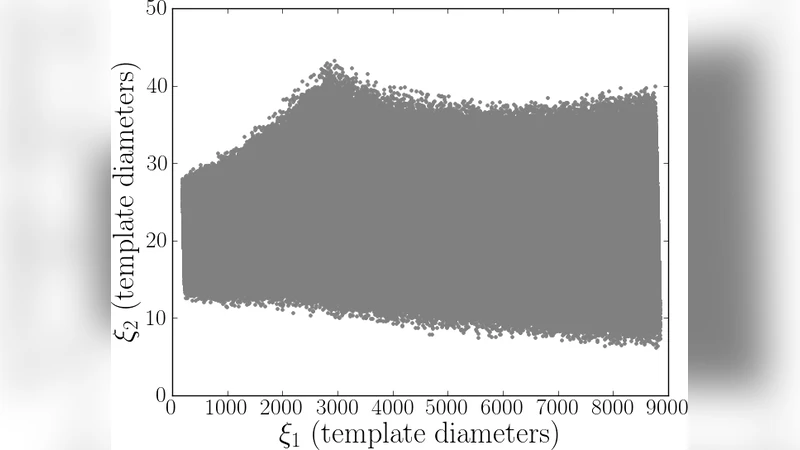
The detection of gravitational waves from binary neutron stars is a major goal of the gravitational-wave observatories Advanced LIGO and Advanced Virgo. Previous searches for binary neutron stars with LIGO and Virgo neglected the component stars’ angular momentum (spin). We demonstrate that neglecting spin in matched-filter searches causes advanced detectors to lose more than 3% of the possible signal-to-noise ratio for 59% (6%) of sources, assuming that neutron star dimensionless spins, $c\mathbf{J}/GM^2$, are uniformly distributed with magnitudes between 0 and 0.4 (0.05) and that the neutron stars have isotropically distributed spin orientations. We present a new method for constructing template banks for gravitational wave searches for systems with spin. We present a new metric in a parameter space in which the template placement metric is globally flat. This new method can create template banks of signals with non-zero spins that are (anti-)aligned with the orbital angular momentum. We show that this search loses more than 3% of the maximium signal-to-noise for only 9% (0.2%) of BNS sources with dimensionless spins between 0 and 0.4 (0.05) and isotropic spin orientations. Use of this template bank will prevent selection bias in gravitational-wave searches and allow a more accurate exploration of the distribution of spins in binary neutron stars.
💡 Research Summary
The paper addresses a critical shortcoming in current binary neutron‑star (BNS) searches with Advanced LIGO and Advanced Virgo: the neglect of the component stars’ intrinsic angular momentum (spin). By assuming that the dimensionless spin parameter χ = cJ/GM² is uniformly distributed between 0 and 0.4 (or, more conservatively, 0–0.05) and that spin orientations are isotropic, the authors quantify how much signal‑to‑noise ratio (SNR) is lost when a non‑spinning template bank is used. Their Monte‑Carlo simulations show that for the broader spin range, 59 % of sources would suffer an SNR loss greater than 3 %, while even for the narrow range the loss exceeds 3 % for 6 % of sources. This loss translates directly into reduced detection volume and biased estimates of the BNS merger rate, especially for systems where the spins are (anti‑)aligned with the orbital angular momentum.
To remedy this, the authors develop a new method for constructing template banks that explicitly include spin. The key innovation is a re‑parameterisation of the waveform space that yields a globally flat metric. In the traditional approach, the match‑metric varies across the mass‑spin manifold, making it difficult to place templates efficiently without over‑covering some regions and under‑covering others. By defining an “effective mass–spin” coordinate system, the authors diagonalise the metric and render it Euclidean, allowing a regular lattice of templates to be laid down. This lattice can accommodate spins that are (anti‑)aligned with the orbital angular momentum without a prohibitive increase in the number of templates.
The performance of the new spin‑inclusive bank is evaluated using the same population model. For χ ≤ 0.4, only 9 % of sources now lose more than 3 % of the optimal SNR; for the tighter χ ≤ 0.05 case, the fraction drops to a mere 0.2 %. Thus, the spin‑aware bank dramatically reduces the fraction of events that suffer appreciable SNR loss while preserving computational tractability.
Beyond detection efficiency, the authors discuss the scientific implications of using a spin‑inclusive bank. A non‑spinning bank introduces a selection bias: high‑spin systems are under‑represented in the detected sample, skewing any inference about the underlying spin distribution of neutron stars. Since the spin distribution carries information about binary formation channels, supernova kicks, and the internal equation of state of dense nuclear matter, eliminating this bias is essential for robust astrophysical conclusions. Moreover, accurate spin modeling improves parameter estimation after detection, reducing degeneracies between mass and spin and yielding tighter constraints on component masses, tidal deformabilities, and ultimately the neutron‑star equation of state.
The paper concludes with several avenues for future work. First, extending the method to fully precessing spins (i.e., allowing arbitrary spin orientations) would capture a larger portion of the physical parameter space. Second, integrating the flat‑metric template placement into low‑latency pipelines will enable real‑time searches that are both sensitive and computationally efficient. Third, applying the new bank to actual Advanced LIGO/Virgo data will allow the community to test whether the observed BNS population indeed contains a non‑negligible spin component, thereby refining models of binary evolution and neutron‑star physics.
In summary, the authors demonstrate that ignoring neutron‑star spin can cost more than 3 % of the optimal SNR for a substantial fraction of BNS events, and they provide a mathematically rigorous, computationally feasible solution: a globally flat‑metric template bank that includes (anti‑)aligned spins. This advancement promises to increase detection rates, eliminate selection bias, and enable more accurate astrophysical inference from the growing catalog of gravitational‑wave BNS observations.