Stochastic Surveillance Strategies for Spatial Quickest Detection
We design persistent surveillance strategies for the quickest detection of anomalies taking place in an environment of interest. From a set of predefined regions in the environment, a team of autonomo
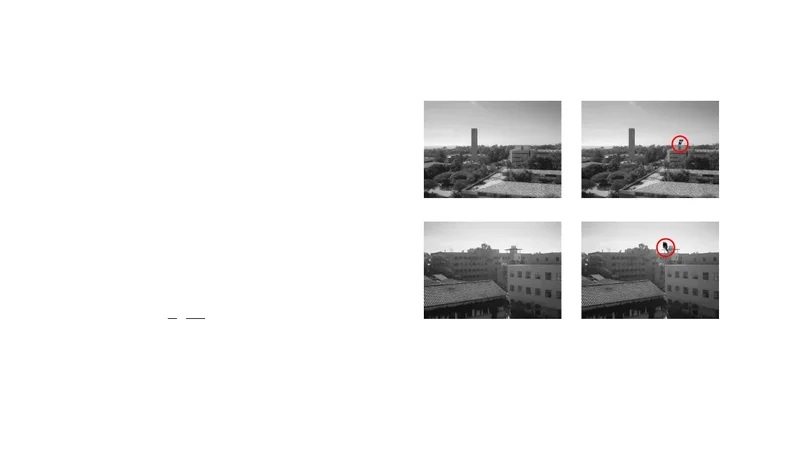
We design persistent surveillance strategies for the quickest detection of anomalies taking place in an environment of interest. From a set of predefined regions in the environment, a team of autonomous vehicles collects noisy observations, which a control center processes. The overall objective is to minimize detection delay while maintaining the false alarm rate below a desired threshold. We present joint (i) anomaly detection algorithms for the control center and (ii) vehicle routing policies. For the control center, we propose parallel cumulative sum (CUSUM) algorithms (one for each region) to detect anomalies from noisy observations. For the vehicles, we propose a stochastic routing policy, in which the regions to be visited are chosen according to a probability vector. We study stationary routing policy (the probability vector is constant) as well as adaptive routing policies (the probability vector varies in time as a function of the likelihood of regional anomalies). In the context of stationary policies, we design a performance metric and minimize it to design an efficient stationary routing policy. Our adaptive policy improves upon the stationary counterpart by adaptively increasing the selection probability of regions with high likelihood of anomaly. Finally, we show the effectiveness of the proposed algorithms through numerical simulations and a persistent surveillance experiment.
💡 Research Summary
The paper tackles the problem of rapidly detecting spatially distributed anomalies using a team of autonomous vehicles that continuously monitor a set of predefined regions. Observations collected by the vehicles are noisy, and a central control center processes them to decide whether an anomaly has occurred in any region. The overarching goal is to minimize the expected detection delay while keeping the false‑alarm rate below a prescribed threshold. To achieve this, the authors jointly design (i) a statistical detection algorithm for the control center and (ii) a stochastic routing policy for the vehicles.
For detection, a parallel CUSUM (cumulative sum) test is run independently on each region. Under the null hypothesis the observations follow a known distribution (mean μ0, variance σ²); under the alternative the mean shifts to μ1. The CUSUM statistic for region i is updated as Si(t)=max{0, Si(t‑1)+log
📜 Original Paper Content
🚀 Synchronizing high-quality layout from 1TB storage...