Observed Limits on Charge Exchange Contributions to the Diffuse X-ray Background
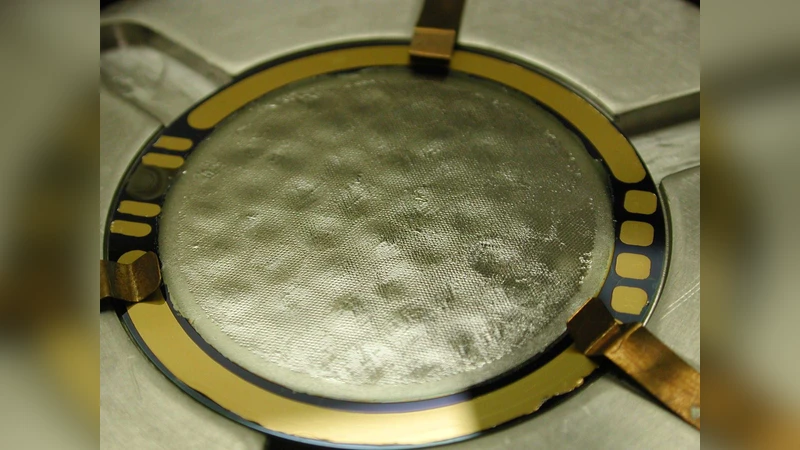
We present a high resolution spectrum of the diffuse X-ray background from 0.1 to 1 keV for a ~1 region of the sky centered at l=90, b=+60 using a 36-pixel array of microcalorimeters flown on a sounding rocket. With an energy resolution of 11 eV FWHM below 1 keV, the spectrum’s observed line ratios help separate charge exchange contributions originating within the heliosphere from thermal emission of hot gas in the interstellar medium. The X-ray sensitivity below 1 keV was reduced by about a factor of four from contamination that occurred early in the flight, limiting the significance of the results. The observed centroid of helium-like O VII is 568+2-3 eV at 90% confidence. Since the centroid expected for thermal emission is 568.4 eV while for charge exchange is 564.2 eV, thermal emission appears to dominate for this line complex, consistent with much of the high-latitude O VII emission originating in 2-3 x 10^6 K gas in the Galactic halo. On the other hand, the observed ratio of C VI Ly gamma to Ly alpha is 0.3+-0.2. The expected ratios are 0.04 for thermal emission and 0.24 for charge exchange, indicating that charge exchange must contribute strongly to this line and therefore potentially to the rest of the ROSAT R12 band usually associated with 10^6 K emission from the Local Hot Bubble. The limited statistics of this experiment and systematic uncertainties due to the contamination require only >32% thermal emission for O VII and >20% from charge exchange for C VI at the 90% confidence level. An experimental gold coating on the silicon substrate of the array greatly reduced extraneous signals induced on nearby pixels from cosmic rays passing through the substrate, reducing the triggered event rate by a factor of 15 from a previous flight of the instrument.
💡 Research Summary
The paper reports the first high‑resolution (≈11 eV FWHM below 1 keV) spectrum of the diffuse X‑ray background (DXB) obtained with a 36‑pixel microcalorimeter array flown on a sounding rocket. The target field is a ~1 deg² region centered at Galactic coordinates l = 90°, b = +60°, a high‑latitude sky area that overlaps the ROSAT R12 band (0.1–0.284 keV) and is traditionally interpreted as emission from the Local Hot Bubble (LHB) at ~10⁶ K. The authors aim to disentangle two possible contributors to this emission: (1) thermal (collisional) emission from hot interstellar gas (e.g., the Galactic halo) and (2) charge‑exchange (CX) emission produced when highly ionised solar‑wind ions capture electrons from neutral atoms in the heliosphere.
During the flight a contaminant film formed on the entrance filter, reducing the instrument’s low‑energy sensitivity by roughly a factor of four. Despite this limitation, the authors were able to measure the centroid of the He‑like O VII triplet at 568 eV (+2/‑3 eV, 90 % confidence). Thermal plasma models predict a centroid of 568.4 eV, whereas CX models predict 564.2 eV. The observed value therefore favours a dominant thermal origin for O VII, consistent with emission from 2–3 × 10⁶ K gas in the Galactic halo rather than from the LHB.
In contrast, the H‑like C VI line ratios provide a different picture. The measured Ly γ/Ly α ratio is 0.3 ± 0.2. Thermal emission predicts a ratio of only 0.04, while CX predicts ≈0.24. The observed ratio is much closer to the CX expectation, indicating that CX contributes substantially to the C VI emission. Since C VI lies within the ROSAT R12 band, this result suggests that a non‑negligible fraction of the R12 flux, usually ascribed to 10⁶ K thermal plasma in the LHB, may actually arise from heliospheric CX.
By propagating statistical uncertainties and systematic errors from the contamination, the authors derive 90 % confidence lower limits: at least 32 % of the O VII flux must be thermal, and at least 20 % of the C VI flux must be CX‑generated. These limits demonstrate that both processes are present, but that their relative importance varies with ion species and energy band.
A notable technical advance described in the paper is the application of a thin gold coating on the silicon substrate of the microcalorimeter array. This coating suppresses spurious signals induced in neighbouring pixels by cosmic‑ray particles traversing the substrate, reducing the overall trigger rate by a factor of 15 compared with the previous flight of the same instrument. This improvement significantly enhances the signal‑to‑noise ratio and enables the detection of faint line features.
In summary, the study provides direct spectroscopic evidence that high‑latitude O VII emission is primarily thermal, originating from hot halo gas, while C VI (and possibly other low‑energy lines in the R12 band) receives a strong CX contribution from the heliosphere. The work highlights the importance of accounting for CX when interpreting soft X‑ray background measurements and underscores the value of high‑resolution microcalorimeter spectroscopy for separating overlapping astrophysical processes. Future missions with longer exposure times, improved filter cleanliness, and broader sky coverage will be essential to quantify the CX fraction across the entire sky and to refine models of the Local Hot Bubble and Galactic halo.