Energies and pressures in viruses: contribution of nonspecific electrostatic interactions
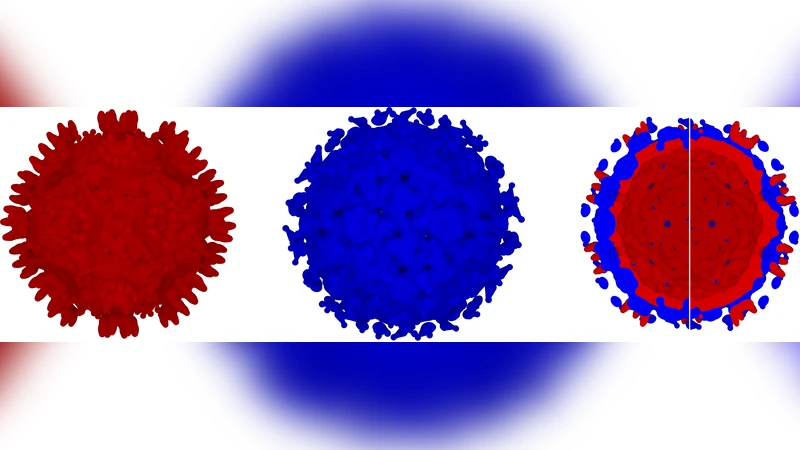
We summarize some aspects of electrostatic interactions in the context of viruses. A simplified but, within well defined limitations, reliable approach is used to derive expressions for electrostatic energies and the corresponding osmotic pressures in single-stranded RNA viruses and double-stranded DNA bacteriophages. The two types of viruses differ crucially in the spatial distribution of their genome charge which leads to essential differences in their free energies, depending on the capsid size and total charge in a quite different fashion. Differences in the free energies are trailed by the corresponding characteristics and variations in the osmotic pressure between the inside of the virus and the external bathing solution.
💡 Research Summary
The paper provides a concise yet thorough physical analysis of how nonspecific electrostatic interactions contribute to the energetics and osmotic pressures of viruses, focusing on two archetypal families: single‑stranded RNA (ssRNA) viruses and double‑stranded DNA (dsDNA) bacteriophages. Starting from the observation that viral capsids are essentially rigid, highly symmetric shells—most often icosahedral—the authors model the capsid surface as a continuous distribution of positive and negative charges derived from lysine/arginine and aspartate/glutamate residues, respectively. By converting discrete atomic charges into smooth scalar fields, they obtain a realistic description of the electrostatic landscape surrounding the capsid.
The core of the theoretical framework is a linearized Poisson‑Boltzmann (PB) treatment (Debye‑Hückel approximation) that yields an analytical expression for the electrostatic potential ψ(r) inside and outside the capsid. The electrostatic free energy is then written as F_el = ½∫ρ(r)ψ(r)d³r, where ρ(r) is the total charge density. This approach allows the authors to derive simple scaling laws that relate the free energy to the capsid radius R, the total genome charge Q, the ionic strength (through the Debye length κ⁻¹), and the dielectric constant ε of the aqueous medium.
A key insight emerges when the two virus families are compared. In ssRNA viruses the genome is spread relatively uniformly throughout the capsid interior, so the charge distribution can be approximated by a uniformly charged sphere. The resulting electrostatic free energy scales as Q²/(ε R) multiplied by a dimensionless screening function f(κR). Consequently, the osmotic pressure Π = −∂F_el/∂V drops rapidly with increasing capsid volume, typically remaining in the range of a few tens of kilopascals.
In contrast, dsDNA bacteriophages pack their genome at very high density in a tightly wound spool near the capsid axis. This geometry is best described as a charged cylinder of radius a with linear charge density λ. The corresponding free energy scales as (λ² L)/(ε) · g(κa), where L is the total DNA length and g is a screening function for a cylindrical charge. Because the DNA charge is concentrated, the resulting internal pressure is much larger—often several hundred kilopascals—and shows only a weak dependence on capsid size. This high pressure is experimentally observed as the driving force for DNA ejection during infection and also defines the mechanical limits of the capsid.
The authors discuss several limitations of their model. The linear PB approximation neglects nonlinear effects that become important at high charge densities or in the presence of multivalent ions (e.g., Mg²⁺). The model also ignores specific ion–protein interactions, the mechanical stiffness of the nucleic acid, and localized charge patches such as positively charged protein tails that bind the genome. Despite these simplifications, the scaling analysis captures the dominant trends seen in experiments and provides a clear physical picture: capsid size, total charge, and genome spatial organization together dictate the balance between attractive electrostatic binding and repulsive osmotic pressure.
Finally, the paper outlines future directions, suggesting that incorporating full nonlinear PB theory, Monte‑Carlo simulations of ion correlations, and atomistic calculations of protein charge states would refine the quantitative predictions. Extending the framework to include other forces—van der Waals, hydrophobic, and entropic contributions from genome confinement—could yield a comprehensive free‑energy landscape for viral assembly and disassembly. The work thus bridges a gap between abstract electrostatic theory and concrete virological phenomena, offering valuable guidance for antiviral strategies, virus‑based nanomaterial design, and the broader understanding of how physical forces shape biological self‑assembly.
Comments & Academic Discussion
Loading comments...
Leave a Comment