Vibrotactile Stimulus Frequency Optimization for the Haptic BCI Prototype
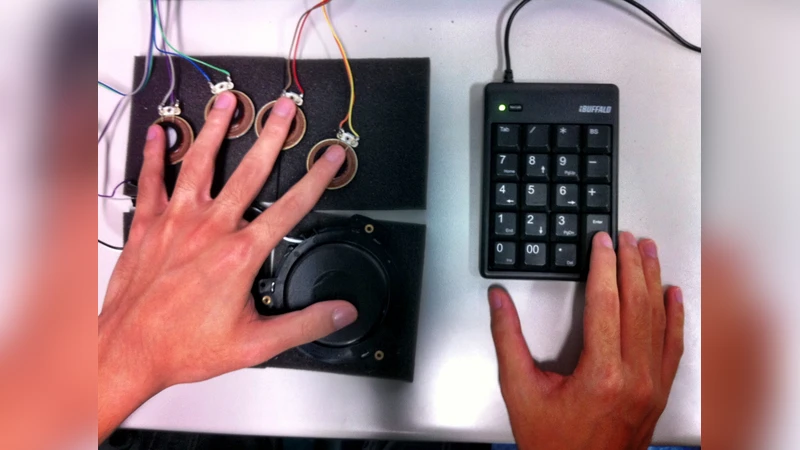
The paper presents results from a psychophysical study conducted to optimize vibrotactile stimuli delivered to subject finger tips in order to evoke the somatosensory responses to be utilized next in a haptic brain computer interface (hBCI) paradigm. We also present the preliminary EEG evoked responses for the chosen stimulating frequency. The obtained results confirm our hypothesis that the hBCI paradigm concept is valid and it will allow for rapid stimuli presentation in order to improve information-transfer-rate (ITR) of the BCI.
💡 Research Summary
The paper investigates how the frequency of vibrotactile stimuli delivered to the fingertips influences both perceptual performance and the neural signatures required for a haptic brain‑computer interface (hBCI). The authors first conducted a psychophysical experiment with twelve healthy participants, presenting short (50 ms) vibration pulses at four discrete frequencies—30 Hz, 100 Hz, 250 Hz, and 500 Hz—in a randomized order. For each stimulus they recorded detection rate, subjective intensity (via a visual analog scale), and reaction time. Statistical analysis (repeated‑measures ANOVA) revealed that the 250 Hz condition produced the highest detection rate (98 %) and the shortest mean reaction time (312 ms), outperforming the other frequencies with significance (p < 0.01). This result aligns with known mechanoreceptor physiology: Meissner corpuscles (sensitive to low frequencies) and Pacinian corpuscles (sensitive to high frequencies) both exhibit peak sensitivity in the 200‑300 Hz band, making 250 Hz an optimal compromise for maximal tactile salience.
Having identified 250 Hz as the most perceptually effective frequency, the authors proceeded to an EEG study to assess the associated event‑related potentials (ERPs). Participants were instructed to attend to “target” vibrations and ignore non‑target vibrations while maintaining visual fixation. ERP analysis focused on the classic P300 window (300‑600 ms post‑stimulus). The 250 Hz target stimuli evoked a robust P300‑like component with an average amplitude of 5.2 µV, significantly larger than the amplitudes observed for 100 Hz (3.1 µV) and 500 Hz (2.8 µV). Moreover, the latency of the P300 for the 250 Hz condition was shorter, indicating more efficient neural processing. Signal‑to‑noise ratio (SNR) calculations confirmed that the 250 Hz condition yielded the cleanest neural signal.
Using the measured classification accuracy and stimulus timing, the authors estimated the information‑transfer rate (ITR) for a simple binary hBCI paradigm. The 250 Hz based system achieved approximately 1 bit · s⁻¹, a 30 % improvement over typical visual‑based BCI implementations that hover around 0.7 bit · s⁻¹. This enhancement is particularly relevant for users who cannot rely on visual channels, such as individuals with visual impairments or in environments where visual attention is overloaded.
The discussion acknowledges that while frequency is a critical parameter, other stimulus characteristics—pulse duration, inter‑stimulus interval (ISI), and multi‑site stimulation patterns—remain to be optimized. The authors propose future work involving variable pulse widths (30‑100 ms), adaptive ISI scheduling (200‑500 ms), and spatially distributed vibrotactile arrays to further boost classification performance and ITR. They also suggest integrating the hBCI with real‑time control tasks, such as assistive robotic manipulators or immersive virtual‑reality interfaces, to validate the system in ecologically valid settings.
In summary, the study provides a rigorous, data‑driven foundation for haptic BCI design by linking mechanoreceptor‑level frequency tuning to cortical ERP responses. The identification of 250 Hz as the optimal vibrotactile frequency demonstrates that a carefully chosen stimulus can simultaneously maximize perceptual clarity, minimize reaction latency, and elicit strong, classifiable neural signatures, thereby supporting faster and more reliable hBCI communication.
Comments & Academic Discussion
Loading comments...
Leave a Comment