Residual Cooling and Persistent Star Formation amid AGN Feedback in Abell 2597
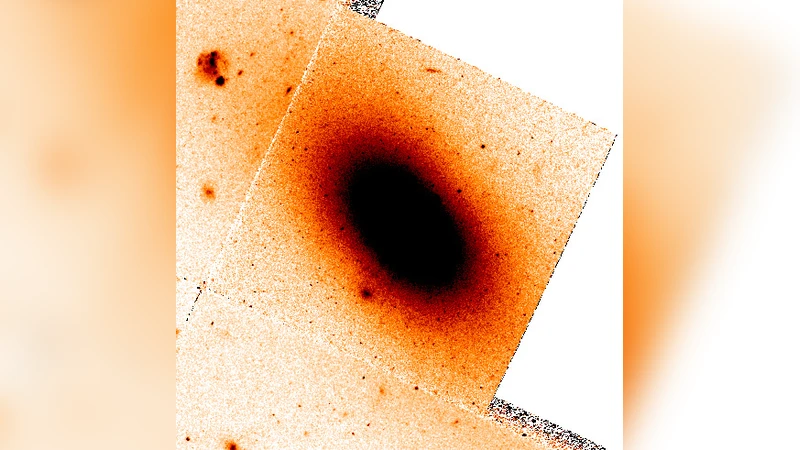
New Chandra X-ray and Herschel FIR observations enable a multiwavelength study of active galactic nucleus (AGN) heating and intracluster medium (ICM) cooling in the brightest cluster galaxy of Abell 2597. The new Chandra observations reveal the central < 30 kiloparsec X-ray cavity network to be more extensive than previously thought, and associated with enough enthalpy to theoretically inhibit the inferred classical cooling flow. Nevertheless, we present new evidence, consistent with previous results, that a moderately strong residual cooling flow is persisting at 4%-8% of the classically predicted rates in a spatially structured manner amid the feedback-driven excavation of the X-ray cavity network. New Herschel observations are used to estimate warm and cold dust masses, a lower-limit gas-to-dust ratio, and a star formation rate consistent with previous measurements. The cooling time profile of the ambient X-ray atmosphere is used to map the locations of the observational star formation entropy threshold as well as the theoretical thermal instability threshold. Both lie just outside the < 30 kpc central region permeated by X-ray cavities, and star formation as well as ionized and molecular gas lie interior to both. The young stars are distributed in an elongated region that is aligned with the radio lobes, and their estimated ages are both younger and older than the X-ray cavity network, suggesting both jet-triggered as well as persistent star formation over the current AGN feedback episode. Bright X-ray knots that are coincident with extended Ly-alpha and FUV continuum filaments motivate a discussion of structured cooling from the ambient hot atmosphere along a projected axis that is perpendicular to X-ray cavity and radio axis. We conclude that the cooling ICM is the dominant contributor of the cold gas reservoir fueling star formation and AGN activity in the Abell 2597 BCG.
💡 Research Summary
The authors present a comprehensive multi‑wavelength investigation of the brightest cluster galaxy (BCG) in the cool‑core cluster Abell 2597, combining deep Chandra X‑ray imaging with new Herschel far‑infrared (FIR) observations. The Chandra data reveal that the central X‑ray cavity network, previously thought to be confined within ~30 kpc, is more extensive, comprising at least four clear cavities and additional ghost cavities. By measuring cavity volumes and surrounding pressures, the total enthalpy is estimated at ~10⁵⁸ erg, sufficient in principle to offset the classical cooling flow that would otherwise deposit several thousand solar masses of gas per year.
Despite this energetic feedback, spectral analysis using multi‑temperature APEC models shows a residual cooling flow persisting at 4 %–8 % of the classical rate, corresponding to ~30–70 M⊙ yr⁻¹. The cooling‑time profile of the ambient intracluster medium (ICM) indicates that the ratio of cooling time to free‑fall time (t_cool/t_ff) falls below the critical value of ~10 within the same ~30 kpc region, satisfying the theoretical thermal‑instability criterion.
Herschel PACS and SPIRE photometry, complemented by CO(1‑0) and