Quantum Theory, namely the pure and reversible theory of information
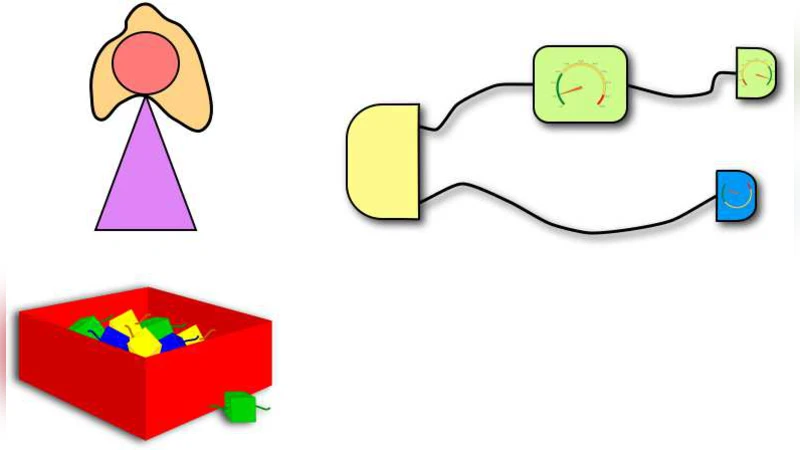
After more than a century since its birth, Quantum Theory still eludes our understanding. If asked to describe it, we have to resort to abstract and ad hoc principles about complex Hilbert spaces. How is it possible that a fundamental physical theory cannot be described using the ordinary language of Physics? Here we offer a contribution to the problem from the angle of Quantum Information, providing a short non-technical presentation of a recent derivation of Quantum Theory from information-theoretic principles. The broad picture emerging from the principles is that Quantum Theory is the only standard theory of information compatible with the purity and reversibility of physical processes.
💡 Research Summary
The paper tackles one of the most persistent puzzles in modern physics: why quantum theory, despite being a century‑old cornerstone of our understanding of the microscopic world, still resists a clear, physically intuitive description. The authors argue that the difficulty stems from trying to explain quantum phenomena with the traditional language of classical physics—particles, waves, and deterministic trajectories—rather than with the language of information. They present a recent derivation of quantum theory that starts from two simple, information‑theoretic postulates: purity and reversibility.
Purity asserts that every physical system can be described by a pure state, i.e., a state that carries maximal information about the system and is not a statistical mixture of other states. In operational terms, this means that the state space contains extremal points that cannot be written as convex combinations of other states. Reversibility requires that any allowed physical transformation can be undone; mathematically, each transformation must have an inverse that is also a physically admissible operation. In other words, the dynamics must be represented by bijective maps that preserve the informational content of the system.
To formalize these ideas, the authors adopt the framework of generalized probabilistic theories (GPTs). In a GPT, states are vectors in a convex set, measurements are linear functionals (effects), and transformations are linear maps that send the state set onto itself. Within this framework, the two postulates dramatically restrict the admissible theories.
First, consider a classical probabilistic theory. Its state space is a simplex (the set of probability distributions over a finite set of outcomes). While this space satisfies purity in the sense that the vertices are pure deterministic states, it fails the reversibility requirement: most stochastic maps (e.g., coarse‑graining or noisy channels) are irreversible and increase Shannon entropy, reflecting an unavoidable loss of information. Consequently, classical theory cannot be the unique theory that fulfills both postulates.
Second, the authors examine theories based on complex Hilbert spaces. Here, pure states are unit vectors (or rank‑one projectors) and transformations are unitary operators. Unitaries are bijective and preserve the inner product, guaranteeing that the von Neumann entropy of a pure state remains zero under evolution—exactly the reversibility demanded by the second postulate. Moreover, the convex hull of pure states yields the set of density matrices, which reproduces the full statistical structure of quantum mechanics. The authors show that any GPT satisfying both purity and reversibility must be isomorphic to this Hilbert‑space construction, up to a choice of field (real, complex, or quaternionic). By invoking additional physically motivated constraints (e.g., the existence of continuous reversible transformations), the complex Hilbert space is singled out, reproducing standard quantum theory.
A key strength of this derivation is its minimalism. Earlier reconstructions of quantum mechanics often required a larger set of axioms—such as “no‑signalling,” “local tomography,” or “information causality”—which, while plausible, add layers of conceptual baggage. By contrast, the purity‑reversibility pair is both intuitively clear and directly tied to the operational notion of information flow. The paper demonstrates how quintessential quantum features—entanglement, the no‑cloning theorem, and the impossibility of deterministic state discrimination—emerge naturally from these two principles. For instance, entanglement appears as the unique way to combine pure states of subsystems while preserving overall purity, and the no‑cloning theorem follows from the impossibility of a reversible map that would duplicate an arbitrary pure state.
The authors also discuss the broader implications of viewing quantum theory as the only standard information theory compatible with pure, reversible dynamics. They suggest that any future extension—such as quantum gravity, quantum thermodynamics, or theories with additional degrees of freedom—must respect these two core constraints if it is to retain the familiar quantum structure. In practice, this means that new physical ingredients should be introduced as additional systems or symmetries that couple to the existing Hilbert‑space framework, rather than as a replacement of its foundational postulates.
In conclusion, the paper provides a concise, non‑technical exposition of a powerful reconstruction: quantum mechanics is not an arbitrary mathematical edifice but the inevitable outcome of demanding that physical processes be both information‑preserving (pure) and invertible (reversible). This perspective reframes the “weirdness” of quantum theory as a reflection of deep informational principles, offering a clearer conceptual foundation for both teaching quantum mechanics and guiding future theoretical developments.