Control and femtosecond time-resolved imaging of torsion in a chiral molecule
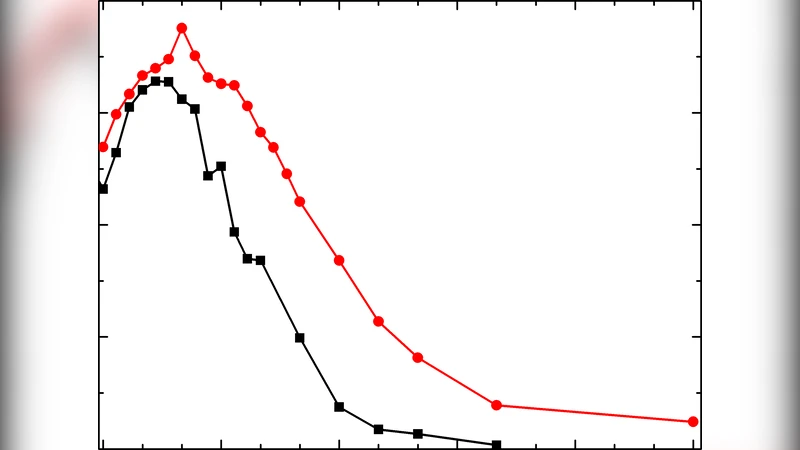
We study how the combination of long and short laser pulses, can be used to induce torsion in an axially chiral biphenyl derivative (3,5-difluoro-3’,5’-dibromo-4’-cyanobiphenyl). A long, with respect to the molecular rotational periods, elliptically polarized laser pulse produces 3D alignment of the molecules, and a linearly polarized short pulse initiates torsion about the stereogenic axis. The torsional motion is monitored in real-time by measuring the dihedral angle using femtosecond time-resolved Coulomb explosion imaging. Within the first 4 picoseconds, torsion occurs with a period of 1.25 picoseconds and an amplitude of 3 degrees in excellent agreement with theoretical calculations. At larger times the quantum states of the molecules describing the torsional motion dephase and an almost isotropic distribution of the dihedral angle is measured. We demonstrate an original application of covariance analysis of two-dimensional ion images to reveal strong correlations between specific ejected ionic fragments from Coulomb explosion. This technique strengthens our interpretation of the experimental data.
💡 Research Summary
This paper investigates the use of a combination of long and short laser pulses to induce torsion in an axially chiral biphenyl derivative, specifically 3,5-difluoro-3’,5’-dibromo-4’-cyanobiphenyl. A long elliptically polarized laser pulse is used for generating 3D alignment of the molecules, while a short linearly polarized pulse initiates torsion about the stereogenic axis. The torsional motion is monitored in real-time using femtosecond time-resolved Coulomb explosion imaging. Within the first 4 picoseconds, torsion occurs with a period of 1.25 picoseconds and an amplitude of 3 degrees, which aligns well with theoretical calculations. As more time elapses, the quantum states describing the torsional motion dephase, leading to a nearly isotropic distribution of the dihedral angle being measured. The paper also introduces a novel application of covariance analysis on two-dimensional ion images to reveal strong correlations between specific ejected ionic fragments from Coulomb explosion events, which strengthens the interpretation of experimental data.
Comments & Academic Discussion
Loading comments...
Leave a Comment