Socio-economic models of divorces in different societies
Population dynamic of getting divorced depends on many global factors, including social norms, economy, law or demographics as well as individual factors like the level of interpersonal or problem-sol
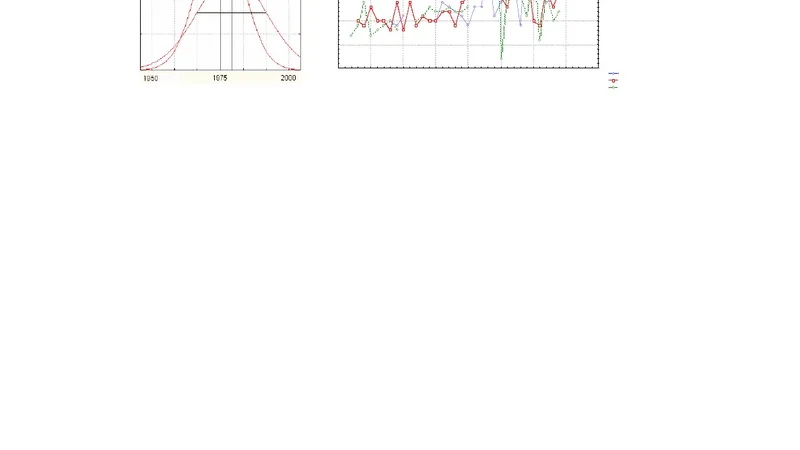
Population dynamic of getting divorced depends on many global factors, including social norms, economy, law or demographics as well as individual factors like the level of interpersonal or problem-solving skills of the spouses. We sought to find such a relationship incorporating only quantitative variables and test theoretical model considering phase transition between coupling (pairs) and free (single) preferential states as a function of social and economic. The analyzed data has been collected by UN across almost all the countries since 1948. Our first approach is followed by Bouchaud’s model of social network of opinions, which works well with dynamics of fertility rates in postwar Europe. Unfortunately, we postulate that this pure sociological and pure economic approach fail in general. Thus, we did some observation about why it went wrong and where economy (e. g. Poland) or law (e. g. Portugal) has bigger impact on getting divorce than social pressure.
💡 Research Summary
The paper attempts to model the dynamics of divorce across societies using only quantitative variables, drawing on a large UN dataset that records divorce rates for more than 150 countries from 1948 onward. The authors adopt a “phase‑transition” perspective, treating marriage and single status as two preferential states that individuals can switch between under the influence of social pressure and economic‑legal forces. To formalize this idea they borrow Bouchaud’s opinion‑network model, which has previously been applied to post‑war European fertility trends. In the adapted framework, a coupling constant J represents the strength of social norms (peer, family, cultural expectations) while an external field h aggregates economic conditions (GDP per capita, unemployment, income inequality) and legal factors (complexity of divorce procedures, legislative restrictions).
Data preprocessing involves normalising a set of social indicators (e.g., religious adherence, traditional‑value indices) and economic‑legal indicators, then mapping them onto J and h for each country‑year observation. The authors implement a stochastic Markov‑chain transition rule: the probability that a married individual becomes divorced in the next period is proportional to exp
📜 Original Paper Content
🚀 Synchronizing high-quality layout from 1TB storage...