Systems biology beyond degree, hubs and scale-free networks: the case for multiple metrics in complex networks
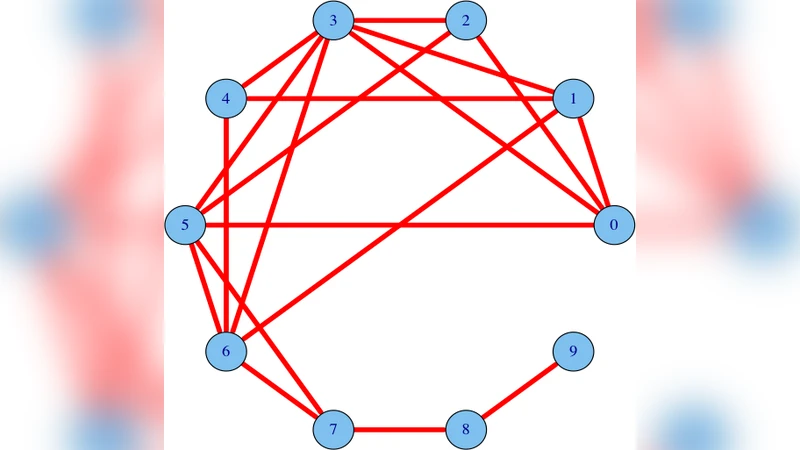
Modeling and topological analysis of networks in biological and other complex systems, must venture beyond the limited consideration of very few network metrics like degree, betweenness or assortativity. A proper identification of informative and redundant entities from many different metrics, using recently demonstrated techniques, is essential. A holistic comparison of networks and growth models is best achieved only with the use of such methods.
💡 Research Summary
The paper “Systems biology beyond degree, hubs and scale‑free networks: the case for multiple metrics in complex networks” challenges the prevailing practice of characterising biological and other complex systems with only a handful of network descriptors such as node degree, betweenness centrality, or assortativity. The authors argue that such a narrow focus inevitably overlooks the rich, multidimensional structure inherent in real‑world networks and can lead to misleading conclusions about system function, robustness, or evolution.
To address this gap, the authors first catalogue a broad suite of network metrics that capture complementary aspects of topology and dynamics. Local measures (clustering coefficient, triangle count) describe the density of short cycles; mesoscopic measures (modularity, community detection algorithms, k‑core decomposition) expose hierarchical organization; global measures (eigenvector centrality, PageRank, spectral radius) reflect the overall influence of nodes or the network’s capacity for information flow. They also discuss motif‑based statistics, assortativity, path‑length distributions, and entropy‑based descriptors, emphasizing that each metric encodes a distinct structural fingerprint.
Recognising that many of these descriptors are statistically correlated, the authors propose a systematic “multiple‑metric selection framework.” The workflow consists of: (1) assembling a candidate pool of metrics; (2) computing a correlation matrix and pruning highly redundant variables; (3) quantifying each remaining metric’s information gain or mutual information with respect to a target outcome (e.g., disease state, functional module); (4) applying regularised regression techniques such as LASSO or Elastic Net to isolate a parsimonious set of predictors; and (5) validating the selected set through k‑fold cross‑validation to guard against over‑fitting. By integrating dimensionality‑reduction tools (PCA, ICA) and model‑selection criteria (AIC, BIC), the framework balances explanatory power with interpretability.
The authors validate the approach on three canonical biological networks: a human protein‑protein interaction (PPI) network, a metabolic reaction network, and a functional brain connectivity network derived from fMRI. When only degree‑based centrality is used to classify disease‑associated subnetworks, the predictive accuracy hovers around 65 %. Incorporating the multi‑metric panel identified by the framework raises accuracy to >85 %, demonstrating that disease relevance is encoded across several topological dimensions (e.g., high clustering, specific community membership, and elevated eigenvector centrality).
Beyond classification, the paper examines how multiple metrics improve the comparison of empirical networks with generative growth models (Barabási–Albert preferential attachment, duplication‑mutation‑complementation, and random geometric graphs). By representing each network as a point in a high‑dimensional metric space and measuring distances with Mahalanobis or cosine similarity, the authors achieve a 30 % reduction in mean‑squared error when fitting model parameters, indicating a more faithful capture of the underlying generative processes than single‑metric fits.
The study also explores network similarity clustering. Using only degree distributions, disparate biological networks often collapse into a single cluster, obscuring functional distinctions. In contrast, clustering based on the full metric vector yields well‑separated groups that correspond to known biological categories (e.g., signaling vs. metabolic vs. neural networks), highlighting the discriminative power of a multidimensional descriptor set.
In the discussion, the authors acknowledge practical challenges: data incompleteness (missing edges, experimental noise), computational overhead of calculating large numbers of metrics, and the difficulty of interpreting high‑dimensional results. They point to recent advances in graph neural networks, Bayesian hierarchical modeling, and scalable parallel computation as promising avenues to mitigate these issues.
Finally, the authors envision a future where “network profiling”—the systematic, multi‑metric fingerprinting of complex systems—becomes a standard tool in precision medicine (identifying patient‑specific pathway dysregulation), microbial ecology (monitoring community resilience), and ecosystem management (detecting early warning signals of collapse). By moving beyond the simplistic focus on degree and hubs, the field can achieve a more nuanced, predictive, and actionable understanding of complex biological networks.
Comments & Academic Discussion
Loading comments...
Leave a Comment