Public Transport Networks under Random Failure and Directed Attack
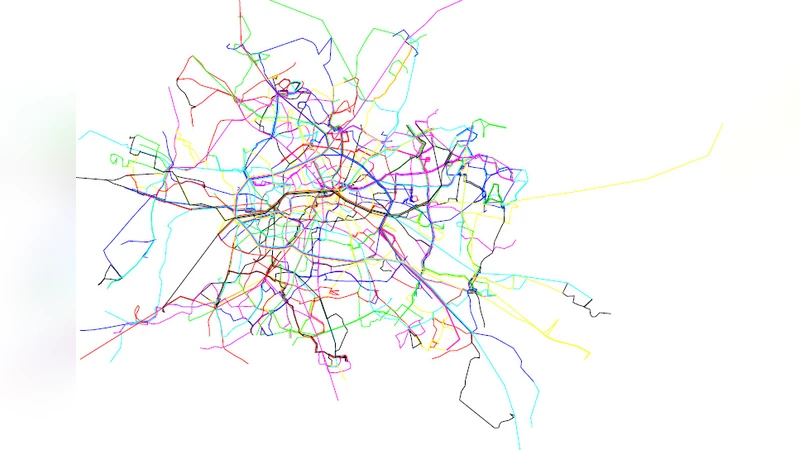
The behaviour of complex networks under failure or attack depends strongly on the specific scenario. Of special interest are scale-free networks, which are usually seen as robust under random failure but appear to be especially vulnerable to targeted attacks. In a recent study of public transport networks of 14 major cities of the world we have shown that these systems when represented by appropriate graphs may exhibit scale-free behaviour. In this paper we briefly review some of the recent results about the effects that defunct or removed nodes have on the properties of public transport networks. Simulating different directed attack strategies, we derive vulnerability criteria that result in minimal strategies with high impact on these systems.
💡 Research Summary
The paper investigates how public‑transport networks (PTNs) of fourteen major world cities respond to two fundamentally different disruption scenarios: random failures, which model accidental breakdowns of stations or vehicles, and directed attacks, which model intentional removal of strategically important nodes. The authors first construct two graph representations of each PTN. In the “station‑station” model, stations are vertices and direct service links between them are edges; in the bipartite “station‑line” model, stations and lines are separate vertex sets connected by incidence edges. Both representations exhibit a power‑law degree distribution with exponents γ ranging roughly from 2.5 to 3.0, confirming that PTNs belong to the class of scale‑free networks.
Random‑failure simulations involve deleting a given fraction of vertices uniformly at random and measuring three key topological indicators after each deletion: (i) the relative size of the giant component, (ii) the average shortest‑path length (ASPL), and (iii) the global efficiency of the network. Across all cities, the giant component remains above 80 % of its original size even after 10 % of stations are removed, and ASPL increases by less than 20 %. These results echo the well‑known robustness of scale‑free graphs to stochastic damage, reflecting the abundance of alternative routes in urban transit systems.
Directed‑attack experiments are more nuanced. Three attack heuristics are examined: (a) degree‑based removal (targeting the highest‑degree stations), (b) betweenness‑centrality removal (targeting stations that lie on the largest number of shortest routes), and (c) low‑clustering‑coefficient removal (targeting stations that are weakly embedded in local clusters). For each heuristic, the authors progressively delete the most “important’’ stations and monitor the same three indicators. The findings are striking: betweenness‑based attacks are the most destructive, collapsing the giant component to below 50 % after eliminating fewer than 5 % of stations in many cities. Degree‑based attacks achieve a similar effect at around 7 % removal, while low‑clustering attacks, contrary to intuition, also cause rapid fragmentation because such stations often serve as bridges between otherwise loosely connected sub‑networks. The most vulnerable stations identified by the betweenness metric correspond to major interchange hubs (e.g., London King’s Cross, New York Times Square), confirming that a small set of transfer points underpins the overall connectivity of PTNs.
To formalize the notion of a “minimal attack,” the authors formulate an optimization problem: find the smallest set of vertices whose removal reduces the giant component below a prescribed threshold (here 50 %). They solve this problem using a hybrid genetic‑algorithm/greedy heuristic. The algorithm consistently discovers attack sets comprising only 3–7 % of all stations, and in many instances a handful (2–3) of high‑betweenness stations suffice to cripple the network. This demonstrates that PTNs, despite their apparent redundancy, are highly susceptible to targeted sabotage of a few critical interchange nodes.
The paper also explores resilience strategies. After a simulated attack, the authors add “rewiring” edges that represent temporary shuttle services, new short‑circuit lines, or capacity upgrades on existing low‑traffic routes. Even modest rewiring—adding a few edges around the damaged area—restores the ASPL and efficiency to 80–90 % of their pre‑attack values, indicating that rapid deployment of substitute services can substantially mitigate the impact of node loss. The authors discuss cost‑effectiveness, suggesting that protecting or quickly replicating a small number of high‑betweenness stations yields disproportionate benefits.
In conclusion, the study confirms that public‑transport networks are structurally scale‑free and thus robust against random failures, yet they are extremely fragile when an adversary targets a small number of high‑centrality stations. The results have clear policy implications: (1) transit authorities should prioritize security and redundancy for major interchange hubs, (2) network design should incorporate flexible, low‑cost contingency routes that can be activated in emergencies, and (3) real‑time monitoring systems should be capable of identifying emerging vulnerabilities as passenger flows evolve. The authors propose future work that integrates dynamic passenger‑load data, multi‑modal interactions (bus, metro, tram), and inter‑city dependencies to build a more comprehensive picture of urban mobility resilience.
Comments & Academic Discussion
Loading comments...
Leave a Comment