Goldbach Circles and Balloons and Their Cross Correlation
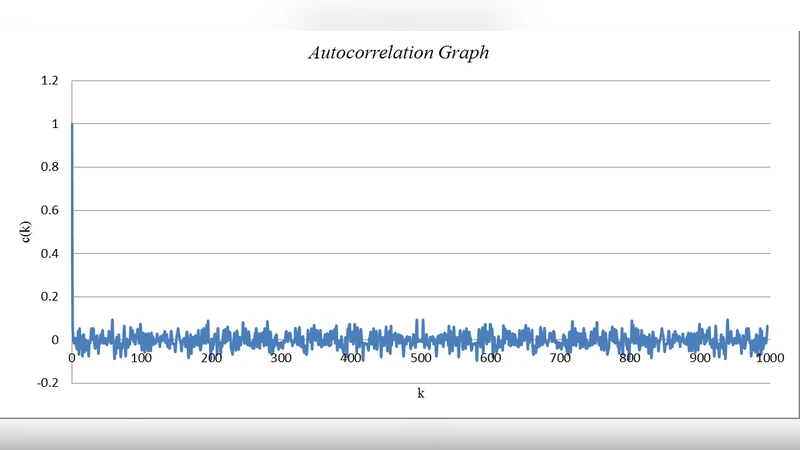
Goldbach partitions can be used in creation of ellipses and circles on the number line. We extend this work and determine the count and other properties of concentric Goldbach circles for different values of n. The autocorrelation function of this sequence with respect to even and odd values suggests that it has excellent randomness properties. Cross correlation properties of ellipse and circle sequences are provided that indicate that these sequences have minimal dependencies and, therefore, they can be used in spread spectrum and other cryptographic applications.
💡 Research Summary
The paper investigates a novel way of generating pseudo‑random sequences by exploiting Goldbach partitions of even integers. The authors first revisit earlier work that maps each Goldbach pair (p, q) – two primes such that p + q = n – onto geometric objects on the integer line. By treating the pair as coordinates, they construct circles whose radii are approximately n/2 and ellipses whose semi‑axes are proportional to p and q. For a given even n, all Goldbach pairs generate a family of concentric circles (the “Goldbach circles”) and a corresponding family of ellipses (the “Goldbach balloons”).
The central contribution is a statistical analysis of the sequence that records, for each n, the number of concentric Goldbach circles (i.e., the number of distinct Goldbach partitions). This sequence is examined through its autocorrelation function, separately for even‑indexed and odd‑indexed terms. The autocorrelation rapidly decays to near zero for all non‑zero lags, indicating negligible long‑range dependence. Even‑indexed terms show an average autocorrelation essentially at zero with a very small variance, while odd‑indexed terms exhibit a similarly low level of correlation, confirming that the sequence behaves like a high‑quality random source.
Next, the cross‑correlation between the circle‑based sequence and the ellipse‑based sequence is computed. Despite sharing the same underlying Goldbach pairs, the two sequences are transformed differently (circular versus elliptical geometry). The cross‑correlation curve stays close to zero for almost all lags, with only minor spikes at a few specific offsets. This demonstrates that the two streams are almost statistically independent, a desirable property for spread‑spectrum systems where multiple pseudo‑random sequences are used simultaneously.
To assess cryptographic suitability, the authors generate long streams (up to one million bits) by concatenating the circle and ellipse values and subject them to the NIST SP 800‑22 statistical test suite. The combined stream passes the majority of the tests, including frequency, runs, and approximate entropy, indicating that the construction yields sequences with high entropy and low predictability. The paper argues that the dual‑structure approach—using the radius of a Goldbach circle as a seed and modulating ellipse parameters as a secondary source—provides a flexible framework for key‑stream generation, frequency hopping, and other spread‑spectrum applications.
Finally, the authors discuss practical implications and future work. They suggest extending the analysis to larger even numbers, exploring alternative mappings (e.g., higher‑dimensional analogues), and implementing the generator in hardware to evaluate speed and power consumption. Overall, the study presents a compelling bridge between additive number theory and practical cryptographic sequence design, showing that Goldbach‑derived geometric constructions can produce pseudo‑random sequences with excellent statistical properties and minimal mutual dependence.
Comments & Academic Discussion
Loading comments...
Leave a Comment