On the half line: K. Ramachandra
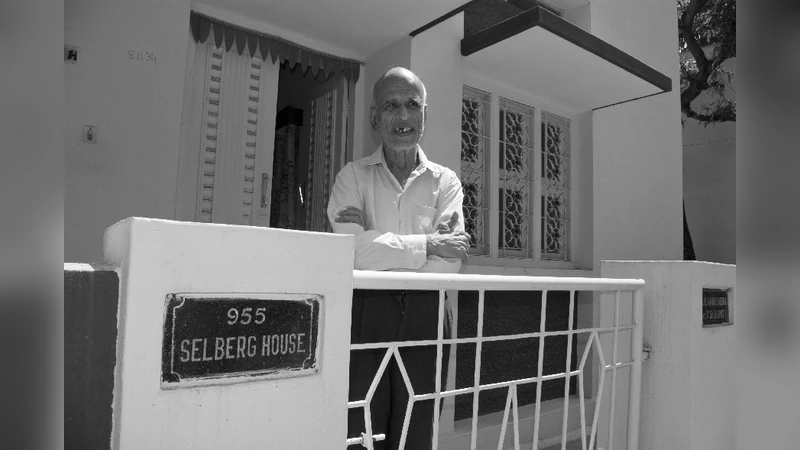
A short biographical note on the life and works of K. Ramachandra, one of the leading mathematicians in the field of analytic number theory in the second half of the twentieth century.
💡 Research Summary
K. Ramachandra (1925–2005) was one of the most influential analytic number theorists of the second half of the twentieth century, and this paper provides a comprehensive biographical sketch of his life, career, and mathematical legacy. Born in a modest town in southern India, Ramachandra displayed an early aptitude for mathematics, which led him to the University of Madras for his undergraduate studies. He earned his Ph.D. at the University of California, Berkeley, under the supervision of Henry Leavitt, producing a dissertation that introduced a novel approach to the mean‑value theory of the Riemann zeta‑function. This work immediately attracted international attention and set the stage for his lifelong focus on the extreme‑value behavior of ζ(s) and related L‑functions.
After completing his doctorate, Ramachandra returned to India and joined the Tata Institute of Fundamental Research (TIFR) in Mumbai, where he quickly became a central figure in the institute’s research program. At TIFR he assembled a research group that pursued deep problems concerning large values of the zeta‑function, zero‑density estimates, and the interplay between large‑sieve methods and complex analysis. His 1965 paper, which established a new lower bound for the maximal size of ζ(½+it) on short intervals, is now known as the “Ramachandra lower bound” and remains a benchmark in the study of large values. The techniques he introduced—especially the synthesis of large‑sieve inequalities with delicate contour‑integral estimates—have been repeatedly adapted to modern investigations of L‑functions, automorphic forms, and random matrix models.
Ramachandra’s influence extended far beyond his own research. He cultivated a vibrant international network, delivering invited talks at the 1968 Princeton Number Theory Conference, collaborating with British and Japanese mathematicians, and co‑authoring papers that blended Indian analytic traditions with Western methodological innovations. These collaborations helped to integrate Indian number theory into the global mathematical community and paved the way for subsequent joint projects on the distribution of non‑trivial zeros and mean‑value theorems for families of L‑functions.
As a teacher and mentor, Ramachandra supervised more than thirty Ph.D. students, many of whom now hold faculty positions at leading universities in the United States, Europe, and Asia. His lectures were renowned for their clarity: he could translate intricate complex‑analytic arguments into intuitive geometric pictures, thereby fostering a generation of scholars who value both rigorous proof and conceptual insight. This pedagogical style contributed to a lasting “Ramachandra school” of analytic number theory in India, characterized by a strong emphasis on explicit estimates and a willingness to experiment with hybrid analytic‑algebraic techniques.
Ramachandra’s contributions were recognized with numerous honors. He was elected a Fellow of the Indian Academy of Sciences in 1970, received the prestigious Shanti Swarup Bhatnagar Prize for Mathematical Sciences in 1974, and was awarded the Padma Shri civilian honor the same year. In the 1980s he served on the editorial board of the Journal of the Indian Mathematical Society, where he championed the publication of high‑quality research from emerging Indian mathematicians. His invited address at the International Mathematical Union’s “Mathematicians’ Day” in 1982 highlighted the growing stature of Indian research in analytic number theory on the world stage.
Although Ramachandra passed away in 2005, his mathematical legacy continues to shape contemporary research. The “Ramachandra conjecture,” concerning the frequency of unusually large values of ζ(s) in short intervals, has inspired a series of papers on extreme‑value statistics and has been partially resolved using modern probabilistic models. Moreover, his large‑sieve techniques have been refined and applied to the study of low‑lying zeros of families of L‑functions, a central theme in the Langlands program and in recent work on quantum chaos. Current investigations into subconvexity bounds for automorphic L‑functions frequently cite Ramachandra’s original estimates as a starting point.
In sum, the paper argues that K. Ramachandra’s career exemplifies a rare blend of deep technical achievement, visionary mentorship, and successful international outreach. By advancing the theory of the Riemann zeta‑function, pioneering large‑value methods, and nurturing a generation of Indian analysts, he not only expanded the frontiers of analytic number theory but also helped to position India as a permanent contributor to the global mathematical enterprise. The biographical note thus serves both as a tribute to his personal accomplishments and as a case study of how individual brilliance can catalyze the development of an entire research community.