INTEGRAL/IBIS nine-year Galactic Hard X-Ray Survey
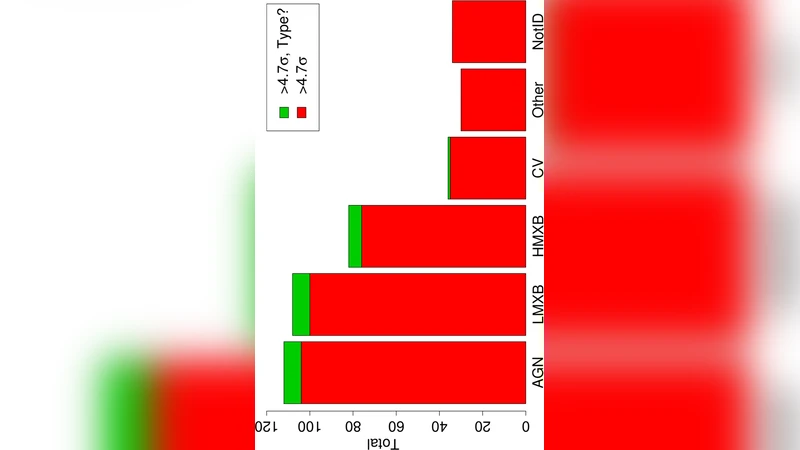
Context. The INTEGRAL observatory operating in a hard X-ray/gamma domain has gathered a large observational data set over nine years starting in 2003. Most of the observing time was dedicated to the Galactic source population study, making possible the deepest Galactic survey in hard X-rays ever compiled. Aims. We aim to perform a Galactic survey that can be used as the basis of Galactic source population studies, and perform mapping of the Milky Way in hard X-rays over the maximum exposure available at |b|<17.5 deg. Methods. We used sky reconstruction algorithms especially developed for the high quality imaging of INTEGRAL/IBIS data. Results. We present sky images, sensitivity maps, and catalogs of detected sources in the three energy bands 17-60, 17-35, and 35-80 keV in the Galactic plane at |b|<17.5 deg. The total number of sources in the reference 17-60 keV band includes 402 objects exceeding a 4.7 sigma detection threshold on the nine-year time-averaged map. Among the identified sources with known and tentatively identified natures, 253 are Galactic objects (108 low-mass X-ray binaries, 82 high-mass X-ray binaries, 36 cataclysmic variables, and 27 are of other types), and 115 are extragalactic objects, including 112 active galactic nuclei (AGNs) and 3 galaxy clusters. The sample of Galactic sources with S/N>4.7 sigma has an identification completeness of ~92%, which is valuable for population studies. Since the survey is based on the nine-year sky maps, it is optimized for persistent sources and may be biased against finding transients.
💡 Research Summary
The paper presents the results of a nine‑year hard X‑ray survey of the Galactic plane performed with the IBIS/ISGRI detector aboard the INTEGRAL observatory. The authors compiled all observations obtained between 2003 and 2012 that cover Galactic latitudes |b| < 17.5°, resulting in an unprecedented exposure of roughly 150 Ms. By applying a dedicated sky‑reconstruction pipeline—incorporating multi‑scale filtering, sophisticated background modeling, and weighted averaging of individual pointings—they produced time‑averaged mosaics in three energy bands: 17‑35 keV, 35‑80 keV, and the combined 17‑60 keV band.
Source detection was carried out on the 17‑60 keV mosaic using a conservative 4.7σ threshold, which corresponds to a false‑positive probability of ≈10⁻⁴. The resulting sensitivity map reaches a typical depth of ~0.3 mCrab (≈2 × 10⁻¹² erg cm⁻² s⁻¹), with variations reflecting the non‑uniform exposure across the plane. In total, 402 distinct sources were identified in the reference band. Of these, 253 are Galactic objects, broken down as follows: 108 low‑mass X‑ray binaries (LMXBs), 82 high‑mass X‑ray binaries (HMXBs), 36 cataclysmic variables (CVs), and 27 sources of other Galactic nature (including pulsars, supernova remnants, and unidentified hard X‑ray emitters). The remaining 115 sources are extragalactic: 112 active galactic nuclei (AGNs) and three galaxy clusters.
Cross‑matching with existing optical, radio, and soft‑X‑ray catalogs allowed the authors to assign firm or tentative classifications to the vast majority of detections, achieving an identification completeness of ~92% for the Galactic sample. This high completeness makes the catalog a robust foundation for population studies, such as constructing luminosity functions, assessing spatial distributions, and testing binary‑evolution models. The authors note that LMXBs are strongly concentrated toward the Galactic bulge, whereas HMXBs trace the spiral arms and regions of recent star formation, consistent with theoretical expectations.
Because the survey is based on time‑averaged mosaics, it is optimized for persistent emitters and is intrinsically biased against short‑lived transients. Consequently, a fraction of the known transient HMXBs and other variable sources may be under‑represented. The authors discuss this limitation and propose that future work should incorporate time‑resolved analyses to recover such objects.
In addition to the source catalog, the paper provides sky images, sensitivity maps, and detailed descriptions of the data‑processing methodology, enabling other researchers to reproduce the results or apply the techniques to other INTEGRAL datasets. The authors also suggest that combining this survey with data from newer hard X‑ray missions (e.g., NuSTAR, SRG/eROSITA) will improve source characterization, extend the energy coverage, and refine the census of both Galactic and extragalactic hard X‑ray populations.
Overall, the nine‑year INTEGRAL/IBIS Galactic hard X‑ray survey represents the deepest, most complete hard X‑ray view of the Milky Way to date, delivering a high‑quality catalog that will serve as a benchmark for studies of compact objects, binary evolution, and the high‑energy background of the Universe.