Acquisition probability of multi-user UWB systems in the presence of a novel synchronization approach
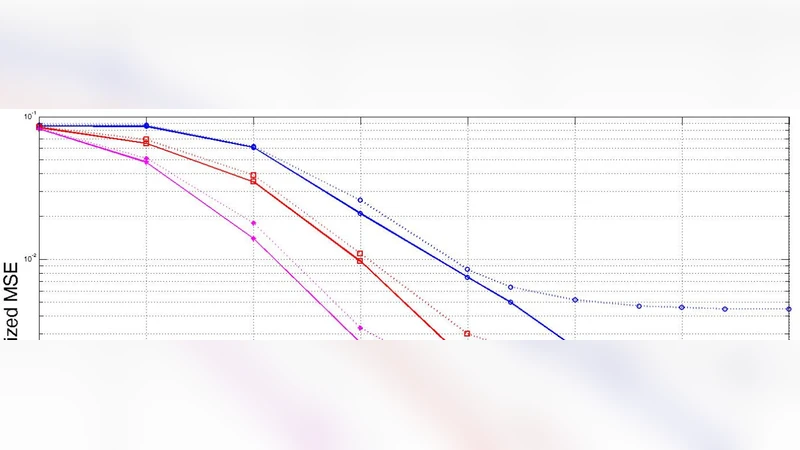
In this paper, to synchronize Ultra Wideband (UWB) systems in ad-hoc multi-user environments, we propose a new timing acquisition approach for achieving a good performance despite the difficulties to get there. Synchronization constraints are caused by the ultra-short emitted waveforms nature of UWB signals. Used in [1, 2] for single-user environments, our timing acquisition approach is based on two successive stages or floors. Extended for multi-user environments, the used algorithm is a combination between coarse synchronization based on timing with dirty templates (TDT) acquisition scheme and a new fine synchronization scheme developed in [3-6] which conduct to an improved estimate of timing offset. In this work, we develop and test this method in both data-aided (DA) and non-data-aided (NDA) modes. Simulation results and comparisons are also given to confirm performance improvement of our approach (in terms of mean square error and acquisition probability) compared to the original TDT algorithm in multi-user environments, especially in the NDA mode.
💡 Research Summary
The paper addresses the challenging problem of timing acquisition in ultra‑wideband (UWB) communication systems operating in ad‑hoc multi‑user environments. UWB signals consist of extremely short pulses that provide fine ranging resolution but also make synchronization difficult, especially when several users transmit simultaneously and their pulses overlap. Traditional timing‑acquisition methods such as Timing with Dirty Templates (TDT) have been successfully applied to single‑user scenarios, offering robustness against noise and multipath. However, in multi‑user settings the dirty template becomes contaminated by interference from other users, leading to degraded timing estimates.
To overcome this limitation, the authors propose a two‑stage acquisition architecture that combines the conventional coarse TDT stage with a newly developed fine‑synchronization stage. In the coarse stage, the received signal is correlated with a pre‑computed dirty template over multiple frames, and the resulting correlation values are averaged to obtain an initial estimate of the timing offset. This stage works in both data‑aided (DA) and non‑data‑aided (NDA) modes, making it suitable for systems where pilot symbols may be unavailable.
The fine stage builds on the authors’ earlier work (references