On firm specific characteristics of pharmaceutical generics and incentives to permanence under fuzzy conditions
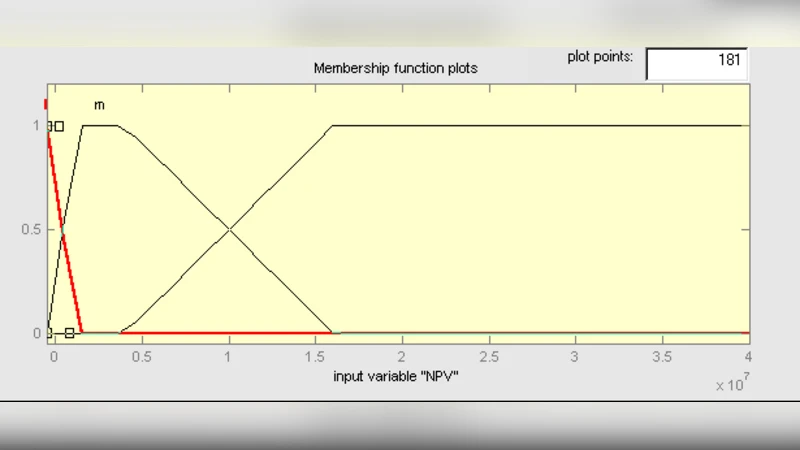
The aim of this paper is to develop a methodology that is useful for analysing from a microeconomic perspective the incentives to entry, permanence and exit in the market for pharmaceutical generics under fuzzy conditions. In an empirical application of our proposed methodology, the potential towards permanence of labs with different characteristics has been estimated. The case we deal with is set in an open market where global players diversify into different national markets of pharmaceutical generics. Risk issues are significantly important in deterring decision makers from expanding in the generic pharmaceutical business. However, not all players are affected in the same way and/or to the same extent. Small, non-diversified generics labs are in the worse position. We have highlighted that the expected NPV and the number of generics in the portfolio of a pharmaceutical lab are important variables, but that it is also important to consider the degree of diversification. Labs with a higher potential for diversification across markets have an advantage over smaller labs. We have described a fuzzy decision support system based on the Mamdani model in order to determine the incentives for a laboratory to remain in the market both when it is stable and when it is growing.
💡 Research Summary
The paper presents a novel methodology for evaluating entry, permanence, and exit incentives of pharmaceutical generic manufacturers under conditions of high uncertainty. Recognizing that traditional econometric approaches often fail to capture the non‑linear relationships and expert judgment inherent in this market, the authors adopt a Mamdani‑type fuzzy decision support system (FDSS). Three key determinants are modeled as fuzzy inputs: expected net present value (NPV) representing financial health, the number of generic products in a firm’s portfolio indicating scale economies, and the degree of market diversification measured by the number of national markets served and the sales share across them. Each input is expressed through three linguistic terms (“low,” “medium,” “high”) with triangular or Gaussian membership functions calibrated to the empirical data.
A rule base comprising 27 IF‑THEN statements is constructed from industry expert interviews and a review of the literature. An example rule reads: “If NPV is high and product count is medium and diversification is low, then permanence incentive is medium.” Rules are weighted to resolve conflicts and ordered by priority. During inference, the minimum operator determines rule activation, the maximum operator aggregates the consequent fuzzy sets, and the centroid method defuzzifies the output to yield a quantitative “permanence incentive” score.
The empirical application uses data from 2015‑2022 for twelve major generic firms operating in multiple countries. For each firm, the authors calculate NPV, count the active generic products, and tally the number of markets entered. Feeding these values into the FDSS produces a ranking of permanence incentives. Results show a clear stratification: large, diversified multinationals consistently receive high incentive scores, whereas small, non‑diversified labs obtain low scores, indicating a higher risk of market exit. Notably, a high diversification level can compensate for a medium NPV, elevating the permanence score, which underscores the risk‑mitigation value of geographic spread. Sensitivity analysis confirms that while NPV exerts the strongest influence, the interaction between diversification and product count is also significant.
The authors discuss policy implications, suggesting that regulators should lower entry barriers for small generic manufacturers and provide incentives for market diversification (e.g., export subsidies, partnership facilitation). For firms, the findings advise a strategic shift from merely expanding product lines to actively pursuing geographic diversification to reduce exposure to market‑specific shocks.
In conclusion, the Mamdani‑based fuzzy model proves effective in translating qualitative expert knowledge into a quantitative decision‑making tool for a highly uncertain industry. The approach offers a transparent, adaptable framework that can be extended with dynamic fuzzy systems or integrated with Bayesian networks to capture temporal market dynamics in future research.