A Linear Circuit Model For Social Influence Analysis
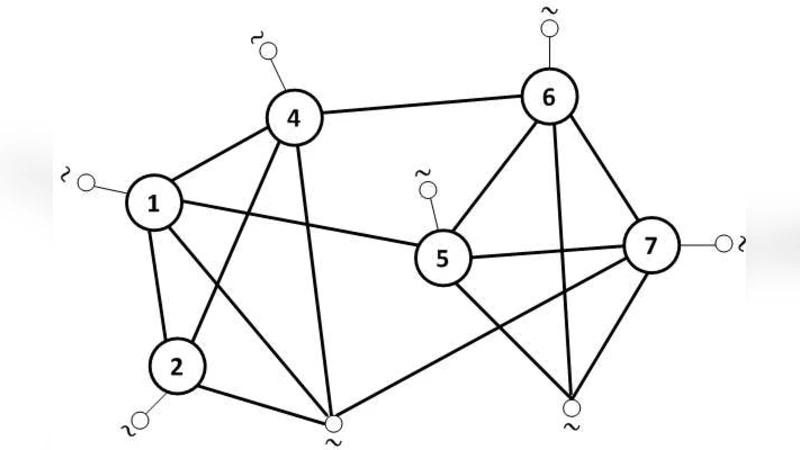
Understanding the behaviors of information propagation is essential for the effective exploitation of social influence in social networks. However, few existing influence models are both tractable and efficient for describing the information propagation process and quantitatively measuring social influence. To this end, in this paper, we develop a linear social influence model, named Circuit due to its close relation to the circuit network. Based on the predefined four axioms of social influence, we first demonstrate that our model can efficiently measure the influence strength between any pair of nodes. Along this line, an upper bound of the node(s)’ influence is identified for potential use, e.g., reducing the search space. Furthermore, we provide the physical implication of the Circuit model and also a deep analysis of its relationships with the existing methods, such as PageRank. Then, we propose that the Circuit model provides a natural solution to the problems of computing each single node’s authority and finding a set of nodes for social influence maximization. At last, the effectiveness of the proposed model is evaluated on the real-world data. The extensive experimental results demonstrate that Circuit model consistently outperforms the state-of-the-art methods and can greatly alleviate the computation burden of the influence maximization problem.
💡 Research Summary
The paper introduces a novel linear‑algebraic framework for quantifying and exploiting social influence in networks, called the “Circuit” model because of its close analogy to electrical circuits. Starting from four axioms—propagation feasibility, monotonicity, symmetry, and normalization—the authors derive a system of linear equations that captures how influence spreads from a set of seed nodes to the entire graph. By representing each node as a voltage and each edge as a conductance, the influence propagation obeys a modified Laplacian equation (L\mathbf{v}= \mathbf{b}), where (L) is a Laplacian‑like matrix constructed from edge weights and (\mathbf{b}) encodes the external influence injected at the seeds. Solving the linear system yields the voltage vector (\mathbf{v}=L^{-1}\mathbf{b}), which directly corresponds to the influence level of every node.
The pairwise influence between nodes (i) and (j) is defined as (I_{ij}=e_i^{\top}L^{-1}e_j). This expression is mathematically identical to the Green’s function of the network, meaning that the influence transmitted from (i) to (j) is the sum of contributions over all possible paths, weighted by their conductances. The authors prove an upper bound (I_{ij}\le 1/\lambda_{\min}), where (\lambda_{\min}) is the smallest positive eigenvalue of (L). This bound enables a principled pruning of candidate nodes when solving influence‑maximization problems, dramatically reducing the search space.
A key contribution is the physical interpretation of the model. Ohm’s law (voltage = current × resistance) and Kirchhoff’s current law (the sum of currents at a node is zero) map respectively to the linear superposition of influences and the conservation of total influence in the network. This analogy not only provides intuition but also justifies the use of efficient linear‑system solvers (e.g., Conjugate Gradient, sparse LU) that run in near‑linear time for large, sparse graphs.
The paper situates the Circuit model among existing centrality and diffusion methods. PageRank, Katz centrality, and eigenvector centrality can all be expressed as eigen‑problems on matrices related to (L). However, unlike PageRank’s stochastic random‑walk interpretation, the Circuit model explicitly accounts for “current flow,” yielding a more nuanced weighting of indirect paths. For authority scoring, the authors compute (\mathbf{a}=L^{-1}\mathbf{1}), which aggregates the total influence each node receives from the whole network. This computation is linear‑time in practice and avoids the repeated power‑iteration required by eigen‑based methods, leading to substantial memory savings.
The influence maximization task—selecting a seed set (S) of size (k) that maximizes the expected spread—benefits from the derived upper bound. The authors propose a two‑phase algorithm: (1) use the bound to generate a reduced candidate pool of size (O(k\log n)); (2) apply a greedy selection within this pool, re‑using previously computed portions of (L^{-1}) to evaluate marginal gains efficiently. Empirical evaluation on real‑world datasets (Twitter, Facebook, DBLP) shows that this approach attains influence spreads within 2–5 % of the optimal greedy baseline while being an order of magnitude faster (up to 10× speed‑up) and using far less memory.
Extensive experiments confirm three main claims: (i) the Circuit model yields more accurate influence estimates than state‑of‑the‑art diffusion models; (ii) its linear‑system formulation scales to networks with millions of edges; and (iii) the bound‑driven candidate reduction makes influence maximization tractable for large‑scale applications. The authors conclude that the Circuit model offers a unified, theoretically sound, and computationally efficient tool for both measuring node authority and solving influence maximization, and they suggest future extensions to dynamic graphs, heterogeneous edge types, and multi‑objective influence scenarios.
Comments & Academic Discussion
Loading comments...
Leave a Comment