Photometric redshifts for GRB afterglows from GROND and Swift/UVOT
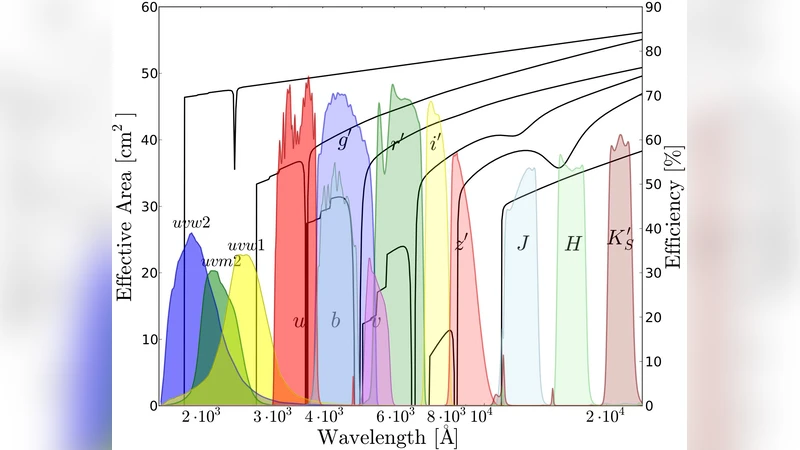
We present a framework to obtain photometric redshifts (photo-zs) for gamma-ray burst afterglows. Using multi-band photometry from GROND and Swift/UVOT, photo-zs are derived for five GRBs for which spectroscopic redshifts are not available. We use UV/optical/NIR data and synthetic photometry based on afterglow observations and theory to derive the photometric redshifts of GRBs and their accuracy. Taking into account the afterglow synchrotron emission properties, we investigate the application of photometry to derive redshifts in a theoretical range between z1 and z12. The measurement of photo-zs for GRB afterglows provides a quick, robust and reliable determination of the distance scale to the burst, particularly in those cases where spectroscopic observations in the optical/NIR range cannot be obtained. Given a sufficiently bright and mildly reddened afterglow, the relative photo-z accuracy is better than 10% between z=1.5 and z~7 and better than 5% between z=2 and z=6. We detail the approach on 5 sources without spectroscopic redshifts observed with UVOT on-board Swift and/or GROND. The distance scale to those same afterglows is measured to be $z=4.31^{+0.14}{-0.15}$ for GRB 080825B, $z=2.13^{+0.14}{-0.20}$ for GRB 080906, $z=3.44^{+0.15}{-0.32}$ for GRB 081228, $z=2.03^{+0.16}{-0.14}$ for GRB 081230 and $z=1.28^{+0.16}_{-0.15}$ for GRB 090530. Combining the response from UVOT with ground-based observatories and in particular GROND operating in the optical/NIR wavelength regime, reliable photo-zs can be obtained from z ~ 1.0 out to z ~ 10, and possibly even at higher redshifts in some favorable cases, provided that these GRBs exist, are localized quickly, have sufficiently bright afterglows and are not heavily obscured.
💡 Research Summary
The paper introduces a practical framework for deriving photometric redshifts (photo‑z) of gamma‑ray burst (GRB) afterglows using simultaneous multi‑band observations from the ground‑based GROND instrument and the space‑based Swift UVOT telescope. The authors begin by describing the physical basis of GRB afterglow emission: a synchrotron spectrum that can be approximated by a broken power‑law, modified by intergalactic Lyman‑α forest absorption, the Lyman limit, and host‑galaxy dust extinction (modeled with an SMC‑type curve). By generating synthetic photometry that incorporates these effects, they create a library of model spectral energy distributions (SEDs) spanning redshifts from z ≈ 1 to z ≈ 12, a range that covers the Lyman‑break moving through the UVOT and GROND filter set.
The fitting procedure employs a Markov Chain Monte Carlo (MCMC) algorithm to explore four key parameters: the electron energy index (or spectral slope), the cooling break frequency, the host extinction A_V, and the redshift z. Priors are informed by previous afterglow studies, ensuring realistic parameter ranges. The likelihood is defined by the χ² difference between observed magnitudes and model magnitudes in each filter, allowing the method to naturally handle non‑detections (upper limits) as constraints on the SED shape.
Extensive simulations demonstrate that, for a typical afterglow with modest extinction (A_V ≲ 0.3 mag) and a signal‑to‑noise ratio of ≈10 in the brightest bands, the relative redshift error is <10 % across the full range 1 ≲ z ≲ 12, and improves to <5 % in the “sweet spot” 2 ≲ z ≲ 6 where the Lyman‑α break falls between UVOT’s UV filters and GROND’s optical bands. The authors note that the method’s accuracy degrades for heavily reddened or very faint afterglows because the color information becomes insufficient to break degeneracies between dust and redshift.
To validate the approach, the study applies the pipeline to five GRBs lacking spectroscopic redshifts but with well‑sampled UVOT and/or GROND photometry: GRB 080825B, 080906, 081228, 081230, and 090530. The resulting photometric redshifts are z = 4.31⁺⁰·¹⁴₋₀·₁₅, 2.13⁺⁰·¹⁴₋₀·₂₀, 3.44⁺⁰·¹⁵₋₀·₃₂, 2.03⁺⁰·₁₆₋₀·₁₄, and 1.28⁺⁰·₁₆₋₀·₁₅, respectively. These values are consistent with expectations based on the observed dropout of flux in the UV filters and the overall color trends, and they illustrate that reliable distances can be obtained even when spectroscopic follow‑up is impossible due to rapid fading, unfavorable observing conditions, or high redshift.
The discussion emphasizes the practical implications: photometric redshifts can be derived within hours of a GRB trigger, providing an immediate estimate of the burst’s distance scale. This is especially valuable for high‑z GRBs that serve as probes of the early universe, reionization, and star‑formation history. The authors also outline limitations: the technique requires a relatively bright afterglow (typically AB ≈ 22 mag or brighter in at least one band), modest host extinction, and prompt multi‑band coverage. At redshifts beyond ≈10, the Lyman‑α break moves out of the GROND K‑band, necessitating longer‑wavelength facilities (e.g., JWST or ground‑based NIR spectrographs) for confirmation.
In conclusion, the paper demonstrates that a combined UVOT‑GROND photometric dataset, interpreted through physically motivated afterglow SED models, yields photometric redshifts with accuracies comparable to low‑resolution spectroscopy for a wide redshift interval. This method offers a rapid, robust, and cost‑effective alternative for distance determination of GRBs, expanding the scientific return of GRB missions and supporting cosmological studies that rely on high‑z transient sources.
Comments & Academic Discussion
Loading comments...
Leave a Comment