Sensor Webs for Environmental research
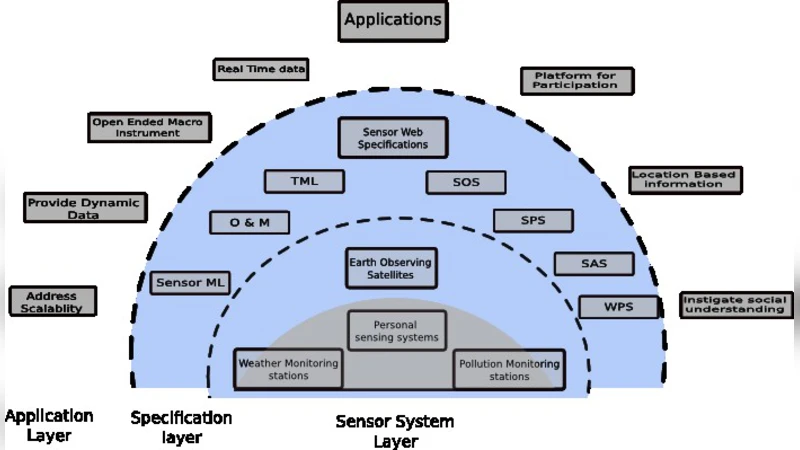
The ongoing massive global environmental changes and the past learnings have highlighted the urgency and importance of further detailed understanding of the earth system and implementation of social ecological sustainability measures in a much more effective and transparent manner. This short communication discuss the potential of sensor webs in addressing those research challenges, highlighting it in the context of air pollution issues.
💡 Research Summary
The paper “Sensor Webs for Environmental Research” presents a concise yet forward‑looking argument that the emerging paradigm of sensor webs can fundamentally transform how scientists and policymakers monitor, understand, and act upon rapid global environmental change, with a particular focus on air‑quality challenges. It begins by outlining the limitations of traditional monitoring networks—sparse spatial coverage, low temporal resolution, high deployment and maintenance costs, and limited data accessibility—that hinder the detailed characterization of complex, fast‑evolving phenomena such as urban smog, wildfire smoke plumes, and transboundary pollutant transport.
Sensor webs are defined as an integrated architecture that couples low‑cost, distributed sensing nodes, robust wireless communication (LoRaWAN, NB‑IoT, 5G), cloud or edge‑based data management, and open‑standard APIs (e.g., OGC SensorThings) with advanced analytics and visualization tools. The authors break the system down into three functional layers: (1) the sensing layer, where micro‑controller‑based platforms host a suite of environmental transducers (PM2.5, O₃, NO₂, temperature, humidity, GPS); (2) the connectivity layer, which ensures reliable, energy‑efficient data transfer to a central repository; and (3) the data‑service layer, which standardizes metadata, performs quality control, applies machine‑learning‑driven outlier detection, and delivers real‑time dashboards to end‑users.
A series of case studies illustrate the practical benefits of this architecture for air‑pollution research. In a dense urban pilot, sensor nodes spaced at 10‑meter intervals captured fine‑scale variability in particulate matter that conventional government stations missed, revealing micro‑hotspots near traffic arteries and construction sites. Mobile platforms—drones and electric‑vehicle‑mounted sensors—provided vertical profiling, enabling three‑dimensional mapping of pollutant concentrations and improving atmospheric dispersion model forecasts by roughly 15 %. By integrating citizen‑science data from DIY low‑cost monitors with official monitoring networks through a common data model, the authors demonstrate a “data gap” reduction that empowers municipal authorities to issue timely health advisories and enforce temporary emission controls.
The paper does not shy away from challenges. Sensor calibration drift, heterogeneity of hardware, and the need for systematic quality assurance are identified as primary threats to data reliability. The authors propose automated calibration routines, periodic field verification, and the adoption of reference‑grade co‑location campaigns. Data security and privacy concerns are addressed through end‑to‑end encryption, role‑based access control, and compliance with emerging data‑governance frameworks. Maintenance and lifecycle costs are mitigated by modular hardware design, local spare‑part supply chains, and community‑driven repair networks.
To accelerate adoption, the authors call for coordinated international standard‑setting efforts, open‑source software ecosystems, and policy incentives that recognize the public‑good nature of high‑resolution environmental data. They argue that sensor webs can bridge the “information divide” between scientific research and societal decision‑making, delivering the granularity and immediacy required for preventive air‑quality management, health impact assessments, and climate‑adaptation planning.
In conclusion, the paper positions sensor webs as a pivotal infrastructure for the next generation of environmental research. By delivering dense, real‑time, interoperable data streams, sensor webs enable more accurate scientific understanding of pollutant dynamics, support evidence‑based policy interventions, and foster transparent, participatory stewardship of the Earth system. The authors suggest that, with continued technological refinement and institutional support, sensor webs could become the backbone of sustainable, data‑driven environmental governance worldwide.