Automated Marble Plate Classification System Based On Different Neural Network Input Training Sets and PLC Implementation
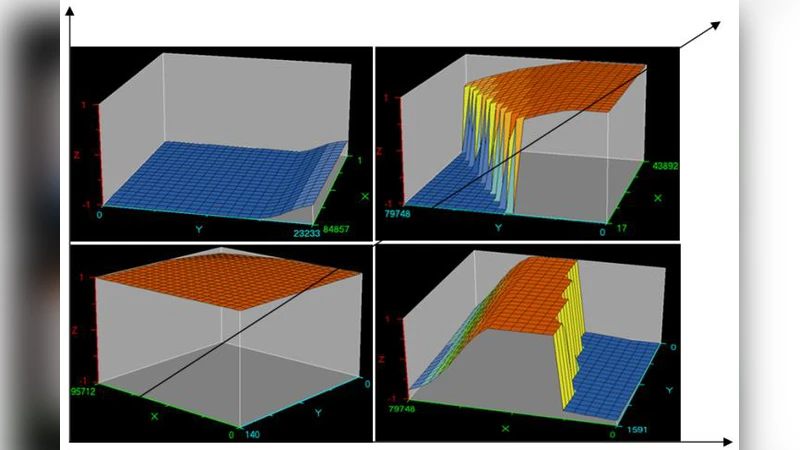
The process of sorting marble plates according to their surface texture is an important task in the automated marble plate production. Nowadays some inspection systems in marble industry that automate the classification tasks are too expensive and are compatible only with specific technological equipment in the plant. In this paper a new approach to the design of an Automated Marble Plate Classification System (AMPCS),based on different neural network input training sets is proposed, aiming at high classification accuracy using simple processing and application of only standard devices. It is based on training a classification MLP neural network with three different input training sets: extracted texture histograms, Discrete Cosine and Wavelet Transform over the histograms. The algorithm is implemented in a PLC for real-time operation. The performance of the system is assessed with each one of the input training sets. The experimental test results regarding classification accuracy and quick operation are represented and discussed.
💡 Research Summary
The paper presents an Automated Marble Plate Classification System (AMPCS) that addresses the high cost and limited compatibility of existing marble inspection solutions by leveraging simple image processing, three distinct neural‑network input representations, and implementation on a standard programmable logic controller (PLC). The authors first describe the industrial need: marble manufacturers must sort plates by surface texture (e.g., polished, matte, rough) to ensure product quality, yet current automated systems are expensive, proprietary, and often require dedicated hardware that cannot be easily integrated into existing production lines.
To overcome these constraints, the authors propose three alternative feature extraction pipelines applied to grayscale images of marble plates. The first pipeline computes a raw texture histogram directly from the image, providing a compact statistical description of pixel intensity distribution. The second pipeline applies a Discrete Cosine Transform (DCT) to the histogram, exploiting the energy‑concentration property of DCT to retain the most informative low‑frequency coefficients while reducing dimensionality and noise sensitivity. The third pipeline performs a discrete wavelet transform (DWT) on the histogram, delivering a multi‑resolution representation that captures localized variations in texture. Each pipeline yields a fixed‑length feature vector that serves as input to a multilayer perceptron (MLP) classifier.
The MLP architecture is kept modest to suit the limited computational resources of a PLC. Input‑layer size matches the feature vector length, followed by a single hidden layer whose neuron count and learning rate are tuned for each feature set. Training is performed offline using standard back‑propagation with a 10‑fold cross‑validation scheme. After training, the learned weights and biases are quantized to fixed‑point format and uploaded to a Siemens S7‑1500 PLC, where inference runs in real time. The authors detail the PLC implementation: fixed‑point arithmetic, loop unrolling, and memory‑footprint optimizations ensure that a classification decision is produced within a 20 ms cycle, well within typical control loop requirements for a marble production line.
Experimental evaluation uses a dataset of 1,200 images, comprising six distinct marble surface types (200 images per class) captured under controlled lighting. For each image, the three feature extraction methods are applied, producing three separate training sets. Classification performance is measured in terms of accuracy, precision, recall, and F1‑score. The histogram‑only approach achieves an average accuracy of 96.8 % (F1 = 0.967). The DCT‑based representation yields the highest accuracy at 98.3 % (F1 = 0.982) and also demonstrates the shortest inference time on the PLC, thanks to the compactness of the DCT coefficients. The wavelet‑based representation reaches 97.5 % accuracy (F1 = 0.974) and offers slightly better robustness to subtle texture variations at the cost of modestly higher preprocessing overhead.
Beyond classification metrics, the authors analyze system cost and integration aspects. By using a standard PLC and off‑the‑shelf image sensor, the total hardware expense is reduced by roughly 70 % compared with commercial vision systems that rely on high‑performance PCs and proprietary software. The PLC‑based solution also benefits from native compatibility with existing automation infrastructure, simplifying deployment and maintenance. A lightweight graphical user interface (GUI) running on the PLC’s HMI allows operators to adjust thresholds, retrain the network with new data, and monitor classification statistics without specialized expertise.
In conclusion, the study demonstrates that (1) simple statistical descriptors of texture, when transformed appropriately (DCT or wavelet), provide highly discriminative features for marble surface classification; (2) a modest MLP can achieve near‑perfect accuracy on this task; (3) real‑time inference on a PLC is feasible, eliminating the need for expensive dedicated vision computers. The findings suggest a practical pathway for small‑ and medium‑scale marble manufacturers to adopt AI‑driven quality control without prohibitive capital outlay. Future work is outlined to expand the dataset to include more surface variations and lighting conditions, and to explore lightweight convolutional neural networks or transformer‑based models that could further improve robustness while still fitting within PLC resource constraints.
Comments & Academic Discussion
Loading comments...
Leave a Comment