X-ray evidence for ultra-fast outflows in local AGNs
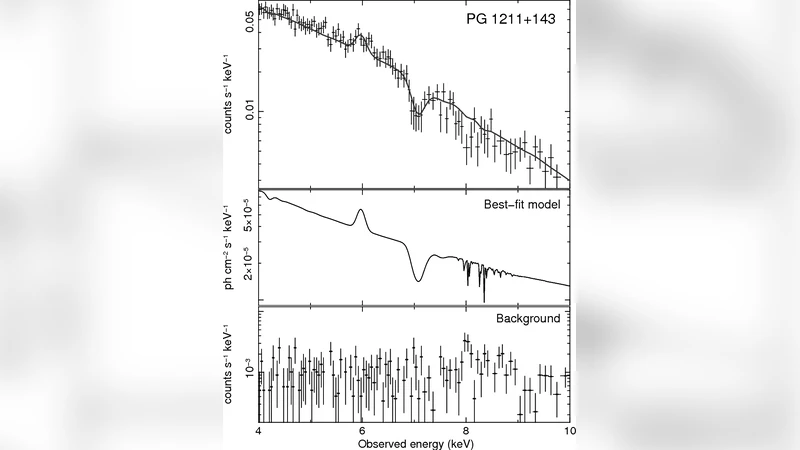
X-ray evidence for ultra-fast outflows (UFOs) has been recently reported in a number of local AGNs through the detection of blue-shifted Fe XXV/XXVI absorption lines. We present the results of a comprehensive spectral analysis of a large sample of 42 local Seyferts and 5 Broad-Line Radio Galaxies (BLRGs) observed with XMM-Newton and Suzaku. We detect UFOs in >40% of the sources. Their outflow velocities are in the range 0.03-0.3c, with a mean value of 0.14c. The ionization is high, in the range logxi3-6 erg s^{-1} cm, and also the associated column densities are large, in the interval ~10^{22}-10^{24} cm^{-2}. Overall, these results point to the presence of highly ionized and massive outflowing material in the innermost regions of AGNs. Their variability and location on sub-pc scales favor a direct association with accretion disk winds/outflows. This also suggests that UFOs may potentially play a significant role in the AGN cosmological feedback besides jets and their study can provide important clues on the connection between accretion disks, winds and jets.
💡 Research Summary
The paper presents a systematic X‑ray spectroscopic investigation of ultra‑fast outflows (UFOs) in a large sample of nearby active galactic nuclei (AGNs). Using archival XMM‑Newton EPIC‑pn and Suzaku XIS observations, the authors assembled a dataset of 42 Seyfert galaxies and 5 broad‑line radio galaxies (BLRGs), all with high‑quality spectra in the 0.5–10 keV band. After constructing baseline continuum models that include a power‑law, reflection, and, where necessary, soft excess components, the authors searched the residuals for blue‑shifted Fe XXV (6.70 keV) and Fe XXVI (6.97 keV) absorption lines. Detection thresholds were set at Δχ² > 9 (≈3σ) and confirmed with Monte‑Carlo simulations to keep the false‑positive probability below 1 %.
UFO signatures were identified in 21 out of the 47 sources, corresponding to a detection fraction of ≳40 %. The outflow velocities span 0.03 c to 0.30 c, with a mean of ~0.14 c, indicating that these winds are genuinely relativistic. Photo‑ionization modeling with XSTAR yields ionization parameters log ξ ≈ 3–6 (erg s⁻¹ cm) and column densities N_H ≈ 10²²–10²⁴ cm⁻², confirming that the absorbers are highly ionized and massive.
Multi‑epoch observations of several objects reveal significant variability in both velocity and column density on timescales ranging from weeks to years. Such rapid changes imply that the absorbing material resides on sub‑parsec scales, likely within a few tens of gravitational radii from the central black hole, and is intimately linked to the accretion disc wind rather than to more distant torus or host‑galaxy gas. The detection of UFOs in BLRGs further demonstrates that these outflows coexist with relativistic jets, suggesting a complex, multi‑phase feedback environment.
By estimating the kinetic power (Ė ≈ ½ Ṁ v²) of the outflows, the authors find values of 10⁴⁴–10⁴⁶ erg s⁻¹, comparable to or exceeding the power carried by radio jets in many systems. This level of energy injection is sufficient to influence the host galaxy’s interstellar medium, potentially regulating star formation and contributing to the observed scaling relations between black‑hole mass and galaxy properties. Consequently, UFOs should be considered a major channel of AGN cosmological feedback alongside jets and radiation pressure.
The paper concludes with a discussion of current instrumental limitations—chiefly spectral resolution and effective area—and outlines the prospects offered by upcoming missions such as XRISM (Resolve) and Athena (X‑IFU). Higher‑resolution spectroscopy will enable precise measurements of line profiles, turbulence, and multiple ionization zones, while coordinated multi‑wavelength campaigns will help disentangle the relationship between disc winds, jets, and larger‑scale outflows. In sum, this work provides robust statistical evidence that ultra‑fast, highly ionized winds are common in local AGNs, originate from the innermost accretion flow, and play a pivotal role in the energetic coupling between supermassive black holes and their host galaxies.