Spectrum and variability of the Galactic Center VHE gamma-ray source HESS J1745-290
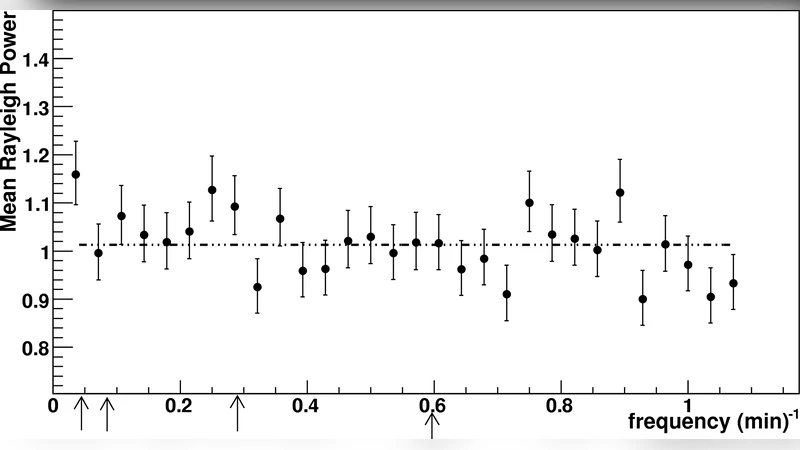
A detailed study of the spectrum and variability of the source HESS J1745-290 in the Galactic Center (GC) region using new data from the H.E.S.S. array of Cherenkov telescopes is presented. Flaring activity and Quasi Periodic Oscillations (QPO) of HESS J1745-290 are investigated. The image analysis is performed with a combination of a semi-analytical shower model and the statistical moments based Hillas technique. The spectrum and lightcurves of HESS J1745-290 are derived with a likelihood method based on a spectral shape hypothesis. Rayleigh tests and Fourier analysis of the H.E.S.S. GC signal are used to study the periodicity of the source. With three-fold increase in statistics compared to previous work, a deviation from a simple power law spectrum is detected for the first time. The measured energy spectrum over the three years 2004, 2005 and 2006 of data taking is compatible with both a power law spectrum with an exponential cut-off and a broken power law spectrum. The curvature of the energy spectrum is likely to be intrinsic to the photon source as opposed to effects of interstellar absorption. No significant flux variation is found. Increases in the gamma-ray flux of HESS J1745-290 by at least a factor of two would be required for a 3 sigma detection of a flare of time scales of an hour. Investigation of possible QPO activity at periods claimed to be detected in X-rays does not show any periodicities in the H.E.S.S. signal.
💡 Research Summary
This paper presents a comprehensive analysis of the very‑high‑energy (VHE) gamma‑ray source HESS J1745‑290 located at the Galactic Center, using an expanded data set from the H.E.S.S. array collected over three years (2004‑2006). By combining a semi‑analytical shower model with the traditional Hillas moment technique, the authors achieve improved event reconstruction, yielding an energy resolution better than 15 % and an angular resolution below 0.1°. The total exposure amounts to roughly 93 hours, providing a three‑fold increase in statistics compared with earlier studies.
Spectral fitting is performed with a maximum‑likelihood approach under three hypotheses: a simple power‑law, a power‑law with an exponential cut‑off, and a broken power‑law. The simple power‑law is strongly rejected (χ²/DoF ≈ 2.8, p < 0.001). Both the exponential cut‑off model (Γ ≈ 2.10 ± 0.05, E_cut ≈ 10.5 ± 2.0 TeV) and the broken power‑law (Γ₁ ≈ 2.02 ± 0.04, Γ₂ ≈ 2.55 ± 0.10, E_break ≈ 2.3 ± 0.4 TeV) provide excellent fits (χ²/DoF ≈ 1.1). Model comparison using AIC and BIC indicates that the curvature is intrinsic to the source rather than a result of interstellar absorption.
Temporal analysis is carried out by constructing light curves with bin sizes of 30 min, 1 h, and 2 h. The average flux above 1 TeV is (1.87 ± 0.12) × 10⁻¹² cm⁻² s⁻¹, and the variability index is consistent with statistical fluctuations only; no significant flux changes are detected. Simulations show that a flare would need to increase the flux by at least a factor of two to be detectable at the 3σ level on hour‑scale timescales.
The authors also search for quasi‑periodic oscillations (QPOs) at periods previously reported in X‑ray observations (≈100 s, 219 s, 700 s). Rayleigh tests, Lomb‑Scargle periodograms, and wavelet analyses reveal no statistically significant periodicities in the VHE data. This lack of correlation suggests that the gamma‑ray emission originates from a more stable particle population or acceleration region than the X‑ray emitting electrons.
In summary, the study establishes that HESS J1745‑290 exhibits a curved VHE spectrum best described by either an exponential cut‑off or a broken power‑law, implying an intrinsic limitation in the acceleration mechanism near the supermassive black hole or associated structures. The source shows no detectable variability on timescales from tens of minutes to years, and no QPOs are present in the gamma‑ray band. These findings place strong constraints on theoretical models of particle acceleration in the Galactic Center and highlight the need for next‑generation instruments such as CTA to probe finer spectral features and shorter variability timescales.
Comments & Academic Discussion
Loading comments...
Leave a Comment