High Resolution Mid-Infrared Spectroscopy of NGC 7538 IRS 1: Probing Chemistry in a Massive Young Stellar Object
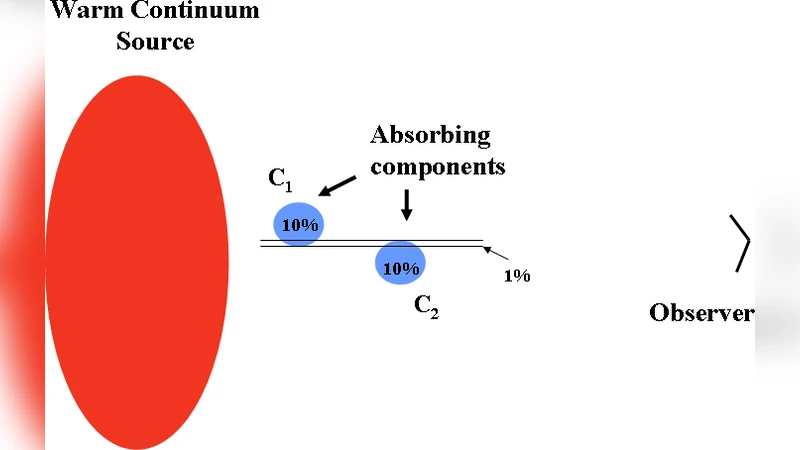
We present high resolution (R = 75,000-100,000) mid-infrared spectra of the high-mass embedded young star IRS 1 in the NGC 7538 star-forming region. Absorption lines from many rotational states of C2H2, 13C12CH2, CH3, CH4, NH3, HCN, HNCO, and CS are seen. The gas temperature, column density, covering factor, line width, and Doppler shift for each molecule are derived. All molecules were fit with two velocity components between -54 and -63 km/s. We find high column densities (~ 10e16 cm^2) for all the observed molecules compared to values previously reported and present new results for CH3 and HNCO. Several physical and chemical models are considered. The favored model involves a nearly edge-on disk around a massive star. Radiation from dust in the inner disk passes through the disk atmosphere, where large molecular column densities can produce the observed absorption line spectrum.
💡 Research Summary
The authors present a comprehensive study of the massive young stellar object (MYSO) NGC 7538 IRS 1 using high‑resolution mid‑infrared spectroscopy (R ≈ 75 000–100 000). Observations were carried out with the TEXES spectrograph on the IRTF, covering the 10–13 µm window where numerous fundamental ro‑vibrational transitions of small molecules lie. The data reduction pipeline included atmospheric correction, wavelength calibration against known telluric lines, and continuum normalization, yielding signal‑to‑noise ratios above 150 for most spectral orders.
Line identification was performed by cross‑matching with the HITRAN and JPL molecular databases. The authors detected absorption from a rich inventory: C₂H₂, its isotopologue ¹³C¹²CH₂, the methyl radical CH₃, methane CH₄, ammonia NH₃, hydrogen cyanide HCN, isocyanic acid HNCO, and carbon monosulfide CS. Notably, CH₃ and HNCO are reported for the first time in the mid‑IR toward a massive protostar, and their column densities are quantified. All detected transitions exhibit two distinct velocity components centered at –54 km s⁻¹ and –63 km s⁻¹. Gaussian profile fitting was applied to each component, allowing the extraction of line width (Δv ≈ 3–5 km s⁻¹), covering factor (f_c ≈ 0.5–0.9), and Doppler shift.
Physical conditions were derived under the assumption of local thermodynamic equilibrium (LTE). Rotational diagrams for each molecule and each velocity component yielded excitation temperatures ranging from 200 K to 400 K. Column densities are remarkably high, typically 10¹⁶–10¹⁷ cm⁻², with C₂H₂ and HCN reaching values an order of magnitude larger than previously reported for this source. The covering factors indicate that the absorbing gas does not completely obscure the background dust continuum, implying a clumpy or partially filled line‑of‑sight geometry.
To interpret these results, the authors evaluate two competing chemical‑physical scenarios. The first is a classic photon‑dominated region (PDR) model where intense UV radiation from the central star drives the chemistry. While PDR models can reproduce some of the observed ion‑molecule abundances, they fail to maintain the high NH₃ and CH₄ columns because these species are rapidly photodissociated. The second scenario invokes a nearly edge‑on circumstellar disk whose warm inner rim emits strong mid‑IR continuum that passes through a cooler, molecularly rich disk atmosphere. In this “disk‑atmosphere” model, the gas is heated to a few hundred kelvin by infrared radiation, allowing efficient formation of complex organics (e.g., CH₃, HNCO) via neutral‑neutral reactions and grain‑surface desorption. The model naturally accounts for the two velocity components as the projected rotation of the disk, and reproduces the observed line widths and covering factors.
The authors therefore favor the edge‑on disk interpretation. This geometry explains the large molecular column densities, the presence of both simple and relatively complex species, and the kinematic signatures seen in the spectra. It also supports the notion that massive stars can retain substantial, long‑lived disks during their early accretion phases, providing a reservoir for rich gas‑phase chemistry. The paper concludes by suggesting that future high‑angular‑resolution observations with ALMA and JWST will be able to directly image the proposed disk structure, test the temperature and density gradients inferred from the spectroscopy, and further constrain the chemical pathways operating in massive protostellar environments.
Comments & Academic Discussion
Loading comments...
Leave a Comment