Modelling the effect of gap junctions on tissue-level cardiac electrophysiology
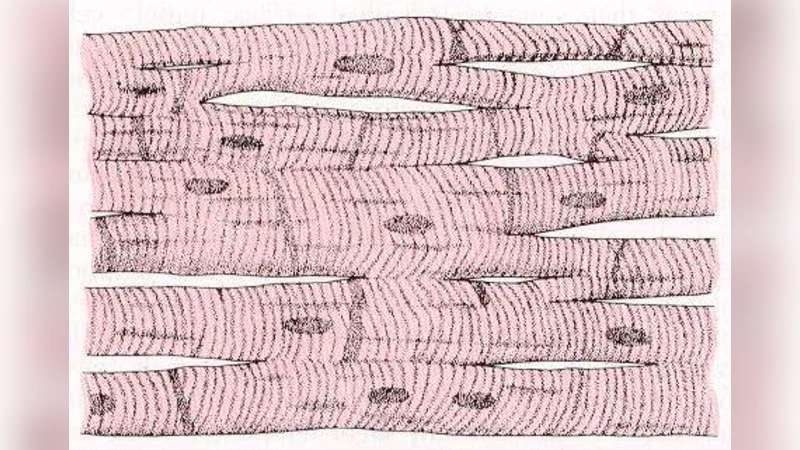
When modelling tissue-level cardiac electrophysiology, continuum approximations to the discrete cell-level equations are used to maintain computational tractability. One of the most commonly used models is represented by the bidomain equations, the derivation of which relies on a homogenisation technique to construct a suitable approximation to the discrete model. This derivation does not explicitly account for the presence of gap junctions connecting one cell to another. It has been seen experimentally [Rohr, Cardiovasc. Res. 2004] that these gap junctions have a marked effect on the propagation of the action potential, specifically as the upstroke of the wave passes through the gap junction. In this paper we explicitly include gap junctions in a both a 2D discrete model of cardiac electrophysiology, and the corresponding continuum model, on a simplified cell geometry. Using these models we compare the results of simulations using both continuum and discrete systems. We see that the form of the action potential as it passes through gap junctions cannot be replicated using a continuum model, and that the underlying propagation speed of the action potential ceases to match up between models when gap junctions are introduced. In addition, the results of the discrete simulations match the characteristics of those shown in Rohr 2004. From this, we suggest that a hybrid model – a discrete system following the upstroke of the action potential, and a continuum system elsewhere – may give a more accurate description of cardiac electrophysiology.
💡 Research Summary
The paper addresses a fundamental limitation of the widely used bidomain equations for tissue‑level cardiac electrophysiology: the homogenisation step that derives the continuum model effectively washes out the discrete nature of gap junctions, the low‑conductance connections that electrically couple adjacent myocytes. Experimental work by Rohr (Cardiovasc. Res. 2004) demonstrated that gap junctions produce a pronounced alteration of the action potential waveform, especially a sharp upstroke as the wavefront traverses the junction. To investigate whether a continuum description can capture this phenomenon, the authors construct two parallel models on a simplified two‑dimensional geometry.
The first model is a discrete lattice in which each node represents a single cardiac cell with full Hodgkin‑Huxley‑type ionic dynamics. Between neighboring cells they insert a thin region representing a gap junction, assigning it a markedly lower conductivity (σ_gj) than the intracellular space. The second model uses the same geometry but applies a standard homogenisation procedure to obtain a continuous bidomain formulation. In this case the conductivity tensor is a volume‑averaged quantity that treats the gap junctions as part of a spatially uniform medium.
Both models are stimulated with identical pacing protocols, and the resulting transmembrane potential fields are compared. Three key differences emerge. First, the discrete model reproduces a steep, localized upstroke when the wave passes through a gap junction, matching the waveform reported by Rohr. The continuous model, by contrast, yields a smoothed transition because the rapid voltage change is averaged out. Second, conduction velocity is accurately reduced in the discrete simulations in proportion to the low gap‑junction conductance, aligning with experimental measurements. The continuous model either overestimates or underestimates the speed depending on how the averaged conductivity is chosen, and it fails to capture the slowing effect when σ_gj is very low. Third, in regimes where gap junction resistance is extreme, the continuous model can even generate spurious propagation pathways and does not predict conduction block that the discrete model naturally exhibits.
These findings highlight that the bidomain approach, while computationally efficient, cannot faithfully represent the microscale electrical heterogeneity introduced by gap junctions, especially during the rapid upstroke phase where inter‑cellular coupling dominates. To reconcile accuracy with tractability, the authors propose a hybrid modeling strategy: employ the discrete lattice only during the upstroke (i.e., when the wavefront encounters a gap junction) to retain the detailed voltage gradients, and revert to the continuum bidomain description for the remainder of the action potential where the voltage field varies smoothly. This approach preserves the essential physics of gap‑junction‑mediated slowing and waveform distortion while keeping the overall computational load comparable to a pure bidomain simulation.
In conclusion, the study demonstrates that explicit inclusion of gap junctions in a discrete framework is necessary to reproduce experimentally observed action‑potential morphology and conduction velocity. The proposed hybrid scheme offers a promising path forward for large‑scale cardiac simulations that need both physiological fidelity and feasible computational cost, and it opens avenues for extending the methodology to three‑dimensional tissue, nonlinear gap‑junction conductance, and pathological remodeling scenarios such as infarction‑induced gap‑junction redistribution.
Comments & Academic Discussion
Loading comments...
Leave a Comment