Significance of Rapid Solutions Development to Business Process Management
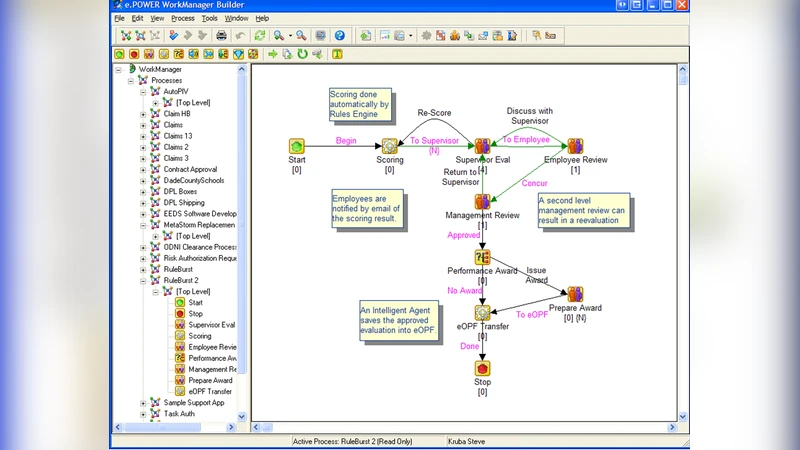
Business process management (BPM) is moving from a niche market into the mainstream. One of the factors leading to this transformation is the emergence of very powerful rapid solutions development tools for creating BPM solutions (BPM RSD). It has been widely recognized that this facility is important for achieving benefits quickly. Similar benefits are attributed to the agile software movement, but BPM RSD differs in that the objective is to reduce the need for custom software development. As the BPM RSD features of some of the current business process management suites (BPMS) products have matured, additional benefits have emerged that fundamentally change the way we approach solutions in this space.
💡 Research Summary
The paper examines how Business Process Management (BPM) is transitioning from a niche technology to a mainstream enterprise capability, driven primarily by the emergence of Rapid Solutions Development (RSD) tools within modern BPM suites. Traditional BPM implementations have long suffered from a disconnect between high‑level process modeling and the low‑level custom coding required to make those models executable. This gap often leads to prolonged project timelines, inflated costs, and difficulty adapting to changing business requirements.
Rapid Solutions Development changes the paradigm by embracing a model‑driven approach where the process model itself becomes a living artifact that can be directly executed. In practice, a BPM RSD platform provides visual canvases for defining workflows, business rules, user interfaces, data mappings, and integration points. Once assembled, the platform automatically generates the underlying code, provisions runtime services, and deploys the solution—all without the developer writing a single line of traditional code. Consequently, the classic “code‑write → test → deploy” cycle collapses into a “model‑simulate → deploy” loop, dramatically shortening time‑to‑value.
The authors compare BPM RSD with agile software development. While agile emphasizes iterative delivery and rapid feedback, it still relies on manual coding and testing in each iteration. BPM RSD delivers instant feedback at the model level; any change to a rule or flow is immediately reflected in a runnable prototype. This capability is especially valuable in regulated industries (finance, healthcare, public sector) where compliance checks can be embedded into the model and automatically enforced during execution.
A survey of leading BPM vendors—IBM Business Automation Workflow, Appian, Pega Platform, Camunda, among others—shows that contemporary BPMS products embed comprehensive RSD capabilities. Features such as drag‑and‑drop workflow designers, rule engines, form builders, pre‑built connectors, version control, rollback, and automated deployment pipelines are now standard. These tools enable business analysts to construct end‑to‑end processes, simulate them in real time, and push changes to production with minimal IT intervention.
From an organizational perspective, the paper identifies four strategic benefits of adopting BPM RSD:
- Bridging the IT‑Business Gap – Domain experts can directly author solutions, reducing miscommunication and the need for extensive hand‑offs.
- Improved ROI Forecasting – Early, executable prototypes allow accurate cost‑benefit analysis before large‑scale investment.
- Reduced Maintenance Overhead – Changes are made at the model layer; the platform automatically validates consistency, eliminating extensive regression testing.
- Accelerated Innovation Cycles – Companies can launch new processes quickly while continuously refining existing ones, supporting both speed‑to‑market and sustained improvement.
The authors also highlight secondary advantages that arise as BPM RSD matures. Integration with process‑mining tools enables automatic detection of bottlenecks and real‑time recommendation of model adjustments. When combined with AI, these recommendations can be auto‑applied, creating a self‑optimizing loop that continuously refines process performance without human intervention. Cloud‑native deployment and micro‑service compatibility further enhance scalability and resilience.
Future research directions are proposed, including deeper AI‑driven process optimization, advanced security and privacy controls within model‑centric environments, and governance frameworks for large‑scale enterprise adoption. The authors argue that as AI, process mining, and RSD converge, BPM will evolve from a supportive technology into the central engine of digital transformation, delivering unprecedented agility, compliance, and operational efficiency.
Comments & Academic Discussion
Loading comments...
Leave a Comment