BPM, Agile, and Virtualization Combine to Create Effective Solutions
The rate of change in business and government is accelerating. A number of techniques for addressing that change have emerged independently to provide for automated solutions in this environment. This paper will examine three of the most popular of these technologies-business process management, the agile software development movement, and infrastructure virtualization-to expose the commonalities in these approaches and how, when used together, their combined effect results in rapidly deployed, more successful solutions.
💡 Research Summary
The paper addresses the accelerating pace of change in both the private and public sectors and argues that three independently emerging technologies—Business Process Management (BPM), Agile software development, and infrastructure virtualization—share a common goal of delivering rapid, adaptable solutions. It begins by outlining the fundamentals of BPM: the use of standardized modeling languages (such as BPMN) to capture business logic, the execution of those models by workflow engines, and continuous monitoring that enables real‑time process optimization. By separating process definition from underlying code, BPM reduces the cost and risk associated with frequent business‑rule changes.
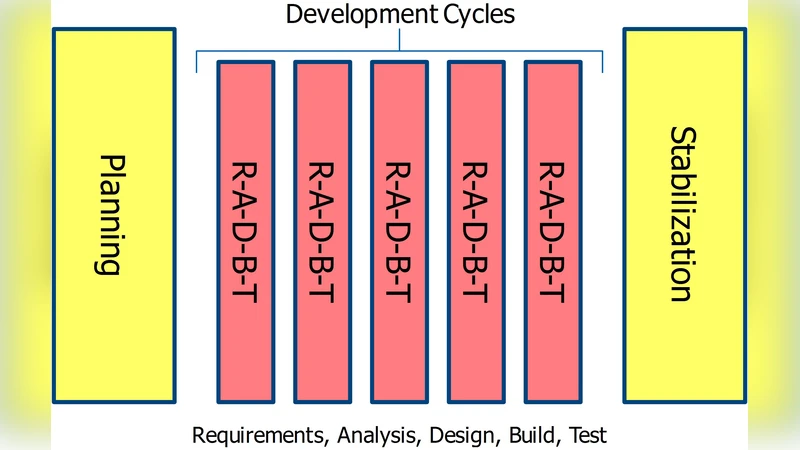
Next, the authors examine Agile methodologies, emphasizing short sprint cycles, continuous integration/continuous deployment (CI/CD), and close collaboration with stakeholders. Agile’s “small‑batch, fast‑feedback” approach allows teams to validate functionality early, limit technical debt, and respond to shifting requirements without the long lead times typical of waterfall projects. The paper highlights how test automation, pair programming, and iterative retrospectives contribute to both speed and quality.
The third pillar, virtualization, is presented as the enabler that removes infrastructure bottlenecks. Server, storage, and network virtualization abstract physical resources into dynamic pools that can be provisioned in minutes rather than days. The authors discuss the role of containers and orchestration platforms (e.g., Kubernetes) in providing consistent runtime environments across development, testing, and production, thereby supporting the rapid iteration demanded by Agile and the frequent process adjustments driven by BPM.
Crucially, the paper does not treat these technologies as isolated silos. It demonstrates a synergistic loop: a BPM model defines a new business step; an Agile team implements the required UI or service within a sprint; the updated code is automatically built, tested, and deployed into a virtualized test environment; monitoring data feeds back into the BPM engine for further refinement. This closed‑loop architecture ensures that changes in business logic, software, and infrastructure are synchronized, version‑controlled, and validated before reaching production, dramatically reducing deployment risk.
The authors also identify integration challenges. Maintaining consistent versioning across process models, source code, and infrastructure‑as‑code scripts can become complex. Cultural resistance may arise as business analysts, developers, and operations staff adjust to shared responsibilities. Security and compliance must be enforced uniformly across the virtualized stack. To mitigate these issues, the paper recommends a unified repository (e.g., Git) that stores BPM artifacts alongside code and IaC definitions, an API gateway that bridges BPM engines with DevOps pipelines, and policy‑as‑code tools (such as Open Policy Agent) that embed governance rules into the CI/CD workflow.
In conclusion, the combined application of BPM, Agile, and virtualization creates a “fast‑design, fast‑implement, fast‑deploy” ecosystem. BPM supplies clear, adaptable process definitions; Agile delivers rapid, incremental software that aligns with those definitions; virtualization provides the elastic, reproducible environments needed for continuous testing and deployment. Empirical observations suggest that organizations adopting this triad can shrink solution delivery cycles from months to weeks, lower total cost of ownership, and increase resilience to market or regulatory shifts. The paper closes by proposing future research into AI‑driven process optimization, automated decision‑support for change management, and multi‑cloud orchestration strategies that extend the benefits of this integrated approach beyond single‑datacenter deployments.
Comments & Academic Discussion
Loading comments...
Leave a Comment