Future Science Prospects for AMI
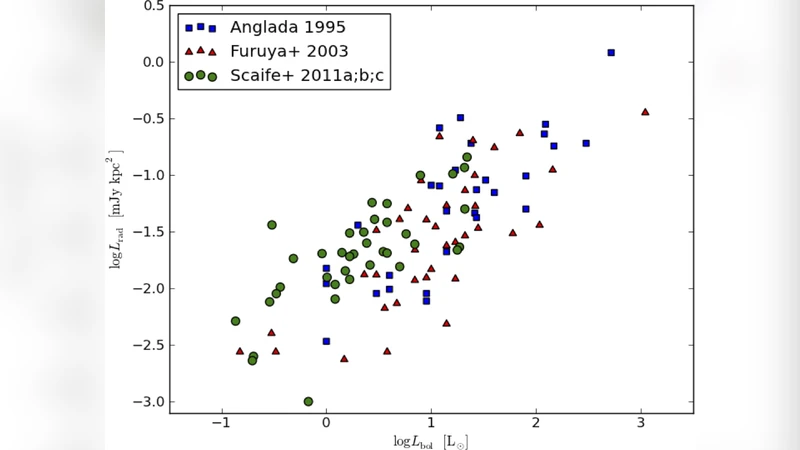
The Arcminute Microkelvin Imager (AMI) is a telescope specifically designed for high sensitivity measurements of low-surface-brightness features at cm-wavelength and has unique, important capabilities. It consists of two interferometer arrays operating over 13.5-18 GHz that image structures on scales of 0.5-10 arcmin with very low systematics. The Small Array (AMI-SA; ten 3.7-m antennas) couples very well to Sunyaev-Zel’dovich features from galaxy clusters and to many Galactic features. The Large Array (AMI-LA; eight 13-m antennas) has a collecting area ten times that of the AMI-SA and longer baselines, crucially allowing the removal of the effects of confusing radio point sources from regions of low surface-brightness, extended emission. Moreover AMI provides fast, deep object surveying and allows monitoring of large numbers of objects. In this White Paper we review the new science - both Galactic and extragalactic - already achieved with AMI and outline the prospects for much more.
💡 Research Summary
The Arcminute Microkelvin Imager (AMI) is a purpose‑built radio interferometer operating between 13.5 and 18 GHz, optimized for high‑sensitivity imaging of low‑surface‑brightness structures on angular scales from 0.5 to 10 arcminutes. It comprises two complementary arrays: the Small Array (AMI‑SA) with ten 3.7‑m dishes and short baselines (5–30 m) that excels at capturing extended emission such as the Sunyaev‑Zel’dovich (SZ) signal from galaxy clusters, and the Large Array (AMI‑LA) with eight 13‑m dishes, ten times the collecting area of the SA and baselines up to 120 m, which provides the resolution and sensitivity needed to identify and subtract contaminating radio point sources. By observing simultaneously with both arrays, AMI achieves a multi‑scale approach: rapid, wide‑field surveys with the SA and precise point‑source modeling with the LA.
Technical performance is notable: a system temperature of ≈25 K and a 4.5 GHz instantaneous bandwidth yield a continuum sensitivity of ~1 mJy beam⁻¹ in one hour. The instrument’s automated phase calibration, real‑time data pipeline, and flexible observing modes (scan‑map versus pointed) enable both large‑area surveys (hundreds of square degrees) and deep integrations on individual targets. Continuous monitoring capability further allows the construction of long‑term light curves for variable and transient radio sources.
Scientific achievements to date span extragalactic and Galactic domains. Extragalactically, AMI has produced SZ maps for over 30 galaxy clusters, providing independent mass estimates and constraints on the mass–temperature relation, cluster evolution, and dark‑matter distribution when combined with X‑ray and optical data. The low‑frequency SZ measurements also probe electron temperature structure and relativistic corrections that are difficult to access at higher frequencies. Within the Milky Way, AMI has imaged diffuse emission from dense molecular clouds, supernova remnants, and radio filaments, shedding light on early stages of star formation and the mechanisms of low‑frequency synchrotron and free‑free radiation. A five‑year monitoring program has yielded a statistical database of radio AGN variability, informing models of plasma instabilities and jet physics.
Future prospects focus on three fronts. First, a digital backend upgrade will expand the usable bandwidth beyond 2 GHz, improving sensitivity to the 0.1 mJy level and achieving sub‑0.2 arcminute resolution, essential for detecting faint high‑redshift clusters and filamentary cosmic‑web emission. Second, advanced phase‑calibration algorithms and machine‑learning point‑source modeling will enhance the removal of confusing sources, allowing cleaner recovery of extended SZ and Galactic signals. Third, coordinated multi‑frequency campaigns with SKA‑precursor facilities (ASKAP, MeerKAT) will combine AMI’s low‑frequency data with higher‑frequency observations (30–100 GHz) to construct comprehensive spectral‑spatial analyses. This synergy is expected to open new windows on the high‑z cluster population, the diffuse radio background of the cosmic web, and the earliest phases of galaxy formation.
In summary, AMI’s unique combination of high sensitivity, multi‑scale imaging, rapid survey capability, and robust point‑source subtraction positions it as a leading instrument for low‑frequency interferometric studies. Planned hardware upgrades and collaborative programs will substantially broaden its scientific reach, enabling decisive contributions to cosmology, galaxy‑cluster physics, Galactic astrophysics, and time‑domain radio astronomy.