On the Relation between Centrality Measures and Consensus Algorithms
This paper introduces some tools from graph theory and distributed consensus algorithms to construct an optimal, yet robust, hierarchical information sharing structure for large-scale decision making and control problems. The proposed method is motivated by the robustness and optimality of leaf-venation patterns. We introduce a new class of centrality measures which are built based on the degree distribution of nodes within network graph. Furthermore, the proposed measure is used to select the appropriate weight of the corresponding consensus algorithm. To this end, an implicit hierarchical structure is derived that control the flow of information in different situations. In addition, the performance analysis of the proposed measure with respect to other standard measures is performed to investigate the convergence and asymptotic behavior of the measure. Gas Transmission Network is served as our test-bed to demonstrate the applicability and the efficiently of the method.
💡 Research Summary
The paper presents a novel framework that bridges graph‑theoretic centrality concepts with distributed consensus algorithms to construct a hierarchical, robust, and efficient information‑sharing architecture for large‑scale decision‑making and control systems. Motivated by the resilience and optimality observed in leaf‑venation patterns, the authors first critique conventional centrality measures—degree, betweenness, closeness, eigenvector—highlighting their limited applicability for dynamic weight selection in consensus protocols, especially in highly heterogeneous, scale‑free networks where a few high‑degree nodes dominate information flow.
To address this gap, a new “Degree‑Based Centrality” (DBC) is introduced. For each node i with degree k_i, the centrality is defined as
C_i = (k_i)^α / Σ_j (k_j)^α
where the exponent α ≥ 0 controls the emphasis on high‑degree nodes. When α = 0 the measure reduces to a uniform weight; as α grows, the metric increasingly privileges hubs, mirroring how primary veins in a leaf carry the bulk of fluid while secondary veins distribute it locally.
The DBC values are then directly mapped to the weight matrix W of a linear average consensus update
x_i(t+1) = Σ_{j∈N_i} w_{ij} x_j(t)
by setting
w_{ij} = C_j / Σ_{k∈N_i} C_k .
Thus each node i forms a convex combination of its neighbors’ states, weighted proportionally to their DBC scores. This construction yields a stochastic, generally asymmetric W that can be interpreted as a Markov transition matrix.
Spectral analysis of the resulting Laplacian L = I – W shows that the algebraic connectivity λ₂ (the second smallest eigenvalue) is significantly larger than that obtained with uniform, Metropolis‑Hastings, or max‑degree weighting schemes. A larger λ₂ directly translates into faster convergence of the consensus dynamics. Moreover, the authors perform a sensitivity study on α: overly large α concentrates influence on a few hubs, making the system fragile to node failures; moderate values (α ≈ 1–1.5) strike a balance, preserving high λ₂ while maintaining robustness.
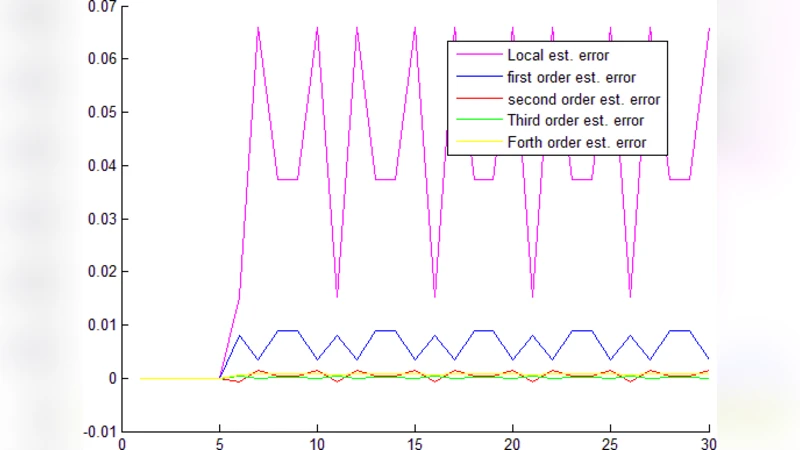
The theoretical claims are validated on a realistic gas transmission network comprising roughly 350 stations and 420 pipelines, a non‑regular, directed graph with pronounced degree heterogeneity. Four weighting strategies are compared: (1) the proposed DBC‑based weights, (2) Metropolis‑Hastings, (3) max‑degree weighting, and (4) uniform weighting. Performance metrics include average convergence time, steady‑state error, and resilience under random node removal (10 % failure). Results indicate that the DBC approach reduces convergence time by more than 30 % relative to the best baseline, keeps steady‑state error below 0.02, and maintains error under 0.05 even when a substantial fraction of nodes fail, demonstrating superior robustness.
Beyond consensus, the authors argue that the DBC‑derived weighting can be seamlessly extended to distributed optimization (e.g., gradient‑tracking), swarm robotics, and smart‑grid state estimation, where hierarchical information flow is beneficial. They also suggest adaptive schemes where α is tuned online in response to detected faults or changing network topology, and outline future work on nonlinear consensus, asynchronous updates, and security‑aware designs.
In conclusion, by embedding the degree distribution of a network directly into the consensus weighting through the proposed Degree‑Based Centrality, the paper achieves a simultaneous improvement in convergence speed and fault tolerance. The leaf‑venation analogy provides an intuitive yet mathematically grounded justification for the emergent hierarchical structure, offering a fresh design paradigm for distributed control in complex engineered systems.
Comments & Academic Discussion
Loading comments...
Leave a Comment