The chaos within: exploring noise in cellular biology
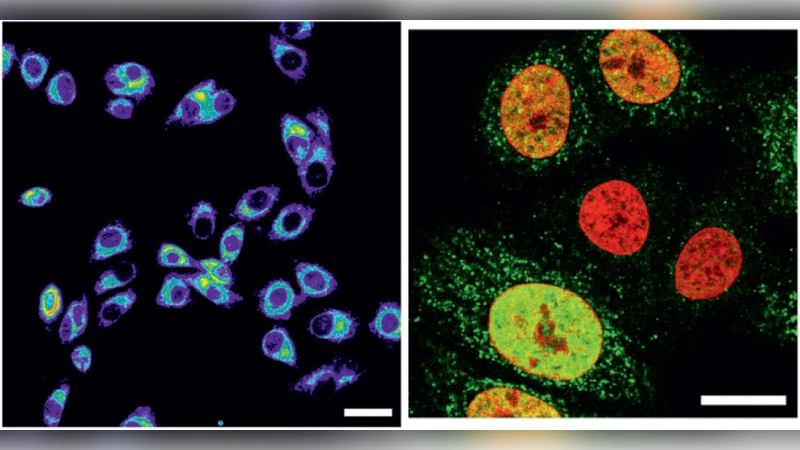
Cellular biology exists embedded in a world dominated by random dynamics and chance. Many vital molecules and pieces of cellular machinery diffuse within cells, moving along random trajectories as they collide with the other biomolecular inhabitants of the cell. Cellular components may block each other’s progress, be produced or degraded at random times, and become unevenly separated as cells grow and divide. Cellular behaviour, including important features of stem cells, tumours and infectious bacteria, is profoundly influenced by the chaos which is the environment within the cell walls. Here we will look at some important causes and effects of randomness in cellular biology, and some ways in which researchers, helped by the vast amounts of data that are now flowing in, have made progress in describing the randomness of nature.
💡 Research Summary
The paper opens by framing cellular biology as a fundamentally stochastic arena, where the motion of molecules, the timing of synthesis and degradation events, and the partitioning of cellular components during growth and division are all governed by random processes. It first reviews the physical underpinnings of intracellular randomness, describing how Brownian motion and diffusion equations capture the erratic trajectories of proteins, RNAs, and metabolites. The authors emphasize that molecular crowding—high concentrations of macromolecules in the cytoplasm—creates a non‑linear reduction in diffusion coefficients, thereby amplifying fluctuations in reaction rates and signaling pathways.
Next, the manuscript distinguishes between intrinsic noise, arising from the probabilistic nature of transcription, translation, and molecular binding events, and extrinsic noise, which stems from cell‑to‑cell variations in size, metabolic state, and cell‑cycle phase. Intrinsic noise is modeled using Poisson or more complex birth‑death processes, while extrinsic noise is treated with multivariate probability distributions that capture correlated fluctuations across many cellular parameters.
The core of the paper explores how this noise shapes cellular fate decisions. In stem cells, stochastic bursts in key transcription factors such as OCT4 and SOX2 can push cells over differentiation thresholds, providing a mechanism by which variability fuels lineage diversification. In cancer, mutated signaling networks often exhibit heightened tolerance to noise, enabling phenotypic heterogeneity that underlies drug resistance and tumor relapse. The authors also discuss pathogenic bacteria, which exploit noise‑driven bet‑hedging strategies to survive sudden environmental stresses, such as nutrient deprivation or antibiotic exposure.
A substantial portion of the review is devoted to recent methodological advances that allow researchers to quantify and model cellular noise. High‑throughput single‑cell RNA sequencing, live‑cell fluorescence microscopy, and microfluidic single‑molecule tracking generate massive datasets that capture the distribution of molecular abundances across thousands of individual cells. These data are integrated with Bayesian inference, stochastic differential equations, and Markov‑chain Monte‑Carlo simulations to estimate model parameters and predict system behavior. The paper highlights three illustrative case studies: (1) using Fano factor and coefficient of variation to dissect gene‑expression noise from single‑cell transcriptomes; (2) applying Langevin dynamics to reconcile live‑cell measurements of protein complex diffusion with theoretical predictions; and (3) employing stochastic hybrid systems to link cell‑cycle‑dependent metabolic fluctuations measured in microfluidic devices with underlying regulatory networks.
In its conclusion, the authors argue that noise should not be viewed merely as experimental error but as an essential source of biological diversity that drives adaptation, development, and evolution. Understanding and harnessing stochasticity has practical implications for drug discovery, regenerative medicine, and microbial engineering. The paper calls for future research that combines multi‑scale modeling—from molecular to population levels—with artificial‑intelligence‑driven data analysis to achieve more precise prediction and control of noise‑driven cellular phenomena.
Comments & Academic Discussion
Loading comments...
Leave a Comment