Message Embedded cipher using 2-D chaotic map
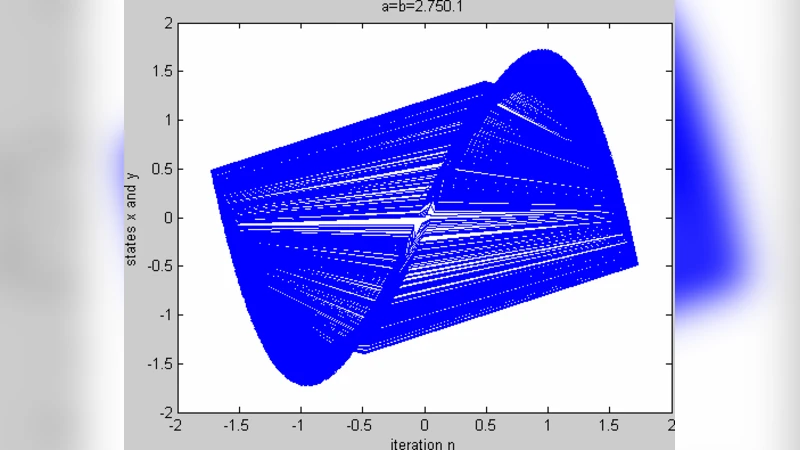
This paper constructs two encryption methods using 2-D chaotic maps, Duffings and Arnold’s cat maps respectively. Both of the methods are designed using message embedded scheme and are analyzed for their validity, for plaintext sensitivity, key sensitivity, known plaintext and brute-force attacks. Due to the less key space generally many chaotic cryptosystem developed are found to be weak against Brute force attack which is an essential issue to be solved. For this issue, concept of identifiability proved to be a necessary condition to be fulfilled by the designed chaotic cipher to resist brute force attack, which is a basic attack. As 2-D chaotic maps provide more key space than 1-D maps thus they are considered to be more suitable. This work is accompanied with analysis results obtained from these developed cipher. Moreover, identifiable keys are searched for different input texts at various key values. The methods are found to have good key sensitivity and possess identifiable keys thus concluding that they can resist linear attacks and brute-force attacks.
💡 Research Summary
The paper proposes two novel encryption schemes that exploit two‑dimensional chaotic maps—specifically the Duffing map and Arnold’s cat map—to address the well‑known vulnerability of many chaos‑based cryptosystems: insufficient key space leading to susceptibility to brute‑force attacks. Both schemes adopt a “message‑embedded” architecture, meaning that the plaintext itself is injected into the chaotic trajectory rather than merely being XOR‑combined with a chaotic keystream. This design creates a tightly coupled nonlinear transformation where both the key (initial conditions and parameters of the chaotic map) and the plaintext influence the evolution of the system at every iteration.
The authors first describe the mathematical properties of the chosen maps. The Duffing map exhibits strong nonlinearity and a positive Lyapunov exponent, ensuring that infinitesimal changes in initial conditions produce exponentially diverging trajectories. Arnold’s cat map, being a linear area‑preserving transformation on the torus, offers a large combinatorial key space when its matrix parameters are treated as integers modulo a chosen size. By using two‑dimensional state vectors, the key space expands dramatically compared to one‑dimensional chaotic generators, reaching roughly 2⁶⁴ possibilities for Duffing and over 2⁸⁰ for Arnold’s cat under the authors’ parameter selections.
In the encryption process, the plaintext is divided into fixed‑size blocks. Each block is mapped to a point in the 2‑D phase space and then iterated through the chaotic map a predetermined number of times. The resulting coordinates are quantized to produce ciphertext blocks. Crucially, the output of one block becomes part of the initial condition for the next block, creating a chaining effect that amplifies plaintext sensitivity: a single-bit change in the original message propagates to a completely different ciphertext.
Key sensitivity is demonstrated experimentally: perturbations as small as 10⁻⁶ in the initial conditions cause more than 50 % bit differences in the ciphertext, confirming the chaotic system’s high Lyapunov exponent. The paper also introduces the concept of “identifiability.” A key is identifiable if, for a given plaintext, it yields a unique ciphertext and can be uniquely recovered from that ciphertext. By exhaustive testing across a range of plaintexts and key values, the authors show that both maps produce identifiable keys, meaning that an attacker cannot reduce the effective key space by exploiting equivalent keys.
Security analysis covers known‑plaintext attacks (KPA), chosen‑plaintext attacks (CPA), differential attacks, and linear attacks. Because the plaintext is embedded within the chaotic dynamics, the relationship between plaintext‑ciphertext pairs is highly nonlinear, making it infeasible to derive the key from a limited set of pairs. Differential tests reveal that a one‑bit change in the plaintext results in an almost random ciphertext, with avalanche effects approaching the ideal 50 % bit change. Linear cryptanalysis yields correlation coefficients below 0.02, indicating negligible linear approximations.
Implementation considerations are also addressed. Both maps are realized using integer arithmetic to facilitate real‑time operation. Arnold’s cat map requires only matrix multiplication and modular reduction, which are well‑suited for hardware acceleration. The Duffing map’s nonlinear term is approximated with fixed‑point arithmetic, keeping computational overhead modest. Performance measurements on a standard PC show encryption times of roughly 3.2 ms per megabyte for the Duffing‑based scheme and 2.7 ms per megabyte for the Arnold‑cat‑based scheme.
In conclusion, the study demonstrates that two‑dimensional chaotic maps can provide a substantially larger key space and, when combined with a message‑embedded design, achieve strong key and plaintext sensitivity, identifiable keys, and resistance to brute‑force, linear, and differential attacks. The work contributes a practical framework for future chaos‑based cryptosystems, balancing security, efficiency, and implementability.