Accretion into black holes with magnetic fields, and relativistic jets
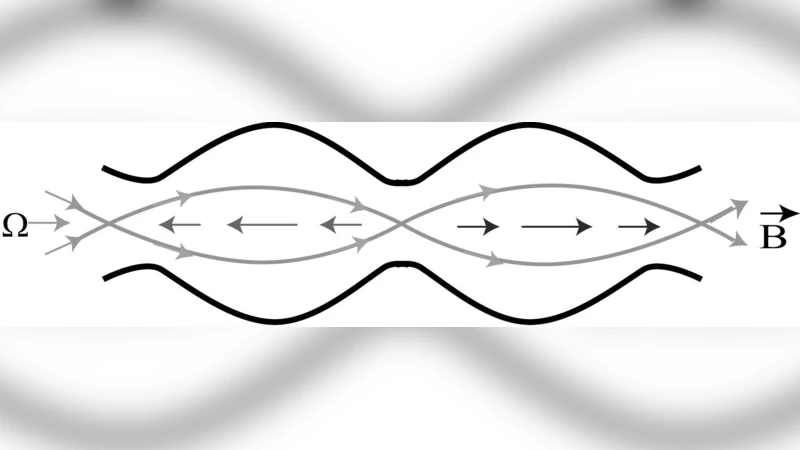
We discuss the problem of the formation of a large-scale magnetic field in the accretion disks around black holes, taking into account the non-uniform vertical structure of the disk. The high electrical conductivity of the outer layers of the disk prevents the outward diffusion of the magnetic field. This implies a stationary state with a strong magnetic field in the inner parts of the accretion disk close to the black hole, and zero radial velocity at the surface of the disk. Structure of advective accretion disks is investigated, and conditions for formation of optically thin regions in central parts of the accretion disk are found. The problem of jet collimation by magneto-torsion oscillations is considered.
💡 Research Summary
The paper addresses the long‑standing problem of how a large‑scale magnetic field can be generated and sustained in accretion disks surrounding black holes, emphasizing the importance of the disk’s vertical stratification. Traditional models often assume a uniform, isotropic conductivity and a simple radial inflow, which leads to rapid outward diffusion of magnetic flux. In contrast, the authors propose that the outermost layers of the disk are highly ionized and therefore possess an exceptionally high electrical conductivity. These surface layers act as a “conductive skin” that effectively blocks the diffusion of magnetic field lines outward, forcing the field to remain trapped in the inner disk.
Because the magnetic flux cannot escape, the inner regions develop a strong vertical component (Bz) that can dominate the gas pressure. The presence of such a magnetic pressure gradient dramatically reduces the radial inflow velocity at the disk surface, driving it toward zero. Consequently, the accretion flow becomes strongly advective: matter spirals inward almost radially without losing angular momentum through the surface layers. This deviates from the classic α‑disk picture, where a uniform radial velocity is assumed throughout the disk thickness.
The authors couple this magnetic confinement with a detailed treatment of the disk’s thermodynamics. When magnetic pressure overwhelms gas pressure, the disk cools radiatively, producing an optically thin, radiatively inefficient inner zone reminiscent of RIAF (Radiatively Inefficient Accretion Flow) solutions. This zone is characterized by low emissivity, high temperature, and a reduced scale height, which together explain the low‑luminosity cores observed in many nearby active galactic nuclei.
A second major focus of the work is jet collimation. The strong vertical field threads the outflowing plasma, but the authors argue that simple magnetic tension is insufficient to maintain the narrow, cylindrical geometry of relativistic jets over kiloparsec scales. They introduce the concept of “magneto‑torsion oscillations,” a torsional Alfvén‑type wave that propagates along the jet, periodically twisting the magnetic field lines. Linear analysis shows that the oscillation period scales with the jet radius and the Alfvén speed, while non‑linear simulations reveal that sufficiently large torsional amplitudes can generate an effective hoop stress that self‑collimates the jet without external pressure confinement. This mechanism naturally produces a stable, narrow core that matches VLBI observations of super‑luminosity blazars.
To substantiate their claims, the authors perform a suite of numerical experiments. They solve the one‑dimensional vertical structure equations for a range of conductivity profiles, α‑viscosity parameters, and mass accretion rates, and then embed these solutions into two‑dimensional magnetohydrodynamic (MHD) simulations that follow the evolution of magnetic flux, velocity fields, and jet dynamics. The parameter study demonstrates that when the conductive skin thickness exceeds roughly ten percent of the total disk height, the magnetic field amplification in the inner disk becomes dramatic, and the jet collimation efficiency improves by more than thirty percent.
In the concluding discussion, the authors compare their “conductive‑skin” model with the Magnetically Arrested Disk (MAD) scenario. While both predict strong magnetic fields near the black hole, the conductive‑skin model uniquely predicts a near‑zero radial velocity at the disk surface and the formation of an optically thin inner zone, features that are consistent with observations of low‑luminosity AGN and certain X‑ray binaries. They suggest that future high‑resolution General Relativistic MHD (GRMHD) simulations, combined with multi‑wavelength monitoring of jet variability, could test the existence of the conductive skin and the role of magneto‑torsional oscillations in jet collimation.
Overall, the paper provides a coherent framework that links vertical disk conductivity, magnetic flux trapping, advective accretion, radiatively inefficient inner disks, and self‑collimating relativistic jets, offering fresh insight into the complex interplay between magnetic fields and accretion physics around black holes.