The green grid saga - a green initiative to data centers: a review
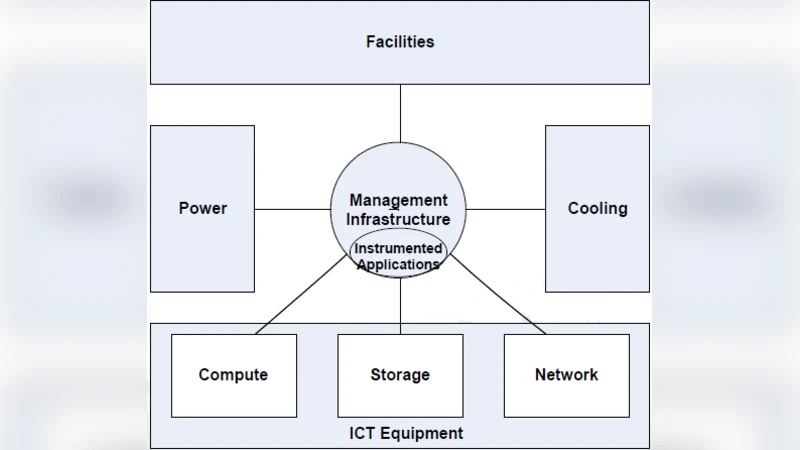
Information Technology (IT) significantly impacts the environment throughout its life cycle. Most enterprises have not paid enough attention to this until recently. IT’s environmental impact can be significantly reduced by behavioral changes, as well as technology changes. Given the relative energy and materials inefficiency of most IT infrastructures today, many green IT initiatives can be easily tackled at no incremental cost. The Green Grid - a non-profit trade organization of IT professionals is such an initiative, formed to initiate the issues of power and cooling in data centers, scattered world-wide. The Green Grid seeks to define best practices for optimizing the efficient consumption of power at IT equipment and facility levels, as well as the manner in which cooling is delivered at these levels hence, providing promising attitude in bringing down the environmental hazards, as well as proceeding to the new era of green computing. In this paper we review the various analytical aspects of The Green Grid upon the data centers and found green facts.
💡 Research Summary
The paper presents a comprehensive review of The Green Grid (TGG), a non‑profit organization that has become a cornerstone of the green‑IT movement, particularly in the context of data‑center sustainability. It begins by outlining the environmental burden of modern information‑technology infrastructures, emphasizing that data centers—housing dense arrays of servers, storage systems, and networking gear—are among the most energy‑intensive facilities in the corporate world. Their power consumption is driven not only by the IT equipment itself but also by the massive cooling infrastructure required to keep temperatures within operational limits. Consequently, data centers contribute significantly to operational costs and carbon emissions.
TGG’s mission is to reduce this impact through a combination of behavioral changes, operational best practices, and technology‑driven efficiencies. The authors dissect TGG’s framework into four interrelated pillars: (1) metric standardization, (2) equipment‑level power management, (3) facility‑level power distribution and conversion, and (4) cooling system innovation.
Metric standardization is the foundation of TGG’s approach. The organization promotes a suite of quantitative indicators—Power Usage Effectiveness (PUE), Data Center infrastructure Efficiency (DCiE), Carbon Usage Effectiveness (CUE), among others—that allow operators to benchmark energy use, isolate inefficiencies, and track progress over time. PUE, defined as total facility power divided by IT‑equipment power, is the most widely adopted metric; TGG encourages a target of ≤1.2, which signifies that no more than 20 % of total power is consumed by non‑IT functions such as cooling, lighting, and power conversion.
At the equipment level, TGG advocates the deployment of advanced power‑management features such as ACPI power states, dynamic voltage and frequency scaling (DVFS), and server‑level power capping. The organization also recommends the use of high‑efficiency power supplies (e.g., 80 PLUS Gold or Platinum) and the consolidation of workloads through virtualization and containerization to improve utilization ratios. By increasing the average utilization of each server, the number of physical machines—and thus the associated power and cooling overhead—can be reduced.
Facility‑level recommendations focus on minimizing losses in the power delivery chain. TGG promotes the adoption of high‑voltage direct current (DC) distribution to reduce conversion steps, the installation of intelligent Power Distribution Units (PDUs) that provide granular, real‑time monitoring, and the implementation of load‑balancing strategies to avoid over‑provisioning. These measures can cut power conversion losses by several percentage points, directly improving PUE.
Cooling, historically the largest non‑IT power consumer, receives a detailed treatment. TGG’s guidance moves beyond conventional air‑side economizers toward liquid‑cooling loops, rear‑door heat exchangers, and heat‑recovery systems that capture waste heat for building heating or hot‑water generation. The paper cites case studies where heat‑recovery reduced overall facility energy demand by up to 30 %, demonstrating the dual economic and environmental benefits of such approaches.
The authors outline TGG’s step‑by‑step implementation roadmap: (1) comprehensive data collection via sensors and meters, (2) data‑driven analysis to pinpoint hotspots, (3) targeted retrofits—such as replacing low‑efficiency UPS units, upgrading to high‑efficiency chillers, or re‑architecting rack layouts for better airflow—and (4) continuous improvement through staff training and periodic re‑assessment. Simulation results included in the review suggest that many of the recommended measures can achieve a payback period of three to five years, even when no additional capital is allocated beyond routine upgrades.
In addition to technical guidance, TGG provides a “Data Center Efficiency Matrix” that integrates energy, cooling, space utilization, and carbon metrics into a single dashboard. This tool enables organizations to align TGG’s targets with internal Key Performance Indicators (KPIs), fostering transparency and accountability in sustainability reporting.
Overall, the paper concludes that The Green Grid offers a pragmatic, low‑cost pathway to substantially lower the environmental footprint of data centers. By coupling behavioral changes—such as disciplined power monitoring and staff education—with technology upgrades—high‑efficiency power supplies, DC distribution, and advanced cooling—the sector can achieve meaningful reductions in both energy consumption and greenhouse‑gas emissions. The authors recommend that future data‑center design and operation adopt TGG’s standards as a baseline, thereby accelerating the transition toward truly green computing.
Comments & Academic Discussion
Loading comments...
Leave a Comment