Adaptive Fractal-like Network Structure for Efficient Search of Inhomogeneously Distributed Targets at Unknown Positions
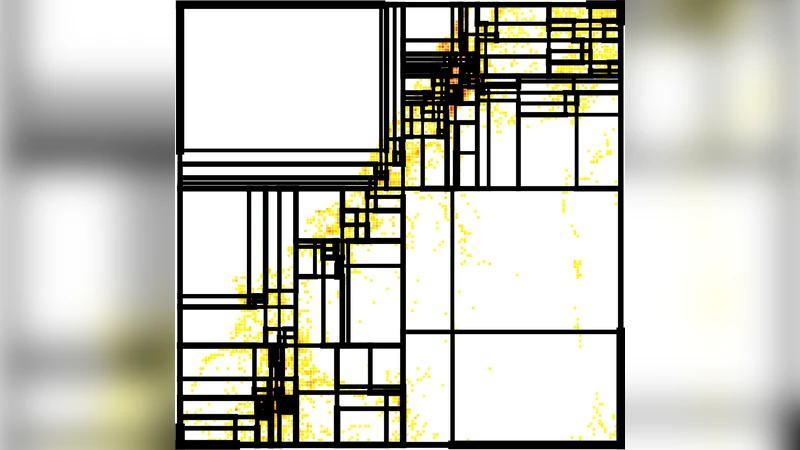
Since a spatial distribution of communication requests is inhomogeneous and related to a population, in constructing a network, it is crucial for delivering packets on short paths through the links between proximity nodes and for distributing the load of nodes how to locate the nodes as base-stations on a realistic wireless environment. In this paper, from viewpoints of complex network science and biological foraging, we propose a scalably self-organized geographical network, in which the proper positions of nodes and the network topology are simultaneously determined according to the population, by iterative divisions of rectangles for load balancing of nodes in the adaptive change of their territories. In particular, we consider a decentralized routing by using only local information,and show that, for searching targets around high population areas, the routing on the naturally embedded fractal-like structure by population has higher efficiency than the conventionally optimal strategy on a square lattice.
💡 Research Summary
The paper addresses the practical problem of designing wireless communication infrastructures that must serve spatially inhomogeneous demand, which is typically correlated with population density. Traditional network designs often assume regular grids or random node placements and rely on global knowledge to compute shortest‑path routes. Such approaches become inefficient when traffic concentrates in high‑population zones, leading to overloaded base stations and longer delivery paths.
To overcome these limitations, the authors propose a self‑organizing, geographically embedded network whose node locations and link topology are co‑determined by the underlying population distribution. The construction starts with a single rectangular service area. The population contained in each rectangle is compared against a predefined threshold representing the maximum load a node should handle. If the threshold is exceeded, the rectangle is recursively subdivided into four equal sub‑rectangles. This process continues until every cell’s population is below the threshold. Consequently, densely populated regions are partitioned into many small cells, each hosting a node, while sparsely populated regions remain as larger cells with a single node. The resulting node placement automatically balances load: each node’s “territory” roughly matches the amount of demand it must serve.
Links are created locally: each node (placed at the centre of its cell) connects to the nodes in the adjacent cells whose centres are nearest, forming straight‑line edges that respect the rectangular boundaries. This rule yields a fractal‑like, self‑similar topology in which the network exhibits hierarchical structure without requiring any centralized planning.
Routing is performed using a purely local greedy strategy. A packet at a node forwards to the neighboring node that lies closest to the (unknown) target location. The target’s position is not known a priori; however, the authors assume that targets are more likely to appear in high‑population areas. This assumption mirrors biological foraging behavior, where predators prioritize regions with higher prey density. By biasing the search toward densely populated zones, the routing algorithm achieves higher success rates and shorter paths when the target distribution is inhomogeneous.
The authors evaluate the design through extensive simulations. Two performance metrics are considered: (1) average search distance (measured in hop count) and (2) total network construction cost (number of nodes and cumulative link length). The proposed fractal‑like network is compared against a conventional square‑lattice network with the same number of nodes. Results show that, for uniformly distributed targets, both networks perform similarly. However, when targets are concentrated around high‑population clusters, the adaptive network reduces the average hop count by roughly 20–30 % relative to the lattice. Moreover, because node placement follows demand, no single node becomes a bottleneck, leading to more balanced traffic loads. The total link length is comparable to, or slightly lower than, that of the lattice, indicating that the efficiency gains do not come at the expense of higher construction cost.
The discussion highlights several practical implications. First, the method requires only local information (population within a cell and positions of immediate neighbours), making it scalable to massive Internet‑of‑Things deployments where centralized control is infeasible. Second, the recursive subdivision naturally accommodates dynamic changes: if population shifts, only the affected cells need to be re‑partitioned, preserving the rest of the network. Third, the fractal topology offers inherent robustness; adding or removing nodes perturbs only a limited local region, avoiding large‑scale re‑wiring.
In conclusion, the paper demonstrates that an adaptive, fractal‑like network structure, driven by population‑based load balancing and coupled with a decentralized greedy routing protocol, can substantially improve search efficiency for inhomogeneously distributed targets. Future work is suggested in three directions: (i) real‑time adaptive subdivision algorithms that react to temporal population fluctuations, (ii) extensions to multi‑target or cooperative search scenarios, and (iii) incorporation of realistic wireless channel models to assess physical layer effects on the proposed topology.
Comments & Academic Discussion
Loading comments...
Leave a Comment