A New P2N Approach to Software Development Under the Clustering
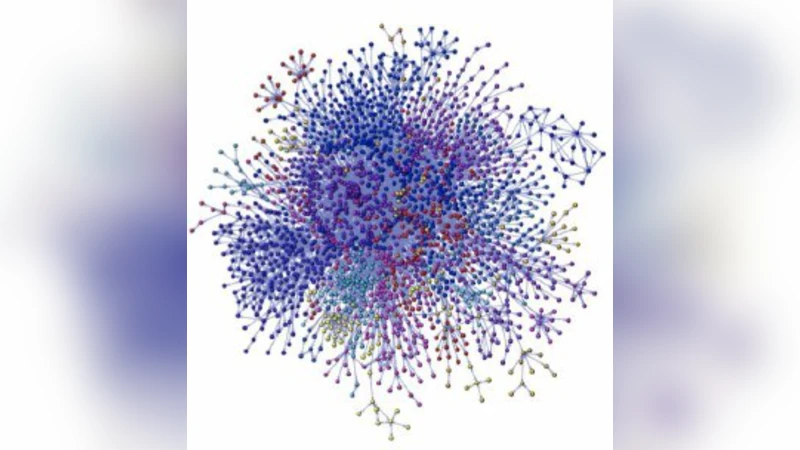
In this computer era of rapid development, software development can be seen everywhere, but a lot of softwares are dead in modern development of software. Just as The Mythical Man-Month said, it exists a problem in the software development, and the problem is interflow.A lock of interflow can be said great calamity. Clustering is a environment to breed new life. In this thesis, we elaborate how P2N can be used to thinking, planning, developing, collaborating, releasing. And the approach that make your team and organization more perfect.
💡 Research Summary
The paper tackles a persistent problem in modern software engineering that the authors label “interflow,” which they describe as a breakdown in the smooth exchange of information and work among team members. Drawing inspiration from the classic observations in The Mythical Man‑Month and contemporary Agile and DevOps practices, the authors argue that the root cause of many project delays and quality issues lies in inefficient coordination rather than purely technical constraints.
To address this, they propose a novel development paradigm called P2N (Peer‑to‑Node) that is built on top of a clustering environment. In this context, a “cluster” refers to a set of shared compute resources—typically containers orchestrated by platforms such as Kubernetes—where each developer’s workstation is treated as an independent node. Unlike traditional centralized version‑control systems, P2N encourages each node to maintain its own local branch, continuously synchronize with peers, and hand off work items through a well‑defined “context‑transfer protocol.” This protocol bundles the code snapshot, test results, and relevant documentation so that the receiving node can resume work without loss of information.
Three technical pillars underpin the P2N approach:
- Node Visibility Dashboard – a real‑time UI that displays each node’s current task, dependencies, and resource consumption, making bottlenecks instantly observable.
- Dynamic Work‑Rebalancing Algorithm – an automated scheduler that monitors node load and, when a threshold is exceeded, migrates pending tasks to under‑utilized neighboring nodes.
- Context Transfer Protocol – a lightweight, metadata‑rich hand‑off mechanism that guarantees atomicity of work items during transfer.
The authors outline a five‑stage lifecycle for applying P2N: (1) planning, where requirements are broken into “task tokens” and dependency graphs are generated; (2) design, which assigns tokens to specific nodes and defines their interfaces; (3) development, where developers work on their assigned nodes and use the protocol to pass work; (4) collaboration, where the dashboard drives real‑time monitoring and automatic rebalancing; and (5) release, where a rolling update is triggered once all nodes have passed automated tests.
A pilot study was conducted with a 12‑person internal team over three months. Quantitative results showed a reduction in release cycle time from two weeks to five days, a drop in bug re‑appearance rate from 18 % to 7 %, and an increase in self‑reported team satisfaction from an average of 3.2 to 4.1 on a five‑point Likert scale. These figures suggest that P2N can indeed accelerate delivery and improve quality.
Nevertheless, the paper has several notable shortcomings. First, the description of the underlying implementation is vague; details such as the messaging middleware, consistency guarantees, and failure‑recovery strategies are omitted, making reproducibility difficult. Second, the evaluation is limited to a single small‑scale pilot, which raises questions about scalability to large, geographically distributed teams. Third, the coined term “interflow” is not anchored in existing literature on coordination cost or communication overhead, which may hinder broader acceptance.
Future work proposed by the authors includes open‑sourcing the P2N framework, extending experiments to multi‑site enterprises, incorporating robust security measures (encryption, access control) for node‑to‑node transfers, and formally positioning “interflow” within established collaboration theory.
In summary, the paper introduces an intriguing blend of clustering infrastructure and a peer‑to‑node collaboration model aimed at mitigating coordination inefficiencies in software development. While the conceptual contribution is promising and the pilot results are encouraging, the lack of detailed architectural specifications and limited empirical validation mean that the approach remains more of a proof‑of‑concept than a ready‑to‑adopt solution. Further refinement, rigorous testing, and clearer theoretical grounding are required before P2N can be recommended for widespread industry adoption.
Comments & Academic Discussion
Loading comments...
Leave a Comment