Characteristic earthquake model, 1884 -- 2011, R.I.P
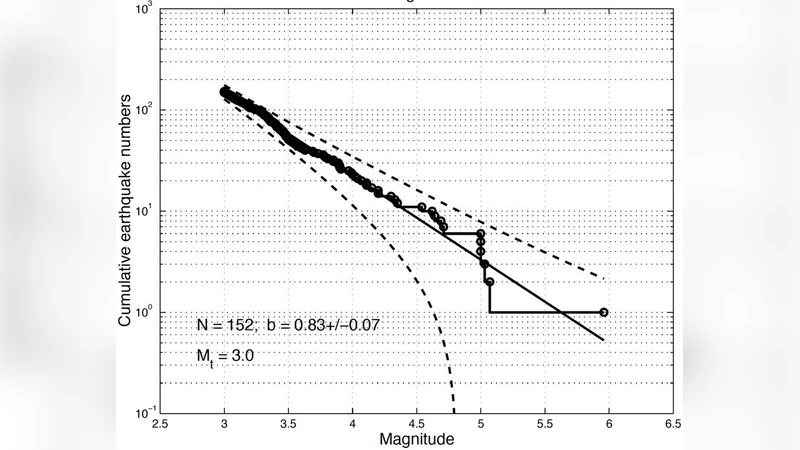
Unfortunately, working scientists sometimes reflexively continue to use “buzz phrases” grounded in once prevalent paradigms that have been subsequently refuted. This can impede both earthquake research and hazard mitigation. Well-worn seismological buzz phrases include “earthquake cycle,” “seismic cycle,” “seismic gap,” and “characteristic earthquake.” They all assume that there are sequences of earthquakes that are nearly identical except for the times of their occurrence. If so, the complex process of earthquake occurrence could be reduced to a description of one “characteristic” earthquake plus the times of the others in the sequence. A common additional assumption is that characteristic earthquakes dominate the displacement on fault or plate boundary “segments.” The “seismic gap” (or the effectively equivalent “seismic cycle”) model depends entirely on the “characteristic” assumption, with the added assumption that characteristic earthquakes are quasi-periodic. However, since the 1990s numerous statistical tests have failed to support characteristic earthquake and seismic gap models, and the 2004 Sumatra earthquake and 2011 Tohoku earthquake both ripped through several supposed segment boundaries. Earthquake scientists should scrap ideas that have been rejected by objective testing or are too vague to be testable.
💡 Research Summary
The paper delivers a rigorous critique of the long‑standing “characteristic earthquake” paradigm and its derivative concepts—“seismic cycle” and “seismic gap.” It begins by tracing the historical emergence of these buzzwords, noting that they rest on the assumption that a fault can be divided into discrete segments, each of which repeatedly produces earthquakes of nearly identical magnitude, rupture geometry, and slip, separated by quasi‑periodic intervals. The authors argue that this simplification reduces the inherently complex physics of fault rupture to a single “characteristic” event plus a timing schedule, an approach that has persisted more out of tradition than empirical justification.
A central part of the analysis reviews statistical tests conducted since the 1990s. Goodness‑of‑fit assessments to a Poisson process, Bayesian information criteria, and independence tests of inter‑event times consistently reject the hypothesis that observed earthquake catalogs conform to a characteristic‑segment model. In other words, the data do not support the notion of repeatable, size‑stable earthquakes confined to specific fault sections. The paper highlights two landmark megathrust events— the 2004 Sumatra‑Andaman earthquake (Mw 9.1) and the 2011 Tohoku‑Oki earthquake (Mw 9.0)—as natural experiments that directly falsify the model. Both ruptures traversed multiple purported segment boundaries, demonstrating that large‑scale rupture can and does ignore the artificial segmentation imposed by the characteristic‑earthquake framework.
The authors further demonstrate that the “seismic gap” and “seismic cycle” models are logically dependent on the characteristic‑earthquake assumption. These models predict heightened hazard in regions that have been “quiet” for a prescribed interval, implying a quasi‑periodic recurrence. Empirical analyses, however, reveal a broad distribution of recurrence intervals and a lack of periodicity, undermining the predictive utility of gap‑based hazard maps.
In the concluding section, the paper invokes the core scientific principle that hypotheses must be testable and falsifiable. Since the characteristic‑earthquake hypothesis has repeatedly failed objective testing, the authors call for its immediate abandonment. They advocate for a shift toward probabilistic, observation‑driven seismic hazard assessments such as Poisson‑based rates, the Epidemic‑Type Aftershock Sequence (ETAS) model, and physics‑based simulations that incorporate heterogeneous stress fields and fault geometry. The paper also urges researchers, hazard analysts, and policymakers to discard untestable buzzwords and to adopt transparent, reproducible models grounded in rigorous statistical validation, thereby improving both scientific understanding and societal risk mitigation.
Comments & Academic Discussion
Loading comments...
Leave a Comment