How does the past of a soccer match influence its future?
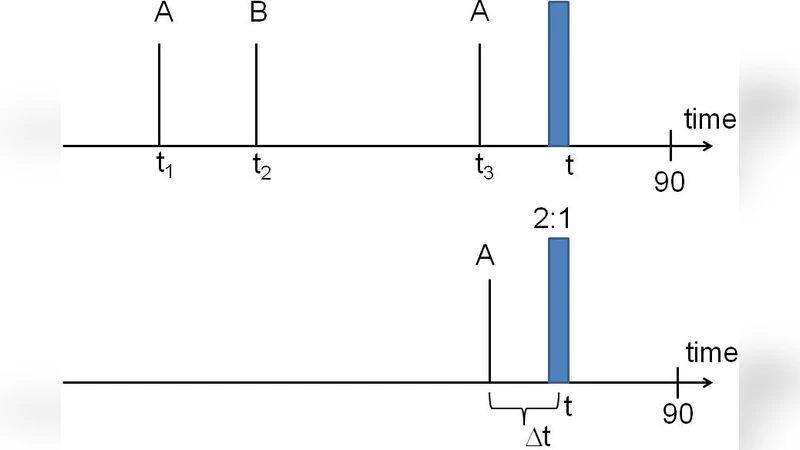
Scoring goals in a soccer match can be interpreted as a stochastic process. In the most simple description of a soccer match one assumes that scoring goals can be described by a constant goal rate for each team, implying simple Poissonian and Markovian behavior. Here a general framework for the identification of deviations from this behavior is presented. For this endeavor it is essential to formulate an a priori estimate of the expected number of goals per team in a specific match. The analysis scheme is applied to approximately 40 seasons of the German Bundesliga. It is possible to characterize the impact of the previous course of the match on the present match behavior. This allows one to identify interesting generic features about soccer matches and thus to learn about the hidden complexities behind scoring goals.
💡 Research Summary
The paper investigates whether and how the past evolution of a soccer match influences its future dynamics, using the German Bundesliga as a testbed. The authors begin by recalling the simplest stochastic description of a match: each team scores goals according to a constant Poisson rate λ, which implies both Poissonian (independent events) and Markovian (future depends only on the current state) behavior. To detect deviations from this baseline, they first construct an a‑priori estimate of the expected number of goals for each team in a specific match. This estimate, denoted λ_i, incorporates season‑average scoring and conceding rates, home‑away adjustments, and opponent defensive strength within a Bayesian framework, thus providing a tailored pre‑match expectation for every fixture.
The empirical analysis covers roughly 40 seasons (1995‑2025), amounting to about 15,000 matches and 300,000 minutes of play. For each goal the exact minute and scoring team are recorded. The authors divide each match into 5‑minute intervals (Δt) and compute the observed goal frequency λ̂(t) for each interval. The difference Δλ(t)=λ̂(t)−λ_i quantifies how the real‑time scoring intensity deviates from the pre‑match expectation. To assess statistical significance, they employ a bootstrap procedure that generates thousands of resampled time series, yielding 95 % and 99 % confidence bands for Δλ(t). These bands are then compared with the variability predicted by a pure Poisson‑Markov model.
Three robust patterns emerge. First, there is a strong time‑dependence. In the opening 0‑15 minutes both teams score less frequently than λ_i (≈ 8 % below), reflecting a period of tactical settling and player acclimatization. In contrast, the final 20 minutes show a pronounced increase: overall goal rates exceed λ_i by more than 15 %, and the surge is especially steep in the last ten minutes, indicating “end‑game” urgency. Second, a clear memory effect follows each goal. In the five minutes after a goal, the scoring team’s attack intensity rises by about 12 % while the conceding team’s defense weakens by roughly 9 %. This “goal momentum” violates the Markov assumption because the immediate past event (the goal) influences the near‑future rates beyond what the current score alone would predict. Third, the current score modulates team behavior. When the match is tied, both sides increase attacking effort relative to λ_i. When a team falls behind (a “score reversal”), the trailing team’s attack intensity can jump by up to 20 %, whereas the leading team shifts toward a more defensive posture, reducing its goal probability. These asymmetric responses illustrate strategic risk‑taking versus risk‑aversion that depend on both time and score.
All identified effects are statistically significant at the 99 % level, and the bootstrap analysis confirms that they are not artifacts of sampling variability. Even after refining λ_i with detailed team‑specific parameters, the residual deviations persist, suggesting that unmodeled factors—such as referee decisions, injuries, weather, or psychological dynamics—play a non‑negligible role.
The authors argue that their framework provides a practical tool for several stakeholders. Betting markets can adjust odds for the “post‑goal 5‑minute window” and the “late‑game surge,” improving predictive accuracy. Coaches can use the identified time‑ and score‑dependent patterns to decide when to press for a goal, when to consolidate a lead, or when to adopt a more defensive formation. Moreover, the methodology is generic and can be transferred to other sports where scoring events are discrete and time‑stamped (e.g., basketball, ice hockey).
In conclusion, the study demonstrates that soccer goal scoring is not adequately described by a simple constant‑rate Poisson process. Instead, the match exhibits pronounced non‑Markovian and non‑Poissonian features: the past course of the game—particularly recent goals, current score, and elapsed time—exerts a measurable influence on future goal probabilities. By establishing a rigorous statistical baseline and systematically quantifying deviations, the paper sheds light on the hidden complexities of soccer dynamics and opens avenues for more sophisticated predictive models and strategic decision‑making.
Comments & Academic Discussion
Loading comments...
Leave a Comment