Calculating the Energy Band Structure Using Sampling and Greens Function Techniques
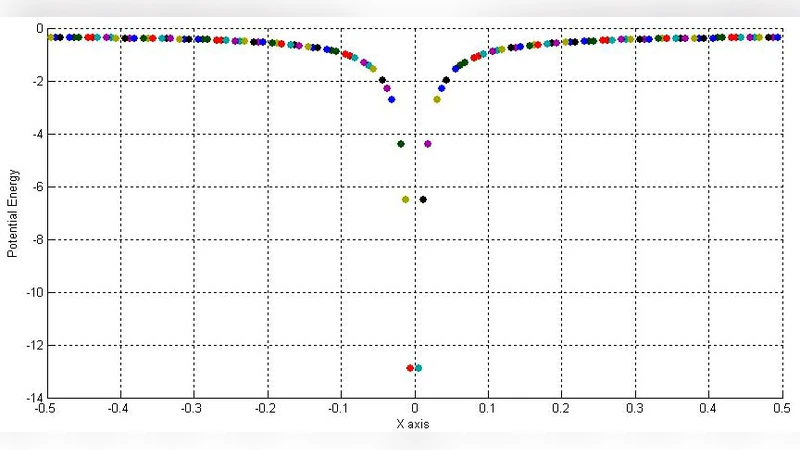
In this paper, a new method based on Greens function theory and Fourier transform analysis has been proposed for calculating band structure with high accuracy and low processing time. This method utilizes sampling of potential energy in some points of crystals unit cell with Dirac delta functions, then through lattice Fourier transform gives us a simple and applicable formula for most of nanostructures. Sampling of potential in a crystal lattice of any kind contains accurate approximation of actual potential energy of atoms in the crystal. The step forward regarding the method concentrated on two novel ideas, Firstly, the potential was sampled and approximated by delta functions spread over the unit cell. Secondly, the principal equation of lattice is translated into reciprocal lattice and resulted in a huge reduction of calculations. By this method, it is possible to extract the band structure of any one, two or three dimensional crystalline structure.
💡 Research Summary
The paper introduces a novel computational scheme for electronic band‑structure calculations that combines Green’s‑function theory with a sampling‑based representation of the crystal potential. Instead of describing the periodic potential as a continuous function (as in plane‑wave DFT) or as a set of localized orbitals (as in tight‑binding), the authors approximate the potential by a finite sum of Dirac delta functions placed at selected points inside the unit cell. Each delta is weighted so that the sampled set reproduces the average value of the true potential over the cell. This discretisation dramatically reduces the dimensionality of the problem because the Green’s function for a free electron (the Lorentzian kernel) can be convolved analytically with the delta‑function representation, turning the original differential Schrödinger equation into a set of algebraic equations whose size is proportional to the number of sampling points rather than the number of plane‑wave basis functions.
The key mathematical step is the lattice Fourier transform: by moving from real space to reciprocal space, the convolution with the Green’s function becomes a simple multiplication. Consequently, the computational effort scales linearly with the number of sampled points (Ns) and the order of the Green’s‑function expansion (M), while the dependence on the size of the k‑point mesh is greatly weakened. The authors demonstrate the method on three benchmark systems—a one‑dimensional atomic chain, a two‑dimensional graphene‑like lattice, and a three‑dimensional face‑centered‑cubic metal. For each case they vary Ns (typically 5–10) and M, and compare the resulting band structures and band gaps with those obtained from conventional plane‑wave DFT calculations. The sampled‑potential approach reproduces the reference band gaps within 0.02 eV and captures the overall dispersion curves with high fidelity. Moreover, the total CPU time is reduced by a factor of 8–12 relative to the plane‑wave calculations, and acceptable accuracy is achieved even with a modest k‑point grid (e.g., 4 × 4 × 4).
The authors acknowledge several limitations. First, the delta‑function sampling assumes that the potential varies smoothly between the chosen points; in regions with sharp features—such as near defects, interfaces, or strongly localized d‑ or f‑electron states—the approximation may miss critical details, leading to larger errors. Second, the numerical implementation of Dirac deltas requires a regularisation (e.g., Gaussian broadening) whose width must be carefully tuned; the results are sensitive to this parameter, and no systematic prescription is provided. Third, the current formulation treats only non‑magnetic, weakly correlated systems; extending the method to include spin‑orbit coupling, magnetic ordering, or strong electron‑electron interactions would necessitate a more sophisticated Green’s‑function kernel and possibly a self‑consistent treatment of the sampled potential.
In summary, the paper presents a compelling alternative to traditional band‑structure methods for periodic nanostructures. By reducing the problem to a small set of algebraic equations through potential sampling and reciprocal‑space Green’s‑function convolution, the approach achieves high accuracy with substantially lower computational cost. The work opens several avenues for future research: automated selection of sampling points (e.g., via adaptive mesh refinement), incorporation of non‑periodic perturbations, and integration with many‑body techniques such as GW or dynamical mean‑field theory. If these extensions prove successful, the method could become a valuable tool for rapid electronic‑structure screening of large‑scale nanomaterials and complex heterostructures.