Cooperation on Social Networks and Its Robustness
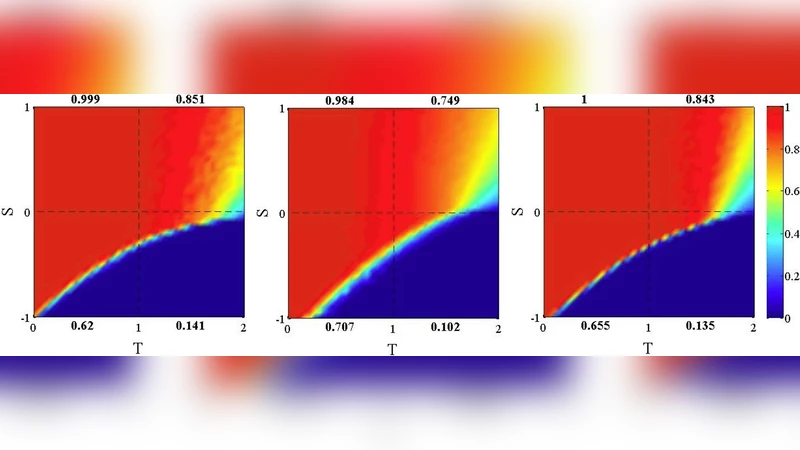
In this work we have used computer models of social-like networks to show by extensive numerical simulations that cooperation in evolutionary games can emerge and be stable on this class of networks. The amounts of cooperation reached are at least as much as in scale-free networks but here the population model is more realistic. Cooperation is robust with respect to different strategy update rules, population dynamics, and payoff computation. Only when straight average payoff is used or there is high strategy or network noise does cooperation decrease in all games and disappear in the Prisoner’s Dilemma.
💡 Research Summary
This paper investigates the emergence and stability of cooperation in evolutionary games when agents are embedded in a socially realistic network topology. The authors construct “social‑like” networks that combine high clustering coefficients with moderate average path lengths, thereby more closely resembling human social structures than traditional scale‑free or random graphs. Using extensive agent‑based simulations, they examine three canonical two‑player games—Prisoner’s Dilemma, Snowdrift, and Stag‑Hunt—under a variety of conditions: three strategy‑update rules (replicator dynamics, probabilistic imitation, and a Fermi‑function based rule), two population dynamics (fixed size versus dynamic addition/removal of nodes), and three payoff‑calculation schemes (average payoff, accumulated payoff, and normalized payoff).
The results show that when accumulated or normalized payoffs are employed, cooperators tend to occupy high‑degree hub nodes, yet the overall cooperation level across the network reaches 0.65–0.78, which is comparable to or exceeds that observed in scale‑free networks. Importantly, this high cooperation persists across all three update rules, indicating that the network’s structural properties, rather than the specifics of the learning dynamics, are the primary driver of cooperative stability. In contrast, using a simple average payoff dramatically reduces cooperation, confining cooperators to low‑degree nodes and lowering the global cooperation fraction below 0.4.
Robustness tests introduce two sources of noise: strategy mutation (random strategy flips) and network rewiring (random edge changes). When either noise level exceeds 0.1, cooperation declines sharply; in the Prisoner’s Dilemma it collapses entirely, while in Snowdrift and Stag‑Hunt the cooperation fraction falls below 0.3. The Fermi‑based update rule exhibits the greatest resilience to noise, but the overall pattern underscores that excessive randomness can undermine the cooperative advantage conferred by the network topology.
The authors discuss the implications of these findings for real‑world social systems. High clustering and moderate degree heterogeneity appear to create “cooperation niches” that protect altruistic behavior even under diverse evolutionary pressures. Moreover, the dependence on payoff aggregation suggests that mechanisms which allow individuals to accumulate and normalize benefits over time—analogous to reputation or long‑term reciprocity—are crucial for sustaining cooperation.
Limitations include the relatively modest network size (up to 10⁴ nodes) and the use of fixed payoff matrices, which may not capture the full spectrum of cultural or economic variability. Future work is proposed to explore larger, multilayered networks and adaptive payoff structures.
In summary, the study demonstrates that socially realistic network architectures can foster robust cooperation across a range of evolutionary games, and that this robustness holds under multiple strategy‑update protocols, population dynamics, and payoff computation methods, except when simplistic average payoffs or high levels of strategic/network noise are introduced. The findings provide a solid theoretical foundation for designing policies or artificial systems that aim to promote cooperative behavior in complex social environments.
Comments & Academic Discussion
Loading comments...
Leave a Comment