CfA Plasma Talks
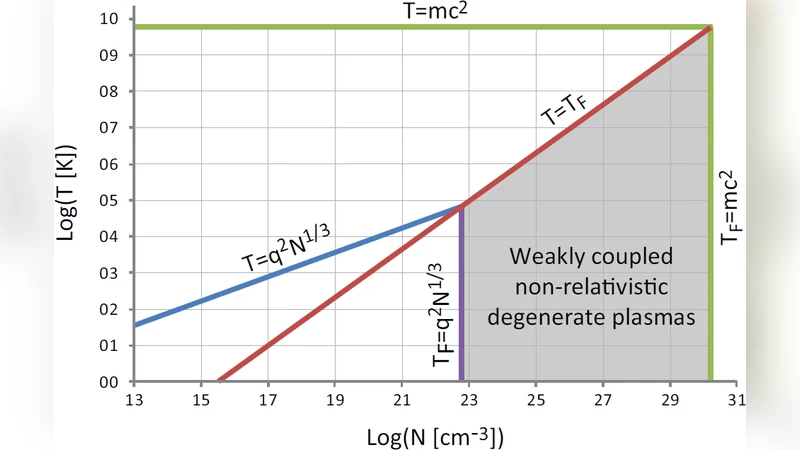
Notes from a series of 13 one hour (or more) lectures on Plasma Physics given to Ramesh Narayan’ research group at the Harvard-Smithsonian Center for Astrophysics, between January and July 2012. Lectures 1 to 5 cover various key Plasma Physics themes. Lectures 6 to 12 mainly go over the Review Paper on “Multidimensional electron beam-plasma instabilities in the relativistic regime” [\emph{Physics of Plasmas} \textbf{17}, 120501 (2010)]. Lectures 13 talks about the so-called Biermann battery and its ability to generate magnetic fields from scratch.
💡 Research Summary
The document is a comprehensive set of lecture notes compiled from a thirteen‑session series delivered to Ramesh Narayan’s research group at the Harvard‑Smithsonian Center for Astrophysics between January and July 2012. Each lecture lasted at least one hour, with several extending to ninety minutes, and together they form a coherent curriculum that moves from fundamental plasma physics to cutting‑edge research on relativistic electron‑beam–plasma instabilities and finally to the Biermann battery mechanism for primordial magnetic‑field generation.
Lectures 1‑5 lay the groundwork. Lecture 1 defines plasma as the fourth state of matter, emphasizing quasineutrality, collective behavior, and the hierarchy of plasma frequencies (electron plasma frequency, ion acoustic frequency, and electromagnetic wave dispersion). Lecture 2 introduces the governing equations—Maxwell’s equations coupled with the Vlasov (or kinetic) description—and derives key dimensionless parameters such as the plasma beta, Debye length, and skin depth. Lecture 3 focuses on linear and weakly nonlinear phenomena: Landau damping, two‑stream and filamentation (Weibel) instabilities, and the conditions under which they become electrostatic or electromagnetic. Lecture 4 transitions to magnetohydrodynamics (MHD), presenting the induction equation, frozen‑in flux theorem, magnetic reconnection, and the role of resistivity and Hall effects. Lecture 5 surveys experimental platforms (laser‑produced plasmas, Z‑pinches, tokamaks) and astrophysical analogues (solar wind, supernova remnants, accretion‑disk coronae), establishing a bridge between laboratory and cosmic plasmas.
Lectures 6‑12 constitute an in‑depth exposition of the review article “Multidimensional electron beam‑plasma instabilities in the relativistic regime” (Physics of Plasmas 17, 120501 2010). Lecture 6 revisits the classic non‑relativistic two‑stream growth rate γ≈(n_b/n_p)^{1/3} ω_p and sets the stage for relativistic corrections. Lecture 7 derives the relativistic dispersion relation, showing that the effective electron mass increases by the Lorentz factor γ₀, which suppresses the growth rate to γ≈γ₀^{-1/2} ω_p. Lecture 8 presents two‑dimensional Particle‑in‑Cell (PIC) results that reveal simultaneous excitation of electrostatic (longitudinal) and electromagnetic (transverse) modes, with the fastest growth occurring for wavevectors oblique to the beam direction. Lecture 9 extends the analysis to three dimensions, illustrating how nonlinear saturation is governed by electron trapping, wave‑breaking, and the transfer of beam kinetic energy into magnetic turbulence. Lecture 10 examines the influence of beam temperature, transverse profile (Gaussian versus flat‑top), and current density gradients on mode selection, demonstrating that modest temperature spreads preferentially damp electrostatic modes while leaving filamentation relatively robust. Lecture 11 discusses spectral cascades: after the linear phase, the dominant electromagnetic filaments merge, producing larger‑scale magnetic structures that can seed a dynamo‑like amplification. Lecture 12 connects these findings to high‑energy astrophysical environments—relativistic jets, pulsar wind nebulae, and supernova shock precursors—by providing scaling relations that translate simulation parameters into observable magnetic‑field strengths and radiation signatures.
Lecture 13 is devoted to the Biermann battery effect. Starting from the generalized Ohm’s law, the lecturer derives the term (∇T × ∇n)/(en) that appears in the induction equation when temperature and density gradients are non‑parallel. This term acts as a source of magnetic flux even in the absence of any pre‑existing field. Numerical experiments illustrate how, in the early universe or during the formation of the first galaxies, such misaligned gradients can generate seed fields of order 10^{-20}–10^{-18} G on kiloparsec scales. The lecture then compares the battery to other seed‑field mechanisms (e.g., plasma dynamo, cosmic‑ray driven instabilities) and discusses how subsequent turbulent amplification can raise the field to the micro‑gauss levels observed in mature galaxies.
Overall, the notes provide a seamless narrative that starts with the essential physics of plasmas, progresses through a rigorous treatment of multidimensional relativistic instabilities—including analytical derivations, PIC simulation data, and parameter‑space maps—and culminates in a discussion of primordial magnetic‑field generation. The material is richly illustrated with equations, plots, and references to both laboratory experiments and astrophysical observations, making it a valuable resource for graduate students, postdoctoral researchers, and senior scientists interested in the intersection of plasma theory, high‑energy astrophysics, and cosmic magnetogenesis.