Description Logics with Fuzzy Concrete Domains
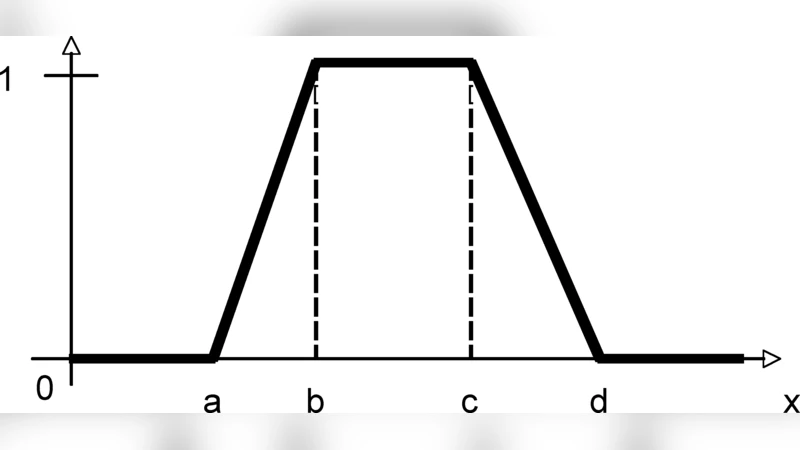
We present a fuzzy version of description logics with concrete domains. Main features are: (i) concept constructors are based on t-norm, t-conorm, negation and implication; (ii) concrete domains are fuzzy sets; (iii) fuzzy modifiers are allowed; and (iv) the reasoning algorithm is based on a mixture of completion rules and bounded mixed integer programming.
💡 Research Summary
The paper introduces a fuzzy extension of Description Logics (DL) that incorporates fuzzy concrete domains, thereby enabling the representation of vague and continuous knowledge within a formally grounded logical framework. Traditional DLs excel at modeling crisp hierarchical relationships and discrete concrete domains (such as integers or strings), but they struggle with concepts that exhibit partial membership, such as “high temperature” or “slightly risky”. To address this gap, the authors propose four main innovations. First, they replace the classical DL constructors (intersection ⊓, union ⊔, and negation ¬) with fuzzy operators based on t‑norms, t‑conorms, fuzzy negation, and fuzzy implication. This allows the membership degree of an individual in a compound concept to be computed as a function of its degrees in the constituent concepts, e.g., μ_{A⊓B}(x)=T(μ_A(x), μ_B(x)). Second, concrete domains are modeled as fuzzy sets rather than crisp value sets. Each numeric attribute (temperature, length, etc.) is associated with a membership function that maps a concrete value to a degree in