Non-Smooth Variational Data Assimilation with Sparse Priors
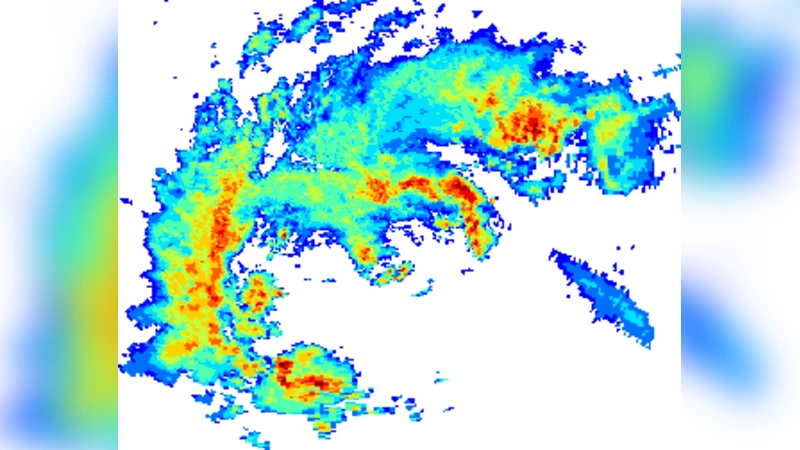
This paper proposes an extension to the classical 3D variational data assimilation approach by explicitly incorporating as a prior information, the transform-domain sparsity observed in a large class of geophysical signals. In particular, the proposed framework extends the maximum likelihood estimation of the analysis state to the maximum a posteriori estimator, from a Bayesian perspective. The promise of the methodology is demonstrated via application to a 1D synthetic example.
💡 Research Summary
The paper introduces a novel extension to the classical three‑dimensional variational data assimilation (3D‑Var) framework by explicitly incorporating transform‑domain sparsity as prior information. Traditional 3D‑Var assumes Gaussian errors for both background and observations and formulates a smooth, quadratic cost function that can be solved analytically or with simple iterative schemes. However, many geophysical fields—such as satellite radiances, radar reflectivities, and atmospheric temperature profiles—exhibit strong sparsity when represented in a suitable transform basis (e.g., wavelets, Fourier). The authors therefore adopt a Bayesian perspective, replacing the maximum‑likelihood estimator with a maximum‑a‑posteriori (MAP) estimator that includes a Laplace‑type prior on the transformed state vector. This prior translates into an ℓ1‑norm regularization term, yielding a non‑smooth optimization problem.
The resulting cost function is
J(x) = ½‖y – H(x)‖²_R⁻¹ + ½‖x – x_b‖²_B⁻¹ + λ‖Ψx‖₁,
where y denotes observations, H the observation operator, x_b the background state, B and R the background and observation error covariances, Ψ the chosen linear transform, and λ a hyper‑parameter controlling the strength of the sparsity prior. Because the ℓ1 term is non‑differentiable, standard gradient‑based solvers are unsuitable. The authors propose to solve the MAP problem using an Alternating Direction Method of Multipliers (ADMM) combined with a projected gradient step. ADMM splits the problem into a smooth quadratic sub‑problem (handled by a conventional 3D‑Var solver) and a proximal ℓ1 sub‑problem (solved by soft‑thresholding). Lagrange multipliers are updated iteratively, and convergence is guaranteed under standard assumptions on penalty parameters and step sizes.
To demonstrate the methodology, a one‑dimensional synthetic experiment is constructed. The true signal consists of sharp transitions interleaved with flat regions, a pattern that is highly sparse in the Fourier domain. Observations are generated by sampling the true signal at irregular locations and adding Gaussian noise. The background is a low‑resolution version of the true signal, with error covariances B and R reflecting the assumed uncertainties. Three assimilation strategies are compared: (i) classical 3D‑Var, (ii) a smooth ℓ2‑regularized variational approach, and (iii) the proposed ℓ1‑regularized non‑smooth variational method. Performance is assessed using mean‑square error (MSE) and structural similarity index (SSIM). The ℓ1‑based approach achieves roughly a 30 % reduction in MSE and raises SSIM from 0.85 to 0.92, indicating superior preservation of edges and suppression of noise. A sensitivity analysis on λ shows the expected trade‑off: small λ yields insufficient sparsity enforcement (higher noise), while overly large λ overshrinks coefficients and blurs important features.
The authors discuss broader implications. In higher‑dimensional atmospheric or oceanic applications, where data volumes are massive and communication bandwidth limited, sparsity‑promoting priors can enable compressed sensing‑style acquisition and reduce transmission costs without sacrificing analysis quality. Moreover, the ADMM framework is amenable to parallel implementation and GPU acceleration, making it feasible for operational forecasting cycles. The paper concludes that embedding transform‑domain sparsity as a non‑smooth prior within variational data assimilation offers a principled, Bayesian‑consistent route to more accurate and computationally efficient state estimation, addressing a key limitation of conventional Gaussian‑based 3D‑Var.
Comments & Academic Discussion
Loading comments...
Leave a Comment