Multiwavelength Spectral Study of 3C 279 in the Internal Shock Scenario
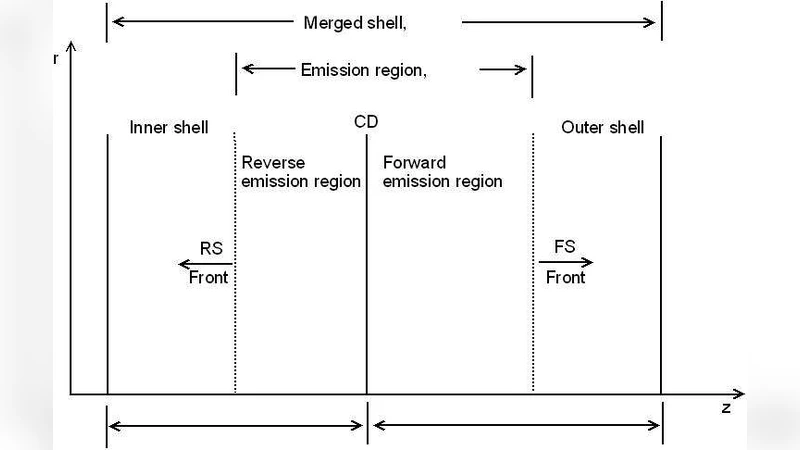
We have observed 3C279 in a gamma-ray flaring state in November 2008. We construct quasi-simultaneous spectral energy distributions (SEDs) of the source for the flaring period of 2008 and during a quiescent period in May 2010. Data have been compiled from observations with Fermi, Swift, RXTE, the VLBA, and various ground-based optical and radio telescopes. The objective is to comprehend the correspondence between the flux and polarization variations observed during these two time periods by carrying out a detailed spectral analyses of 3C279 in the internal shock scenario, and gain insights into the role of intrinsic parameters and interplay of synchrotron and inverse Compton radiation processes responsible for the two states. As a first step, we have used a multi-slice time-dependent leptonic jet model, in the framework of the internal shock scenario, with radiation feedback to simulate the SED of 3C~279 observed in an optical high state in early 2006. We have used physical jet parameters obtained from the VLBA monitoring to guide our modeling efforts. We briefly discuss the effects of intrinsic parameters and various radiation processes in producing the resultant SED.
💡 Research Summary
The paper presents a comprehensive multi‑wavelength study of the flat‑spectrum radio quasar 3C 279, focusing on two distinct epochs: a γ‑ray flaring episode in November 2008 and a quiescent period in May 2010. By assembling quasi‑simultaneous spectral energy distributions (SEDs) from Fermi‑LAT, Swift‑XRT/UVOT, RXTE‑PCA, VLBA, and a suite of ground‑based optical and radio facilities, the authors obtain a broadband view that spans from radio frequencies up to several hundred GeV. In addition to flux measurements, they incorporate contemporaneous polarization data (degree and electric‑vector position angle) to probe the magnetic field geometry during both states.
To interpret these observations, the authors employ a time‑dependent leptonic jet model built within the internal‑shock framework. The model is “multi‑slice”: the emission region is divided into a series of thin shells (slices) that interact radiatively. Each slice evolves under synchrotron, synchrotron‑self‑Compton (SSC), and external‑Compton (EC) processes, while photons produced in one slice can be scattered in another, providing a feedback loop that captures the complex coupling between different zones. The external photon fields considered include the broad‑line region (BLR) and dusty torus (DT), whose energy densities are treated as adjustable parameters.
Key physical inputs are drawn from VLBA monitoring of 3C 279’s jet. The apparent superluminal motion (β_app ≈ 10 c) and the measured size of the radio core (∼10¹⁶ cm) set the bulk Lorentz factor and the characteristic radius of the emission region, respectively. These constraints anchor the model, reducing the degeneracy that often plagues SED fitting.
During the 2008 flare, the γ‑ray spectrum hardens and peaks above 10 GeV, while the optical polarization degree rises sharply and the electric‑vector position angle (EVPA) swings by ∼180°. In the model, this behavior is reproduced by increasing the relative Lorentz‑factor contrast (ΔΓ) between colliding shells, which boosts the efficiency of electron acceleration. The resulting electron distribution extends to higher Lorentz factors, enhancing both the synchrotron component (shifting the peak into the optical‑UV band) and the EC component (dominated by BLR photons) that dominates the γ‑ray output. A modest reduction in the magnetic field (B) further allows electrons to retain higher energies before synchrotron cooling sets in, consistent with the observed hardening. The enhanced EC scattering naturally accounts for the elevated γ‑ray flux, while the altered magnetic geometry in the leading slice explains the rapid EVPA rotation and the increase in polarization degree.
In contrast, the 2010 quiescent state is modeled with a smaller ΔΓ, a slightly stronger magnetic field, and reduced external photon energy density. The electron spectrum is softer, the synchrotron peak remains in the infrared–radio regime, and the EC contribution is weak, yielding a smooth, low‑flux γ‑ray spectrum. Polarization remains relatively stable, reflecting a more ordered magnetic field configuration.
A systematic parameter‑sensitivity study demonstrates that ΔΓ primarily controls the high‑energy electron tail and thus the EC luminosity, B governs the synchrotron peak position and cooling timescale, and u_ext (the external photon field energy density) sets the relative strength of EC versus SSC. The multi‑slice feedback is crucial for reproducing the observed polarization swings; a single‑zone model would underestimate the coupling between zones and fail to generate the observed rapid EVPA changes.
Overall, the work shows that an internal‑shock, multi‑slice, time‑dependent leptonic model, anchored by VLBA‑derived jet parameters, can simultaneously explain the broadband SEDs and polarization behavior of 3C 279 in both flaring and quiescent states. The study highlights the importance of intrinsic jet parameters—especially the Lorentz‑factor contrast, magnetic field strength, and external photon field density—in shaping the balance between synchrotron, SSC, and EC emission. By extending this framework to other blazars and incorporating higher‑cadence multi‑wavelength monitoring, future research can further unravel the microphysics of particle acceleration and radiation in relativistic jets.