A Nonzero Gap Two-Dimensional Carbon Allotrope from Porous Graphene
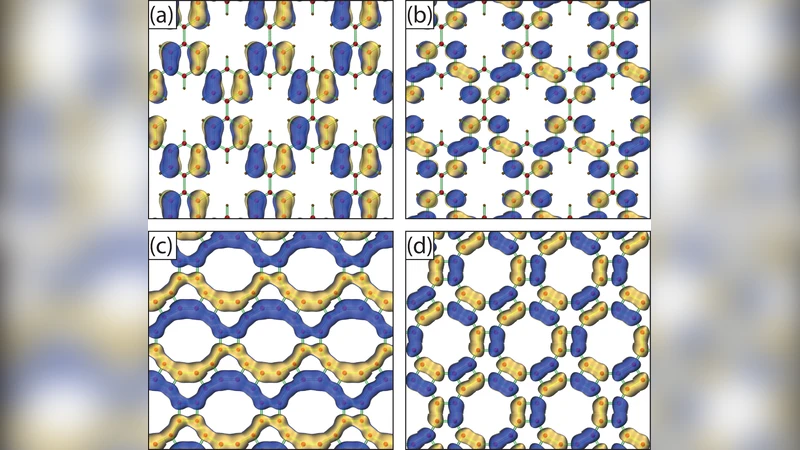
Graphene is considered one of the most promising materials for future electronic. However, in its pristine form graphene is a gapless material, which imposes limitations to its use in some electronic applications. In order to solve this problem many approaches have been tried, such as, physical and chemical functionalizations. These processes compromise some of the desirable graphene properties. In this work, based on ab initio quantum molecular dynamics, we showed that a two-dimensional carbon allotrope, named biphenylene carbon (BPC) can be obtained from selective dehydrogenation of porous graphene. BPC presents a nonzero bandgap and well-delocalized frontier orbitals. Synthetic routes to BPC are also addressed.
💡 Research Summary
Graphene’s zero‑band‑gap nature limits its direct use in many electronic devices that require a finite energy gap for switching. While various physical and chemical functionalization strategies have been explored, they often degrade graphene’s intrinsic high carrier mobility and mechanical robustness. In this work, the authors propose an alternative route that leverages porous graphene (PG) as a precursor to a novel two‑dimensional carbon allotrope, biphenylene carbon (BPC), which possesses a non‑zero band gap and well‑delocalized frontier orbitals.
Using first‑principles density functional theory (DFT) combined with ab‑initio quantum molecular dynamics (QMD), the study simulates selective dehydrogenation of PG. In the PG lattice, certain C–H bonds are removed, prompting neighboring carbon atoms to form new σ bonds that reorganize the hexagonal network into a periodic pattern of squares and octagons— the biphenylene motif. Geometry optimization yields a planar (with minor rippling) sheet where C–C bond lengths range from 1.38 Å to 1.44 Å, comparable to pristine graphene but with characteristic distortions at the square‑octagon junctions.
Electronic structure calculations reveal that BPC is a direct‑gap semiconductor. The PBE‑GGA functional predicts a band gap of ~0.78 eV, while the more accurate HSE06 hybrid functional gives ~0.92 eV. These values place BPC in the same range as conventional semiconductors such as silicon, making it suitable for field‑effect transistors and optoelectronic components. Importantly, the conduction‑band minimum and valence‑band maximum wavefunctions are delocalized over the entire sheet, suggesting high carrier mobility despite the presence of non‑hexagonal rings. Electron density difference maps and electron localization function (ELF) analyses confirm the coexistence of strong σ‑bonding along the square‑octagon edges and an extended π‑network across the lattice, which together confer both thermal stability and mechanical strength.
Molecular dynamics simulations at 300 K for 10 ps demonstrate that the BPC sheet remains structurally intact, indicating kinetic stability under ambient conditions. Energy analyses show that BPC is energetically competitive with other carbon allotropes, and its formation energy is favorable when dehydrogenation is driven by appropriate external stimuli.
The authors also discuss realistic synthetic pathways. One approach involves plasma‑assisted or thermal dehydrogenation of pre‑fabricated porous graphene, where controlled exposure to hydrogen‑free environments at temperatures around 800 °C can induce the required bond rearrangements. An alternative bottom‑up method proposes chemical vapor deposition (CVD) using brominated benzene derivatives as molecular precursors on copper or nickel substrates; the metal catalyst facilitates dehydrogenation and the self‑assembly of the biphenylene network during growth. Process parameters such as substrate temperature, pressure, and exposure time are outlined, offering a practical roadmap for experimental verification.
In summary, this study predicts a new 2D carbon material—biphenylene carbon—that combines graphene‑like high carrier mobility and mechanical resilience with a finite, tunable band gap. The computational evidence for its electronic properties, structural stability, and feasible synthesis routes positions BPC as a promising candidate for next‑generation nanoelectronics, potentially enabling graphene‑based transistors, photodetectors, and flexible semiconductor devices without sacrificing the material’s hallmark performance attributes.