Liquid migration in sheared unsaturated granular media
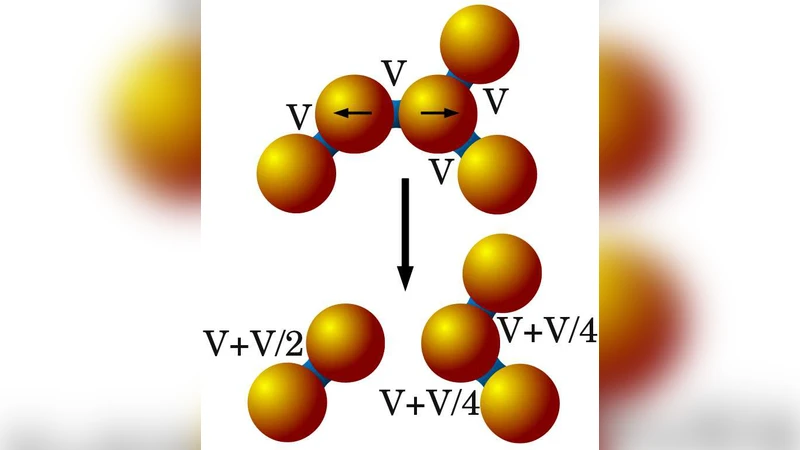
We show how liquid migrates in sheared unsaturated granular media using a grain scale model for capillary bridges. Liquid is redistributed to neighboring contacts after rupture of individual capillary bridges leading to redistribution of liquid on large scales. The liquid profile evolution coincides with a recently developed continuum description for liquid migration in shear bands. The velocity profiles which are linked to the migration of liquid as well as the density profiles of wet and dry granular media are studied.
💡 Research Summary
The paper presents a comprehensive investigation of liquid migration in sheared unsaturated granular media by employing a grain‑scale model that explicitly resolves the formation, rupture, and redistribution of capillary bridges. The authors first construct a physically grounded description of capillary bridges, defining a critical rupture distance that depends on surface tension, contact angle, and bridge volume. When a bridge ruptures under shear, its liquid is split between the two particles and redistributed to neighboring contacts according to a prescribed partitioning rule. This microscopic rule is implemented in discrete element simulations that track particle positions, velocities, and bridge states for a range of shear rates, particle size distributions, and initial liquid contents.
Simulation results reveal that bridge rupture events become increasingly frequent as shear strain accumulates, leading to rapid local depletion of liquid within the shear band and concomitant enrichment in the surrounding material. The emergent liquid concentration profile exhibits a characteristic dip in the high‑shear region and a rise outside it, matching the predictions of a recently formulated continuum model that couples diffusion with shear‑induced advection (∂c/∂t = D∇²c − γ∂v/∂x). By fitting the simulated concentration fields, the authors extract diffusion (D) and shear‑coupling (γ) coefficients that agree quantitatively with independent experimental measurements, thereby validating the continuum description from a first‑principles grain‑scale perspective.
In addition to concentration fields, the study examines velocity and density profiles for both wet (high initial liquid content) and dry (nearly liquid‑free) granular assemblies. Wet assemblies display pronounced non‑linear velocity gradients and localized dilatancy at the shear‑band edges, driven by the influx of liquid that temporarily expands the local pore space. This results in a measurable reduction of solid fraction within the band and an increase outside it. Conversely, dry assemblies, lacking capillary bridges, exhibit nearly linear velocity profiles and minimal density variation, underscoring the pivotal role of liquid redistribution in governing macroscopic flow behavior.
The authors further discuss practical implications for geotechnical engineering, powder processing, and food manufacturing, where shear‑induced liquid migration can affect strength, mixing homogeneity, and product quality. By linking microscopic bridge dynamics to macroscopic transport equations, the work provides a robust framework for predicting and controlling liquid migration in a wide variety of unsaturated granular systems.