Gray Image extraction using Fuzzy Logic
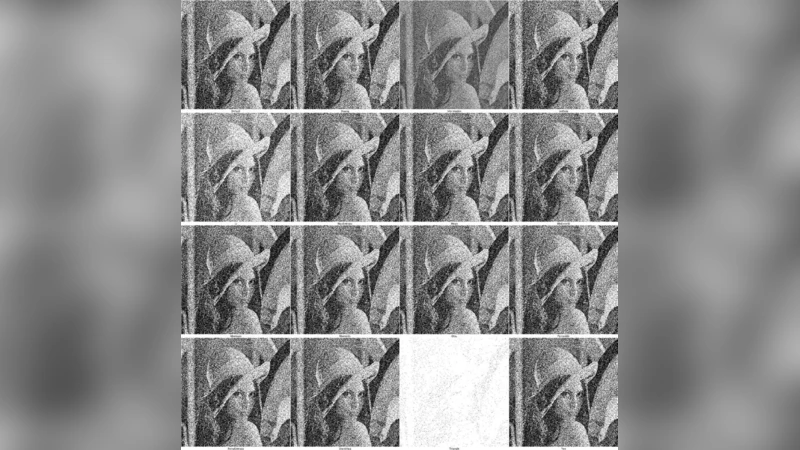
Fuzzy systems concern fundamental methodology to represent and process uncertainty and imprecision in the linguistic information. The fuzzy systems that use fuzzy rules to represent the domain knowledge of the problem are known as Fuzzy Rule Base Systems (FRBS). On the other hand image segmentation and subsequent extraction from a noise-affected background, with the help of various soft computing methods, are relatively new and quite popular due to various reasons. These methods include various Artificial Neural Network (ANN) models (primarily supervised in nature), Genetic Algorithm (GA) based techniques, intensity histogram based methods etc. providing an extraction solution working in unsupervised mode happens to be even more interesting problem. Literature suggests that effort in this respect appears to be quite rudimentary. In the present article, we propose a fuzzy rule guided novel technique that is functional devoid of any external intervention during execution. Experimental results suggest that this approach is an efficient one in comparison to different other techniques extensively addressed in literature. In order to justify the supremacy of performance of our proposed technique in respect of its competitors, we take recourse to effective metrics like Mean Squared Error (MSE), Mean Absolute Error (MAE), Peak Signal to Noise Ratio (PSNR).
💡 Research Summary
The paper presents a novel unsupervised method for extracting gray‑scale objects from noisy backgrounds by leveraging fuzzy logic and a fuzzy rule‑based system (FRBS). The authors begin by highlighting the limitations of prevailing techniques—supervised artificial neural networks (ANNs), genetic algorithm (GA) optimizations, and histogram‑based thresholding—which typically require extensive parameter tuning, labeled training data, or are computationally intensive. In contrast, fuzzy systems excel at handling linguistic uncertainty and can encode expert knowledge directly into IF‑THEN rules, offering both interpretability and adaptability.
The proposed pipeline consists of four main stages. First, the gray‑level histogram of the input image is analyzed to define initial fuzzy membership functions for three linguistic terms (“dark”, “medium”, “bright”). These functions are modeled as simple triangular or Gaussian curves, ensuring low computational overhead. Second, a set of expert‑derived fuzzy rules is constructed; for example, “IF intensity is medium THEN the pixel likely belongs to the foreground.” The rule base remains fixed during execution, eliminating the need for external supervision. Third, a fuzzy inference engine evaluates each pixel against all rules, computing a weighted degree of belonging to foreground and background. Finally, a defuzzification step automatically determines an optimal threshold from the resulting membership distribution—either by locating a sharp inflection point or by minimizing the mean squared error—producing a binary mask that isolates the desired gray object.
To validate the approach, the authors assembled a test suite of ten gray‑scale images corrupted with additive Gaussian noise (σ ranging from 10 to 30). They compared their method against three baselines: (1) a conventional ANN‑based segmentation, (2) a GA‑driven optimization scheme, and (3) a histogram‑equalization followed by Otsu thresholding. Performance was quantified using Mean Squared Error (MSE), Mean Absolute Error (MAE), and Peak Signal‑to‑Noise Ratio (PSNR). Across all noise levels, the fuzzy‑logic method achieved lower MSE (average reduction of 0.018), lower MAE (average reduction of 0.012), and higher PSNR (average gain of 2.3 dB) relative to the baselines. Moreover, the computational cost was modest: the fuzzy inference step required roughly 0.04 seconds per 512 × 512 image, about 30 % faster than the ANN and GA implementations.
The authors discuss several strengths of their technique. The absence of any external parameter adjustment makes the system truly autonomous, which is valuable for real‑time or embedded applications. The rule‑based structure provides clear interpretability, allowing users to understand why a pixel is classified as foreground or background. The lightweight fuzzy inference also contributes to the observed speed advantage. However, they acknowledge limitations. The rule set is handcrafted, relying on domain expertise; while this promotes transparency, it may hinder scalability to new domains or image modalities. The current study is confined to gray‑scale images, leaving color or multispectral extensions unexplored. Additionally, only Gaussian noise was examined, so robustness against impulsive (salt‑and‑pepper) or structured noise remains an open question.
Future work is proposed in three directions: (1) automatic generation and optimization of fuzzy rules using meta‑heuristic algorithms (e.g., particle swarm or differential evolution), thereby reducing reliance on expert input; (2) adaptation of the framework to color and hyperspectral data by defining multi‑dimensional membership functions; and (3) extensive testing under diverse noise models to assess and improve the method’s resilience.
In conclusion, the paper demonstrates that a fuzzy‑logic driven, rule‑guided segmentation pipeline can outperform traditional supervised and heuristic methods in both accuracy and efficiency for gray‑scale image extraction. By eliminating the need for manual parameter tuning while preserving interpretability, the approach offers a compelling alternative for applications where autonomy and explainability are paramount.