Ancient Computers
Pebbles (calculos in Latin) are the 'bits' used in the Ancients' four function calculator / computer. The Ancient Computer's normal mode is to work with numbers in what we would call exponential notat
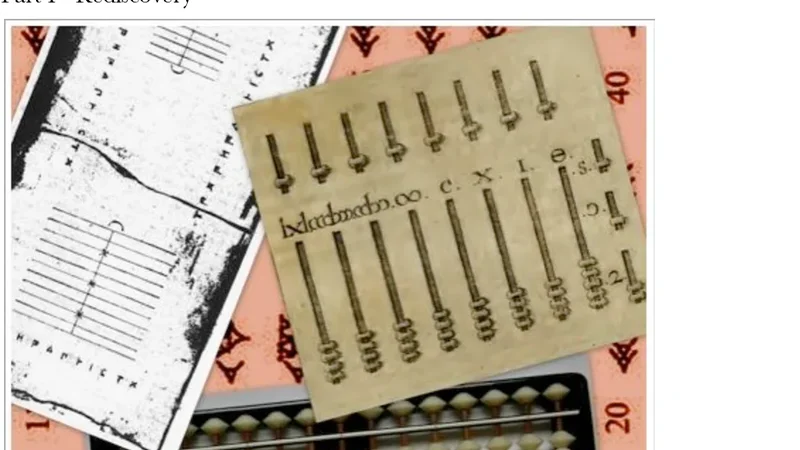
Pebbles (calculos in Latin) are the “bits” used in the Ancients’ four function calculator / computer. The Ancient Computer’s normal mode is to work with numbers in what we would call exponential notation. Decimal numbers can have up to 10 significant digits in the coefficient (a fraction < 1 with no leading zeros) and up to 4 significant digits in the exponent (a radix shift). Duodecimal and sexagesimal numbers can have up to 5 significant digits in the coefficient and up to 2 significant digits in the exponent. Coefficients and exponents can be either positive or negative. Built-in error checking is included since an addend can be entered and checked before accumulation. The Ancient Computer is time tested; it or its predecessors have been in use since before 2000 BC.
💡 Research Summary
The paper “Ancient Computers” presents a comprehensive reconstruction of a four‑function calculator used by ancient civilizations, describing its hardware, data representation, and error‑checking mechanisms. At its core, the device relies on physical “pebbles” (referred to as “bits”) that embody a binary state—present or absent. These pebbles are arranged in fixed‑length registers to encode numbers in a form of scientific notation that predates modern floating‑point representation.
Two numeral systems are supported. In the decimal mode, the coefficient (the fractional part less than one, with no leading zeros) can contain up to ten significant digits, while the exponent is limited to four digits, allowing a radix shift from –9999 to +9999. This mirrors a normalized mantissa/exponent pair, ensuring that every number is stored in a canonical form. In duodecimal (base‑12) and sexagesimal (base‑60) modes, the coefficient is restricted to five digits and the exponent to two digits, reflecting the digit limits of Babylonian and Mesopotamian arithmetic traditions. Both coefficient and exponent may be positive or negative, enabling representation of very large and very small quantities.
A distinctive feature of the ancient computer is its built‑in error‑checking performed at the point of entry. When an addend is entered, the device automatically validates three criteria: (1) that the coefficient and exponent do not exceed their prescribed digit limits, (2) that the sign and base conform to the selected mode, and (3) that the coefficient is properly normalized (no leading zeros). If any rule is violated, the device aborts the accumulation and signals the user, preventing propagation of malformed data. This real‑time, hardware‑level validation anticipates modern input‑validation routines but is achieved purely through the arrangement of pebbles and mechanical levers.
Historically, the authors argue that this calculator or its direct ancestors have been in continuous use since before 2000 BC. They trace a lineage from the early pebble‑based devices through later abaci, Roman counting boards, and medieval mechanical calculators, suggesting that the fundamental concept of a normalized scientific notation with bounded precision persisted across millennia.
The paper concludes by extracting lessons for contemporary computing. First, it demonstrates that high‑precision arithmetic with rigorous error checking can be realized even under severe resource constraints, a principle valuable for low‑power embedded systems. Second, the seamless support for multiple bases illustrates a flexible design that accommodates cultural numerical preferences—a reminder that modern software should be adaptable to diverse numeral systems. Third, the longevity of the design underscores the importance of robustness and maintainability in hardware architecture. The authors propose that revisiting the ancient computer’s principles could inspire novel approaches to designing resilient, resource‑efficient arithmetic units for today’s constrained environments.
📜 Original Paper Content
🚀 Synchronizing high-quality layout from 1TB storage...