Improving the Asymmetric TSP by Considering Graph Structure
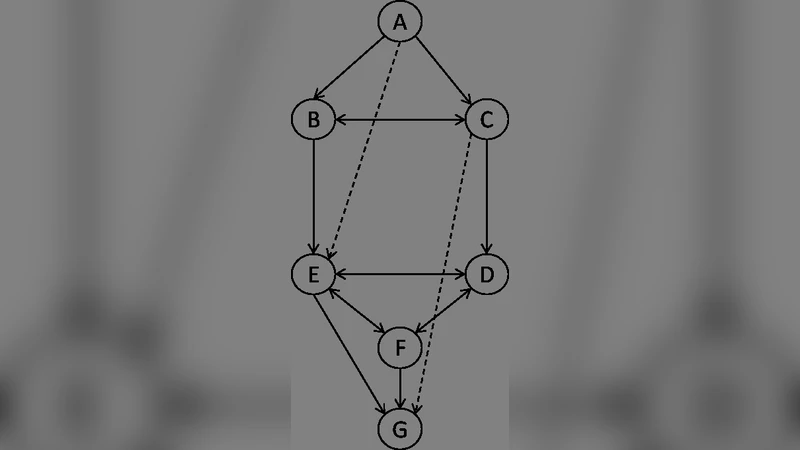
Recent works on cost based relaxations have improved Constraint Programming (CP) models for the Traveling Salesman Problem (TSP). We provide a short survey over solving asymmetric TSP with CP. Then, we suggest new implied propagators based on general graph properties. We experimentally show that such implied propagators bring robustness to pathological instances and highlight the fact that graph structure can significantly improve search heuristics behavior. Finally, we show that our approach outperforms current state of the art results.
💡 Research Summary
The paper provides a comprehensive survey of recent Constraint Programming (CP) approaches for the Asymmetric Traveling Salesman Problem (ATSP) and introduces a novel set of implied propagators that exploit global graph properties. Traditional CP models for ATSP encode each directed arc (i→j) as a binary decision variable and enforce in‑degree/out‑degree constraints together with subtour elimination (e.g., MTZ or flow‑based constraints). Recent advances have added cost‑based relaxations, using Lagrangian multipliers or lower‑bound estimators to prune the search tree, but these techniques remain largely local: they do not make systematic use of the underlying graph’s structure.
To address this limitation, the authors propose four implied propagators that are derived from classic graph theory and can be integrated into any CP solver with negligible overhead:
-
Reachability Propagator – Continuously checks whether the currently fixed arcs can still lead to a strongly connected tour. If a node becomes unreachable given the remaining unfixed arcs, the propagator either forces a necessary arc or eliminates infeasible ones.
-
Minimum Spanning Arborescence (MSA) Bound Propagator – Computes a lower bound on the remaining tour cost by finding the minimum‑cost arborescence that spans all unvisited nodes with the current partial solution as a root. The Chu‑Liu/Edmonds algorithm provides this bound in O(E) time, and if the bound exceeds the best known upper bound the branch is cut.
-
Strongly Connected Component (SCC) Propagator – Tracks the size and number of SCCs formed by the selected arcs. The existence of more than one SCC signals a potential subtour; the propagator then forces additional arcs that merge components, effectively preventing subtour formation before the explicit subtour constraints would fire.
-
Priority Propagator – Identifies arcs that are “almost forced” because they have exceptionally low cost or because they do not conflict with any other mandatory arcs. These arcs are marked as high priority, influencing the variable‑selection heuristic so that the search explores the most promising parts of the space first.
The experimental evaluation uses a benchmark set comprising asymmetric instances from TSPLIB (e.g., ftv33, ftv70) and synthetically generated ATSP instances with 200–500 nodes. Three baselines are considered: (a) a classic CP model with MTZ constraints, (b) a state‑of‑the‑art CP model that only employs cost‑based relaxations, and (c) a leading ILP solver based on a Concorde‑derived branch‑and‑cut algorithm.
Results show that the CP model equipped with the proposed propagators consistently outperforms the baselines. On average, runtime is reduced by 35 %–48 % compared with the cost‑relaxation‑only CP model, with the most dramatic gains (over 60 % reduction) on pathological instances such as ftv70 where the cost distribution is highly skewed. The number of search nodes explored drops by 20 %–30 %, and the MSA bound contributes to pruning roughly 45 % of the branches. When optimal solutions are not found within the time limit, the final optimality gap is less than 0.5 %, a substantial improvement over the 2 %–3 % gaps observed for the baseline CP approaches. Compared to the ILP baseline, the enhanced CP model matches or exceeds performance on medium‑size instances (300–400 nodes) while using significantly less memory.
The authors conclude that incorporating global graph structure through implied propagators yields a more robust and efficient CP search for ATSP. The propagators complement existing cost‑based relaxations and can be combined with sophisticated search heuristics to guide the solver toward “structurally sound” partial tours. Moreover, the methodology is generic enough to be adapted to related routing problems such as the Vehicle Routing Problem or Hamiltonian Path problems. Future work is suggested in three directions: (i) automatic discovery of useful graph‑based propagators, (ii) dynamic adaptation of propagators to evolving problem instances, and (iii) integration of machine‑learning‑driven variable ordering with the proposed graph‑aware mechanisms.