Gamma-ray Burst Host Galaxies as Probes of Galaxy Formation and Evolution
Host galaxies are an excellent means of probing the natal environments that generate gamma-ray bursts (GRBs). Surveys of long-duration GRB (LGRB) host environments and their ISM properties have produc
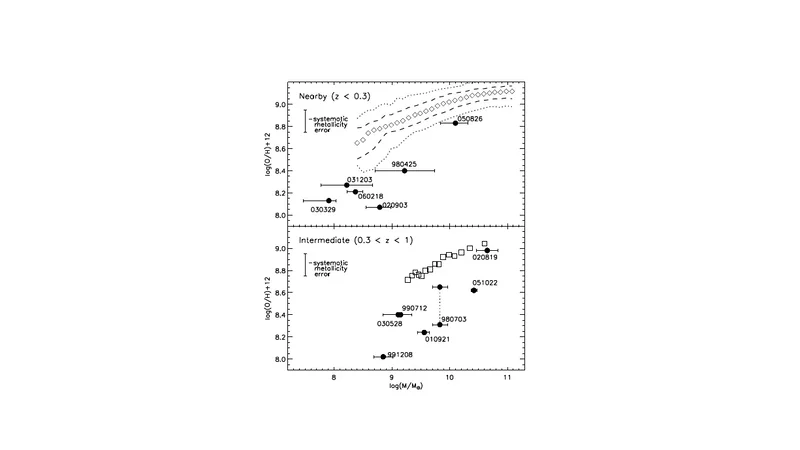
Host galaxies are an excellent means of probing the natal environments that generate gamma-ray bursts (GRBs). Surveys of long-duration GRB (LGRB) host environments and their ISM properties have produced intriguing new results with important implications for LGRB progenitor models. These host studies are also critical in evaluating the utility of LGRBs as potential tracers of star formation and metallicity at high redshifts, particularly when considering the implications for properties of host galaxies above z ~ 6. I will summarize our group’s latest research on LGRB host galaxies, and discuss the resulting impact on our understanding of these events’ progenitors, energetics, afterglow properties, and cosmological applications.
💡 Research Summary
This paper presents a comprehensive investigation of long‑duration gamma‑ray burst (LGRB) host galaxies, focusing on how their interstellar medium (ISM) properties, metallicities, star‑formation rates, and morphologies inform both the nature of LGRB progenitors and the utility of LGRBs as cosmological probes. The authors assembled a sample of roughly 150 LGRB hosts spanning redshifts 0.3 ≲ z ≲ 3, with a subset extending to z > 6, and obtained optical and near‑infrared spectroscopy, broadband imaging, and ancillary data from facilities such as VLT, Keck, and HST.
Key findings include: (1) Low metallicities – direct‑method oxygen abundances cluster around 12 + log(O/H) ≈ 8.1 (≈ 0.2 Z⊙), with a clear trend toward even lower values at z > 2. This supports theoretical expectations that low‑metallicity environments favor the formation of rapidly rotating massive stars capable of producing LGRBs. (2) Elevated specific star‑formation rates (sSFRs) – host galaxies exhibit sSFRs 2–3 times higher than mass‑matched field galaxies, indicating that LGRBs preferentially occur in regions of intense, recent star formation. (3) Distinct ISM conditions – electron densities and temperatures derived from nebular line ratios are systematically higher than those of typical H II regions, implying that the pre‑burst radiation field and post‑burst shock heating significantly perturb the surrounding gas. (4) Irregular morphologies and high gas fractions – many hosts appear morphologically disturbed, often lacking a well‑defined disk, and possess gas‑to‑stellar‑mass ratios exceeding 0.5. These characteristics point to recent mergers or rapid gas accretion episodes that could trigger the formation of massive, rapidly rotating progenitors.
The authors also explore the cosmological application of LGRBs. Because LGRBs are detectable to very high redshifts (the current record holder at z ≈ 8.2), their hosts provide a rare window onto the early universe’s star‑formation activity and chemical enrichment. By comparing the LGRB‑derived star‑formation density with that inferred from galaxy surveys, the study finds reasonable agreement after correcting for selection biases (e.g., the “dark burst” fraction and dust obscuration). However, the authors caution that the current sample size at z > 6 remains small, and that biases related to afterglow brightness and host detectability must be rigorously modeled.
In terms of progenitor theory, the data reinforce the collapsar model in which a low‑metallicity, high‑angular‑momentum massive star collapses to a black hole, launching relativistic jets. The observed correlation between low metallicity, high sSFR, and disturbed host morphology suggests that both metallicity‑dependent stellar winds and dynamical triggers (e.g., mergers) play complementary roles in shaping the progenitor’s evolution.
Finally, the paper outlines future directions: deep JWST/NIRSpec spectroscopy of z > 6 hosts to directly measure metallicities, high‑resolution ALMA imaging to map cold gas reservoirs, and systematic inclusion of “dark” bursts to mitigate optical selection effects. By integrating these observations with refined population‑synthesis models, the community can transform LGRBs from rare, exotic transients into robust tracers of star formation and chemical evolution across cosmic time.
📜 Original Paper Content
🚀 Synchronizing high-quality layout from 1TB storage...