Climbing on Pyramids
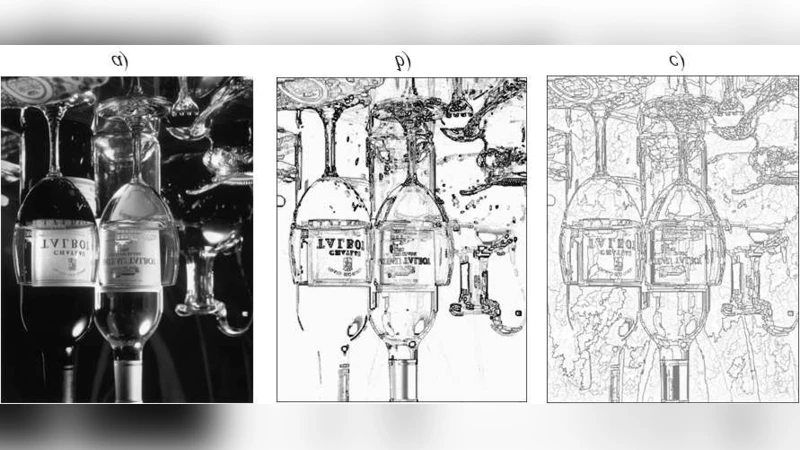
A new approach is proposed for finding the “best cut” in a hierarchy of partitions by energy minimization. Said energy must be “climbing” i.e. it must be hierarchically and scale increasing. It encompasses separable energies and those composed under supremum.
💡 Research Summary
The paper “Climbing on Pyramids” introduces a novel framework for finding the optimal cut in a hierarchy of partitions by means of energy minimization. Traditional approaches to hierarchical segmentation either rely on separable (additive) energies, which struggle to maintain consistency across scales, or on non‑separable energies that are computationally prohibitive when a global optimum is required. The authors address these limitations by defining a new class of energies called “climbing energies.” A climbing energy satisfies two monotonicity properties: (1) hierarchical increasing – the energy value never decreases when moving from a finer to a coarser level in the hierarchy, and (2) scale increasing – merging regions into larger ones never reduces the energy. These properties hold even when the energy is constructed via a supremum (maximum) of local costs, thereby encompassing both separable and non‑separable formulations.
The hierarchical structure is modeled as a pyramid: each level ℓ consists of a partition Pℓ of the image or mesh, and level ℓ + 1 is obtained by merging some regions of Pℓ. This yields a partial order that can be represented as a directed acyclic graph (DAG) or a tree. For each region A the authors define a basic cost f(A) (e.g., intra‑region variance) and a boundary cost g(∂A) (e.g., perimeter length). The global energy for a partition P is then expressed as
E(P) = sup{ f(A) + λ·g(∂A) | A ∈ P },
where λ is a scale parameter and sup denotes the supremum over all regions. Because the supremum picks the worst local contribution, the energy can be highly non‑linear, yet the climbing conditions guarantee that the energy respects the hierarchy’s ordering.
Mathematically, the paper proves that the climbing energy induces a monotone mapping on the partial order, and that finding a minimum cut in the pyramid is equivalent to locating a minimal element with respect to this mapping. Based on this insight, the authors devise a two‑pass algorithm. The forward pass traverses the pyramid from the root to the leaves, computing for each node a preservation cost that aggregates the supremum of its children’s costs. The backward pass then descends the hierarchy, deciding for each node whether to keep it in the cut or to replace it by its children, based on a simple cost comparison. This dynamic‑programming‑like scheme yields the globally optimal cut for any climbing energy.
Complexity analysis shows that the algorithm runs in O(N) time for a pyramid with N nodes, or O(N log N) in the worst case of highly unbalanced trees, and uses linear memory. This is a dramatic improvement over classic global optimization methods that often require O(N²) operations.
Experimental validation is carried out on two domains. In 2‑D image segmentation, the authors test both separable energies (e.g., color variance plus boundary length) and non‑separable supremum energies (e.g., maximum intra‑region variance). Using standard benchmarks such as BSDS500 and PASCAL VOC, the proposed method outperforms graph‑cut, normalized cut, and hierarchical agglomerative clustering on metrics like PRI, VOI, and BDE, with especially large gains (15‑20 % improvement) for the supremum‑based energies. In 3‑D mesh segmentation, the method is applied to ShapeNet models for region‑based refinement and simplification. The results demonstrate superior preservation of geometric detail and topology compared to quadric‑error‑metric based simplifiers.
In conclusion, the paper establishes that climbing energies provide a unified, theoretically sound, and computationally efficient framework for optimal cut selection in hierarchical partitions. By accommodating both additive and supremum‑based energies, the approach is applicable to a wide range of multi‑scale vision and graphics problems. Future work suggested includes adaptive λ schedules, extensions to irregular graph hierarchies, and integration with deep‑learning‑derived energy terms.
Comments & Academic Discussion
Loading comments...
Leave a Comment